 This page's pick
Guides
Language
EnglishCurrency
US dollar · $GetYourGuide uses the currency you choose.
Guide · The royal water temple
Taman Ayun Temple, a royal temple in its moat
Taman Ayun Temple was built for the kings of Mengwi and stands inside a ring of water that feeds the rice fields: what UNESCO says about it, how to visit and how to pair it with the lake temple.
Check availabilityfrom $34 · free cancellation
Editorial team, balitempletour.comUpdated October 24, 2026Reading time 6 min36 sources
Key points
A royal temple for the kings of Mengwi
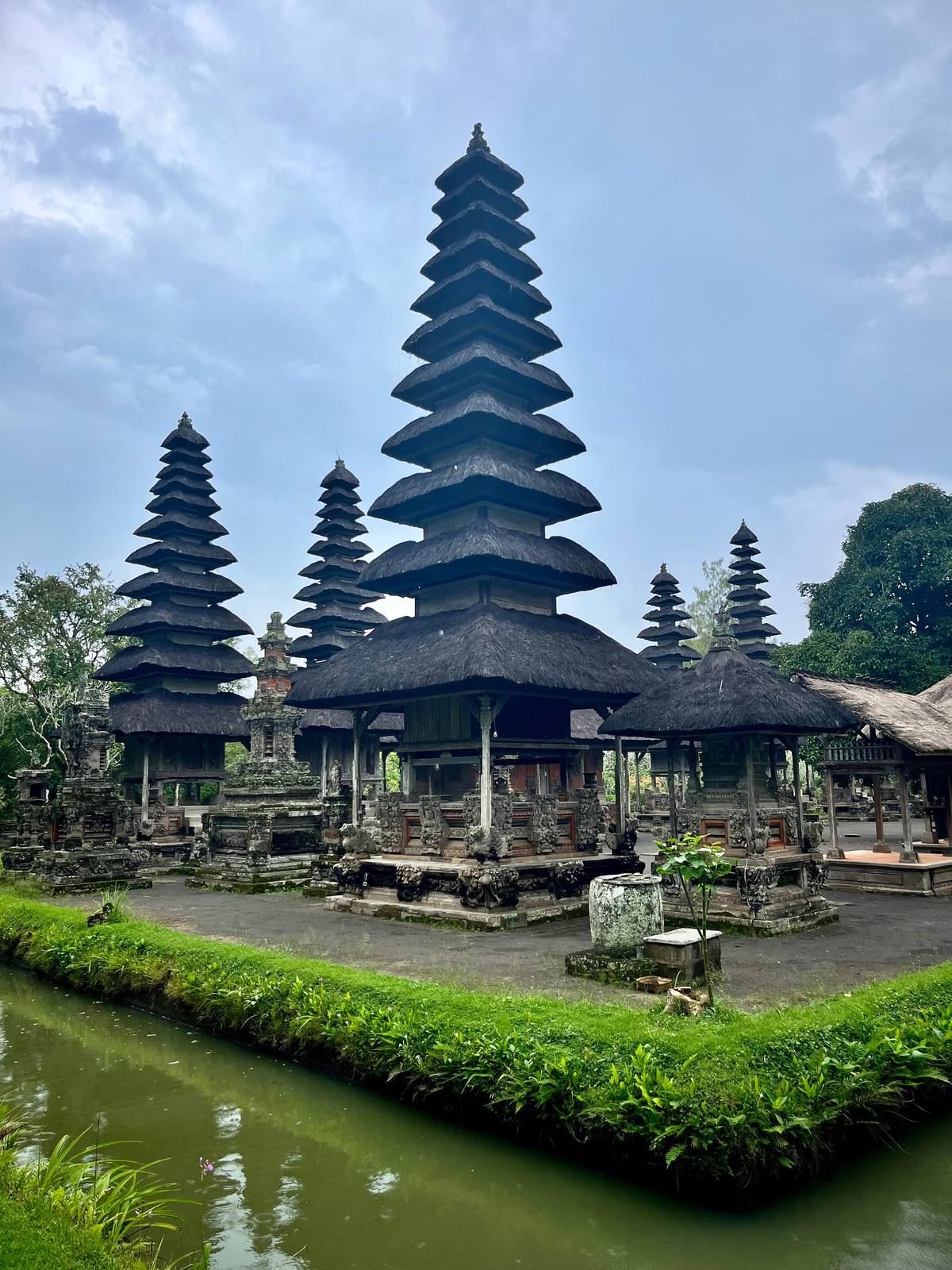
Taman Ayun Temple in Mengwi was the royal temple of a kingdom. The Bali Provincial Tourism Office says it was built by the King of Mengwi, I Gusti Agung Putu, in the Saka year 1556, which is 1634 AD, as a place to honour the king's ancestors.3 The Ministry of Tourism adds that it was once the centre of the Mengwi kingdom's activities.5
It began as a family temple of the royal house, a pura kawiten, built to honour the spirits of the king's forebears.7 Over the centuries it was restored and rebuilt more than once; its last major renovation was in 1937.8 What you see today is an old plan in well-kept stone and thatch, set in lawns and water. The care shows everywhere, from the swept paths to the fresh offerings at the gates, and it gives the place a calm, ordered feel that is rare among the busier temples of the south.
UNESCO describes it as an 18th-century royal water temple, the largest and most impressive edifice of its type on the island.1 The two dates are not a contradiction you need to solve on the spot: one marks the founding by the king, the other the temple as it grew and took its classic shape. Either way, this is the most polished of Bali's great temples.
Royal history
From royal foundation to World Heritage
-
1634
Founded
Built by the King of Mengwi, I Gusti Agung Putu.3
-
18th century
A water temple
UNESCO's date for the royal water temple.1
-
19th century
Height of Mengwi
The largest Balinese kingdom of its time.9
-
1937
Renovated
The last major renovation of the temple.8
-
2002
Proposed
Bali proposes it for the World Heritage List.10
-
2012
Inscribed
Listed with the subak landscape.2
Water all around: the moat and the subak
The first thing you notice is the water. A large body of water surrounds the whole compound and is part of the subak, the cooperative irrigation system of the island.11 You cross a bridge to enter, and from the outer lawns the tiered roofs seem to rise straight out of the moat.
Subak is not just plumbing. UNESCO explains that the temples are the focus of a cooperative system of canals and weirs that dates back to the 9th century, and that it reflects Tri Hita Karana, the joining of the spirit, the human world and nature.1213 Water flows through temples on its way to the fields, and the temple congregations share it out. Standing on the bridge over the moat, you are looking at the same idea in miniature: water held, honoured and then sent on to feed the rice.
UNESCO counts about 1,200 water collectives on Bali, each with between 50 and 400 farmers drawing on one source.14 Taman Ayun shows that system at its grandest: UNESCO calls it the largest regional water temple, showing the subak at its fullest under the largest Balinese kingdom of the 19th century.9
Entrance fees
Who pays what at Taman Ayun
Rp
The UNESCO landscape
The water temples and terraces on the list
| Site | Type | Why it counts |
|---|---|---|
| Taman Ayun | Royal water temple | Largest regional water temple |
| Ulun Danu Batur | Supreme water temple | On Lake Batur |
| Pakerisan watershed | Subak landscape | Oldest known irrigation system |
| Catur Angga Batukaru | Subak landscape | Terraces named in a 10th-century inscription |
From UNESCO's description of the property, which covers 19,500 ha in five sites.915161217
West and highland days
Royal temple, lake temple or both
This page's pick Early start
 On foot
Decision helper
How should you see Taman Ayun?
Pick by the rest of your day
The UNESCO day
Taman Ayun, then Ulun Danu Bratan and the Handara gate in 10 hours.
Mid-morning
The Ministry's suggestion for soft light at Mengwi.6
Walk the moat
The water around the compound is part of the irrigation system.11
The wantilan
An open pavilion in the outer court, once used for cockfighting.18
Included in the landscape is the 18th-century Royal Water Temple of Pura Taman Ayun, the largest and most impressive architectural edifice of its type on the island.
One of five sites in Bali's World Heritage landscape
In 2012 UNESCO inscribed the cultural landscape of Bali province, a serial property of five sites where the subak system still fully works.217 Together they cover 19,500 ha of rice terraces and their water temples.12
Taman Ayun is the easiest of the five to visit. The others are the Supreme Water Temple of Pura Ulun Danu Batur on Lake Batur, and the subak landscapes of the Pakerisan watershed and of Catur Angga Batukaru, with terraces that a 10th-century inscription already mentions.1516 The Pakerisan valley is the same one that holds Tirta Empul and Gunung Kawi.
The Bali government first proposed Taman Ayun to UNESCO in 2002, a decade before the inscription.102 For visitors the label matters less than what it explains: why a temple sits in a moat, why its water matters to farmers, and why the island's religion and its rice fields cannot be told apart.
Map
Where the temples stand on Bali
First the whole island with the temples on this site, then the slopes of East Bali around Lempuyang, then the river valley north of Ubud.
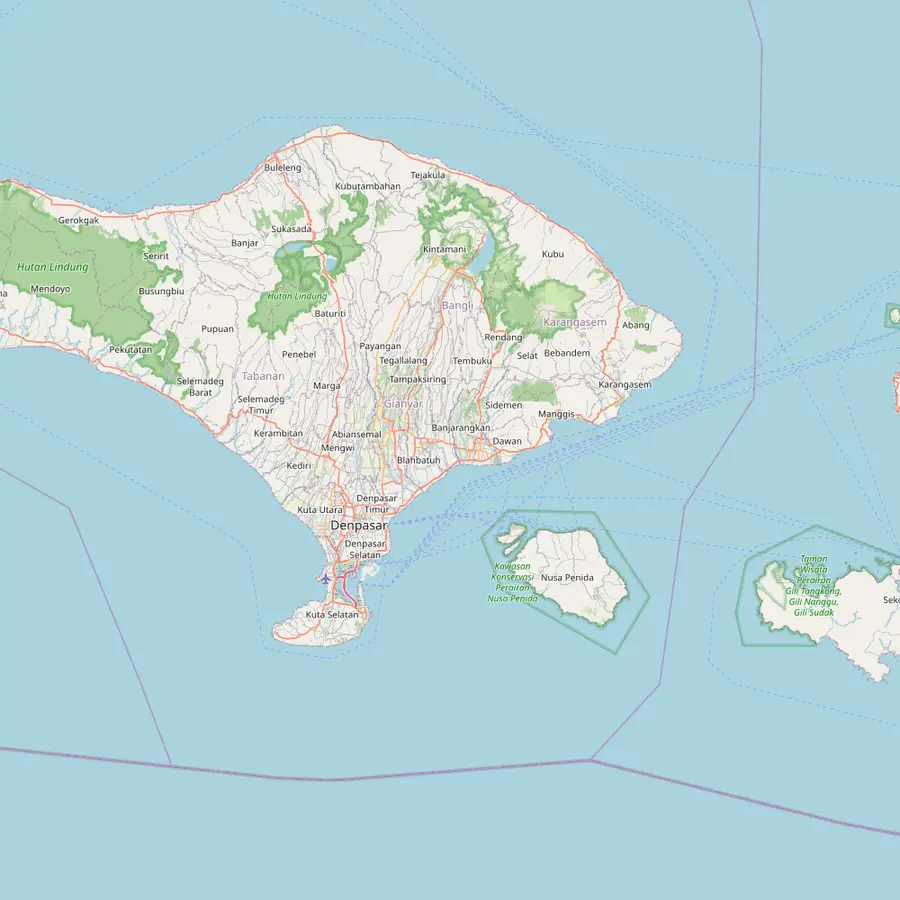 1Lempuyang gate2Tirta Gangga3Besakih4Tirta Empul5Goa Gajah6Ubud Palace7Taman Ayun8Ulun Danu Beratan9Uluwatu10Kuta
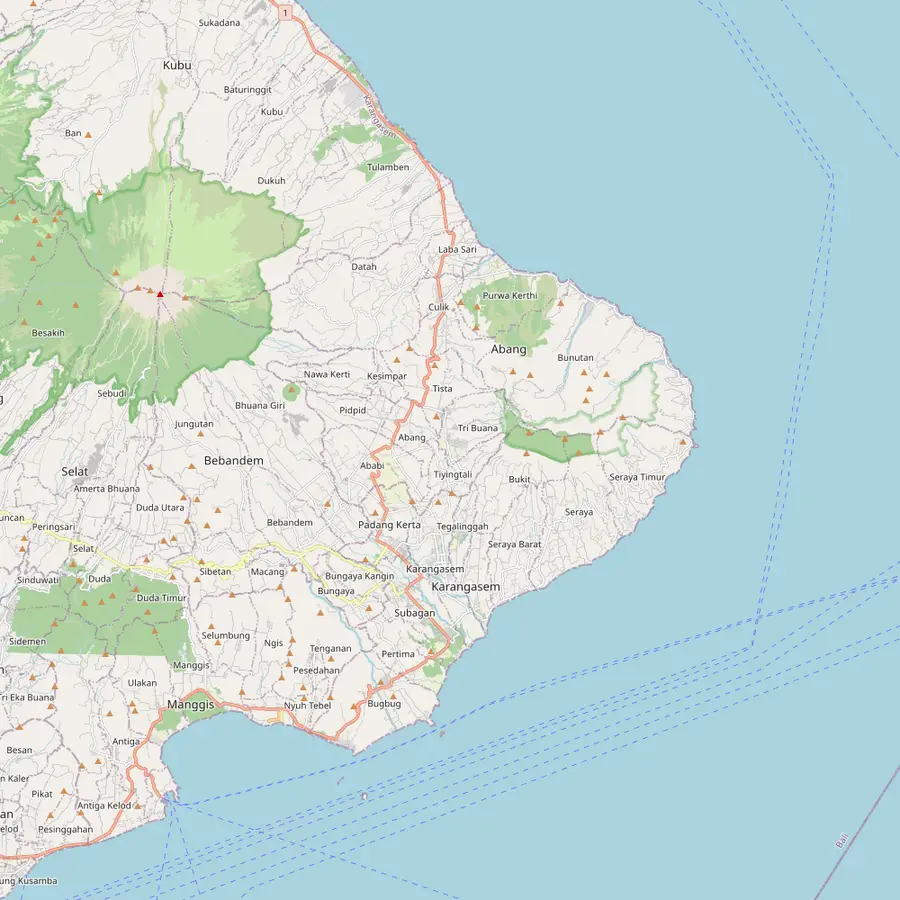 1Lempuyang gate2Tirta Gangga11Lempuyang Luhur
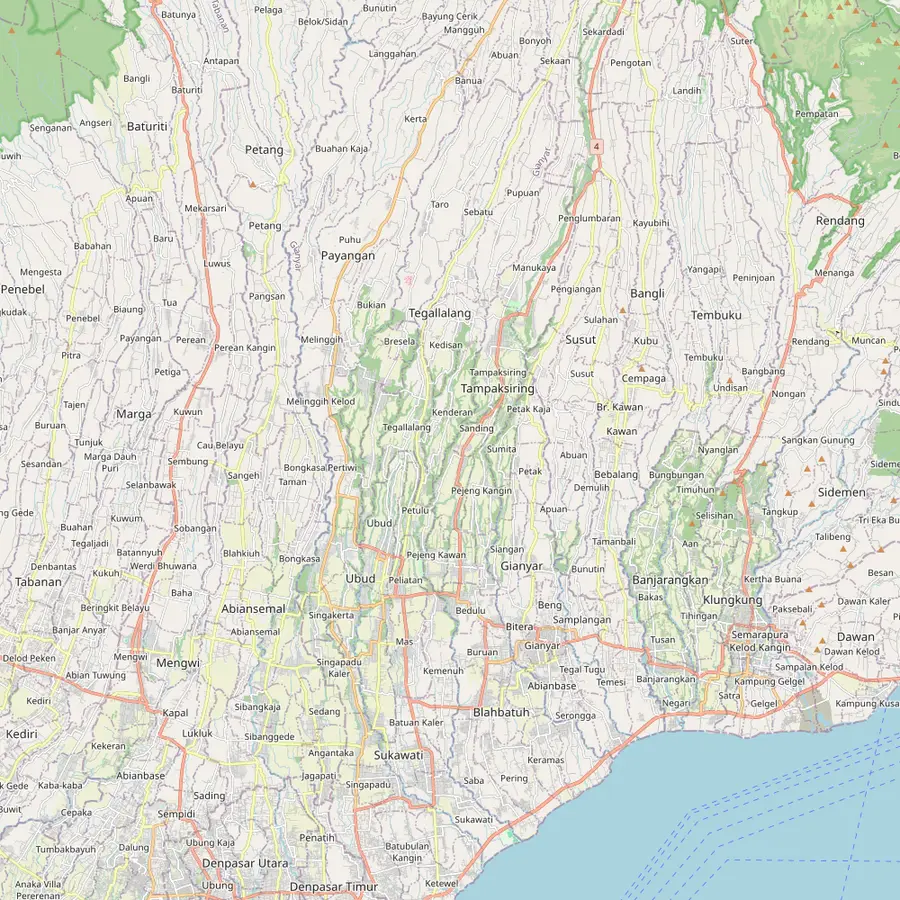 4Tirta Empul5Goa Gajah6Ubud Palace12Gunung Kawi
- 1Lempuyang gate
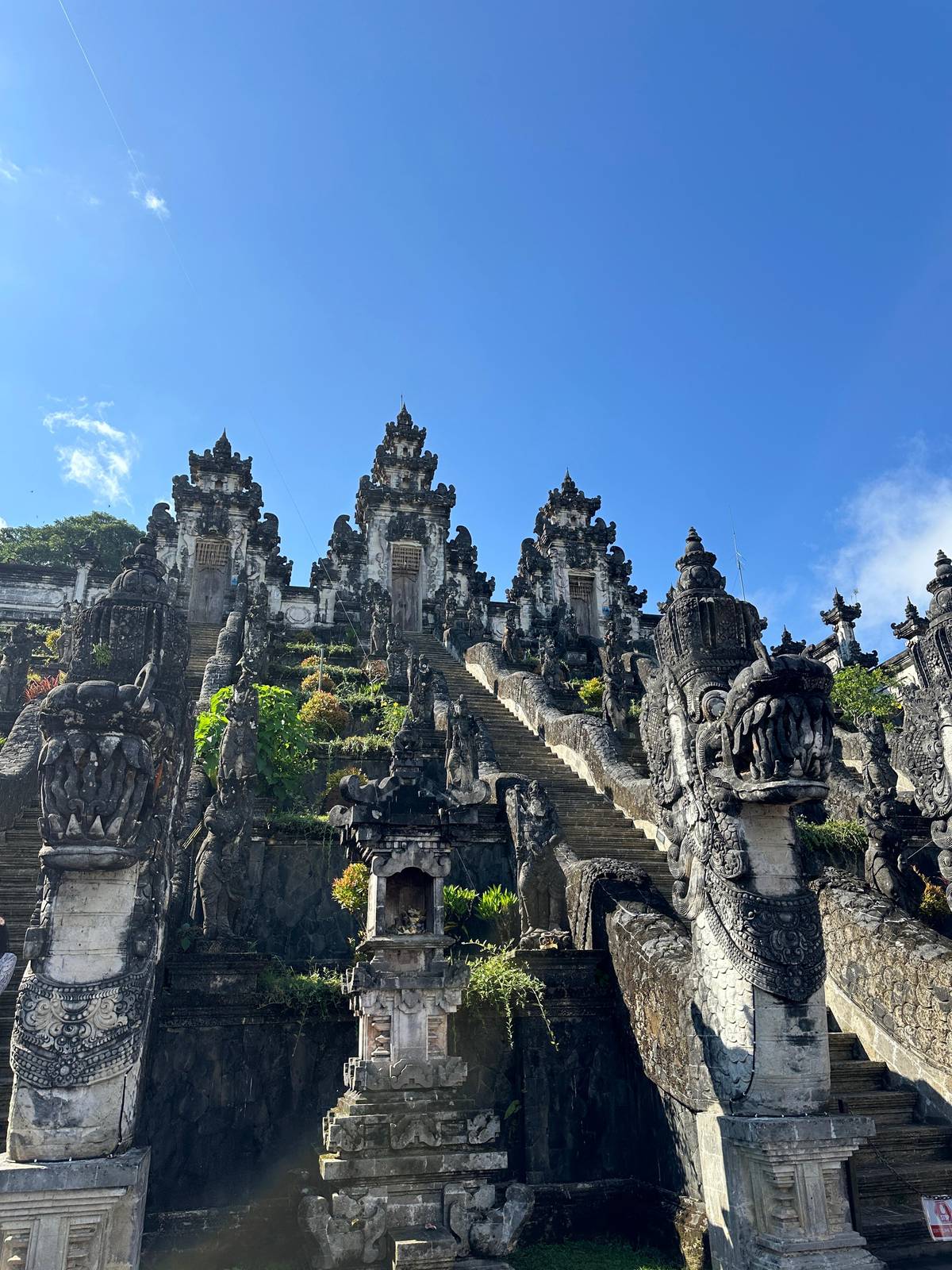
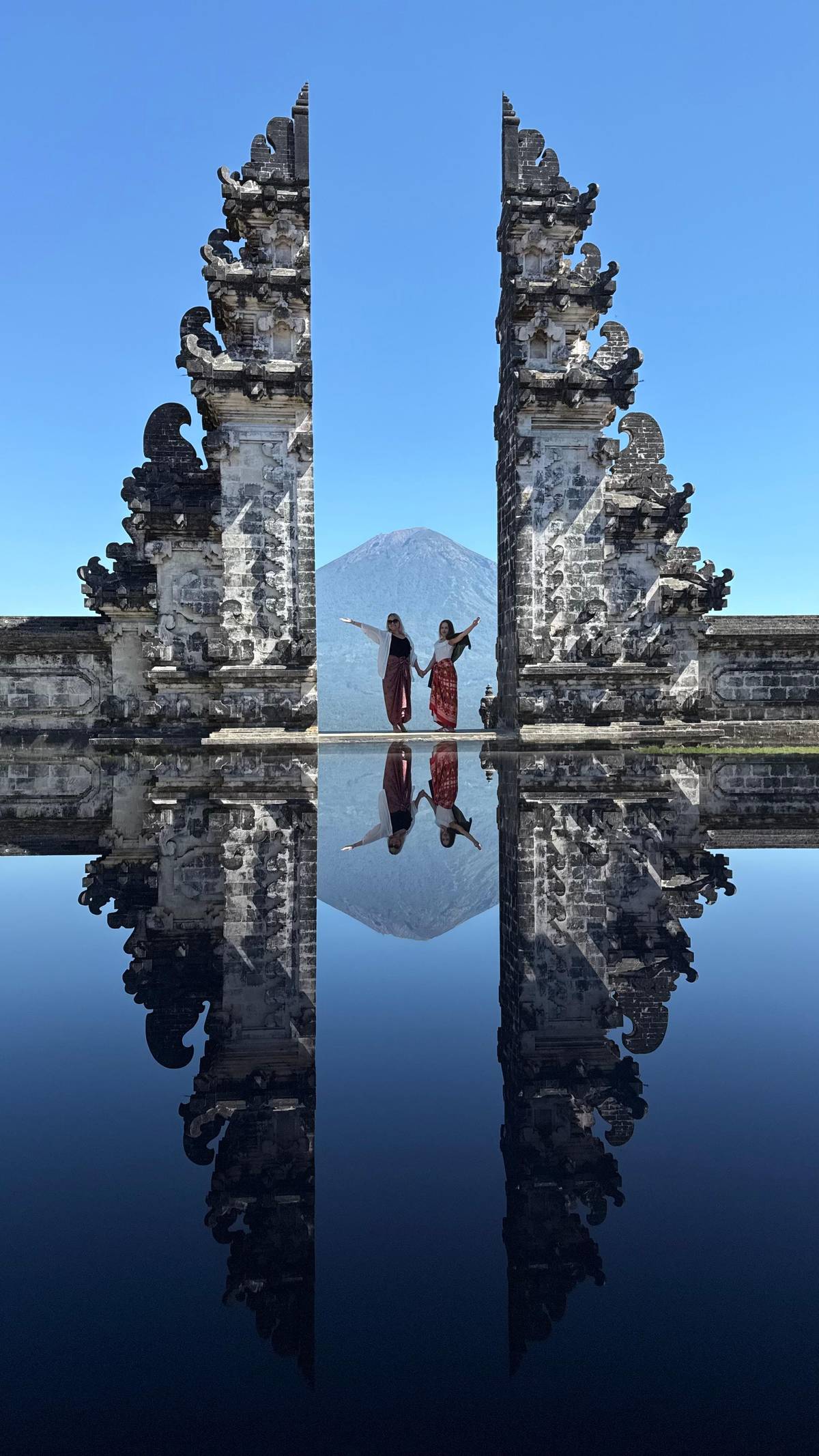
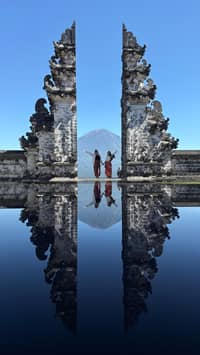
The lowest of seven temples on Mount Lempuyang, where the split gate frames Mount Agung on a clear day.19
In Google Maps ↗ - 2Tirta Gangga
A water palace built in 1948 by the King of Karangasem; a 1-hour stop of the site tour.20
In Google Maps ↗ - 3Besakih
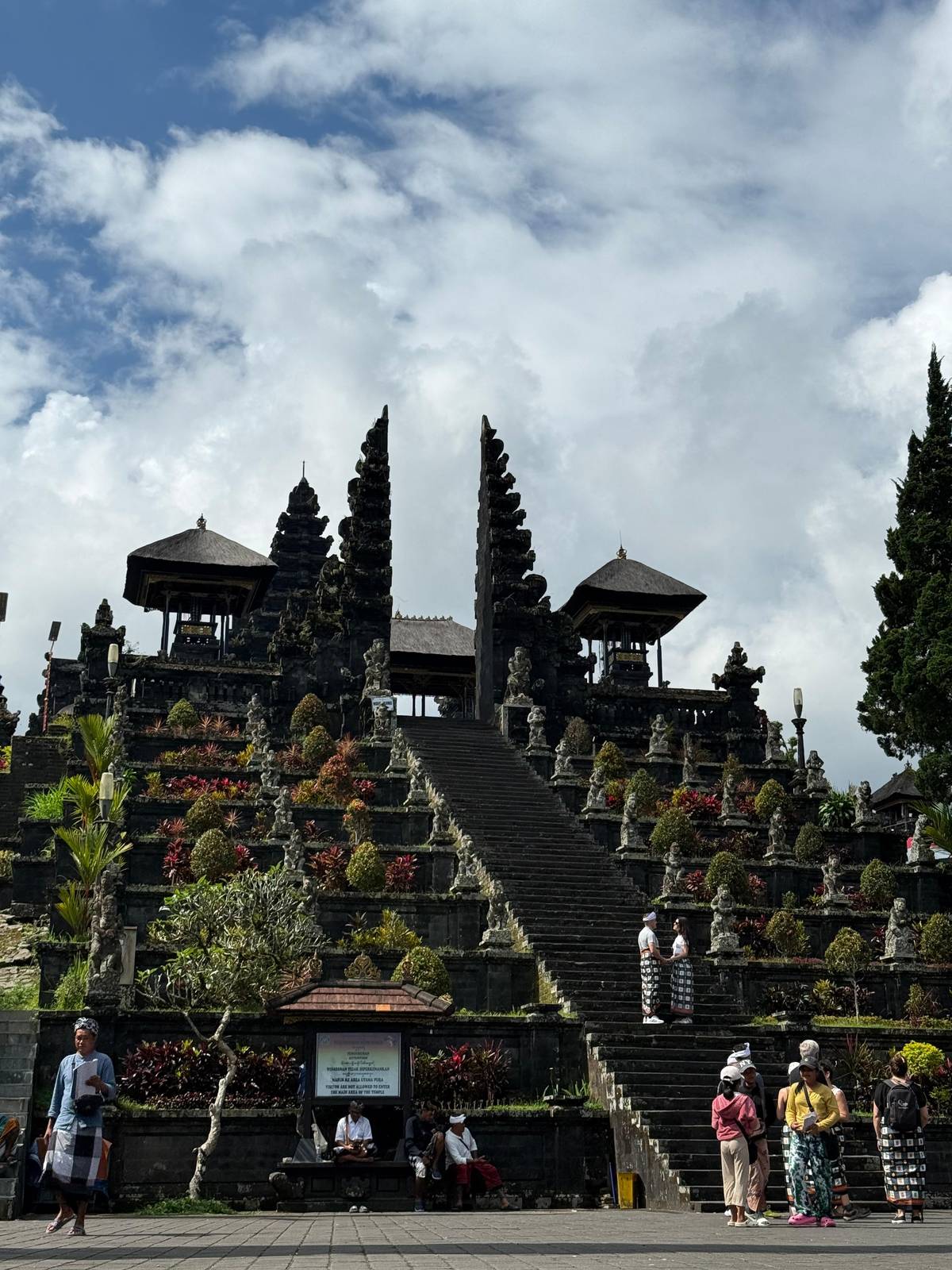
The mother temple, on the slope of Agung at about 1,000 m, a complex of 23 temples.2122
In Google Maps ↗ - 4Tirta Empul
A spring temple founded in 962 AD, with 30 showers fed by the spring.2324
In Google Maps ↗ - 5Goa Gajah
A carved cave about 27 km from Denpasar, named in a text of 1365.2526
In Google Maps ↗ - 6Ubud Palace
Meeting point of the site tour's group options in Ubud.
In Google Maps ↗ - 7Taman Ayun
The royal water temple of Mengwi, part of the UNESCO subak landscape inscribed in 2012.12
In Google Maps ↗ - 8Ulun Danu Beratan
A lake temple in Candikuning, Tabanan, about 1.5 to 2 hours from Denpasar.2728
In Google Maps ↗ - 9Uluwatu
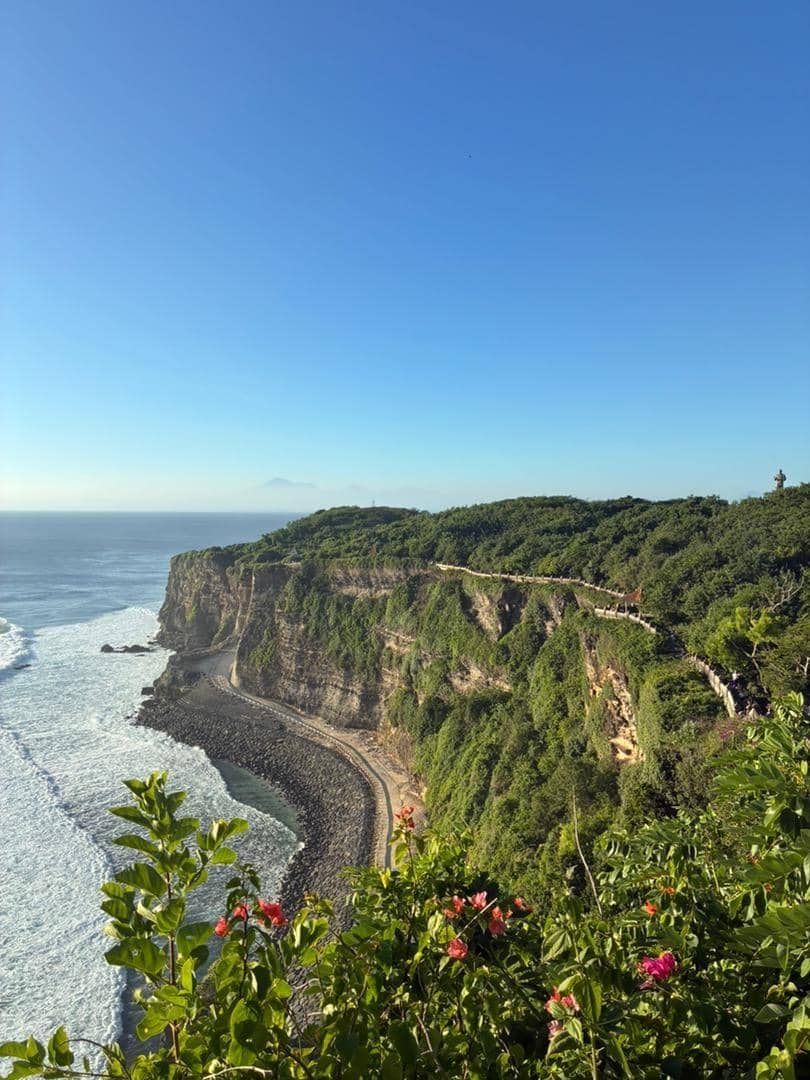
A sea temple on a 70-meter cliff, with the kecak at 6:00 PM.2930
In Google Maps ↗ - 10Kuta
Central Parking Kuta, the other group meeting point of the site tour.
In Google Maps ↗ - 11Lempuyang Luhur
The highest of the seven temples, at about 1,175 m, 2 to 4 hours there and back on foot.3132
In Google Maps ↗ - 12Gunung Kawi
Ancient shrines cut into a rock cliff above the Pakerisan River.33
In Google Maps ↗
Checklist
For a visit to Mengwi
01
Bring
- Small notes for the ticket
- Sun hat for the open lawns
- A light layer if you go on to the lake
02
Respect
- Shoulders and knees covered
- Stay outside the inner wall
- Quiet near people at prayer
Cost calculator
Price a water-temple day for your group
Select a water-temple day and your head count.
People
Total from$67
pp from $34
Check availabilityfree cancellationThe total is each temple day's lowest GetYourGuide price times your party size, shown in your currency at today's ECB rate; the booking page confirms the real amount.
Video
A walk round Taman Ayun at Mengwi
The player loads on your tap, not before.
What to see inside the walls
Taman Ayun is laid out like most Balinese temples, in courts that rise from a public outer area to the inner sanctuary.34 The outer court holds a wantilan, an open pavilion first used for cockfighting and now used for gatherings and music.18 It is a good place to sit in the shade and take in the plan of the whole compound.
The inner court is walled off, and the path that runs around its low wall gives you a clear view of the shrines inside. The tiered meru towers stand in rows: the number of roofs on a meru reflects the status of the deity it honours, and it is always an odd number.35 Counting the roofs is a small game that makes the hierarchy of the temple visible, and children usually enjoy it more than any explanation from a guide.
Walk the full circuit. The path around the inner wall gives you every angle on the merus, and the far side is usually quiet even when the front gate is busy. Look for the carved guardian figures at the gates and the small shrines tucked into corners, which tell you this is still a temple in daily use, not a garden.
Tickets, dress and the best light
The Ministry of Tourism's temple guide lists the entrance at Rp 30,000 for adult foreign nationals and Rp 15,000 for foreign children, with Rp 15,000 and Rp 10,000 for Indonesians.4 It is one of the cheaper temple tickets on the island, and the visit rarely takes more than an hour.
Cover shoulders and knees, as at every Balinese temple; sarongs and sashes are usually provided at the entrance.36 On the tour on this page, the operator notes that sarongs may be provided on site and that women who are menstruating may not enter the temple areas.
The Ministry recommends mid-morning, for soft light.6 The tiered roofs photograph best when the sun is not yet overhead, and the lawns are cooler then. Late afternoon can be lovely too, but the light drops behind the trees, and the tour groups heading on to the coast often stop here around that time.
Getting there and the day tour on this page
Mengwi lies north-west of Denpasar, about 1 hour by car from Denpasar or Ubud.5 It sits on the way to the highlands, which makes Taman Ayun a natural first stop on a day into the mountains.
The tour on this page does exactly that. It drives 1 hour to Taman Ayun and spends 1 hour there, then 45 minutes to Ulun Danu Bratan on Lake Beratan, then 45 minutes to the Handara gate for 1 hour before returning. It runs 10 hours, shared or private, with pickup included and lunch not included.
It has 410 reviews averaging 4.86 and starts from $34. The Bedugul highlands are cooler than the coast, and the operator warns of mist or rain up there, so bring a light layer even if Mengwi is hot.
Pairing it with the highlands
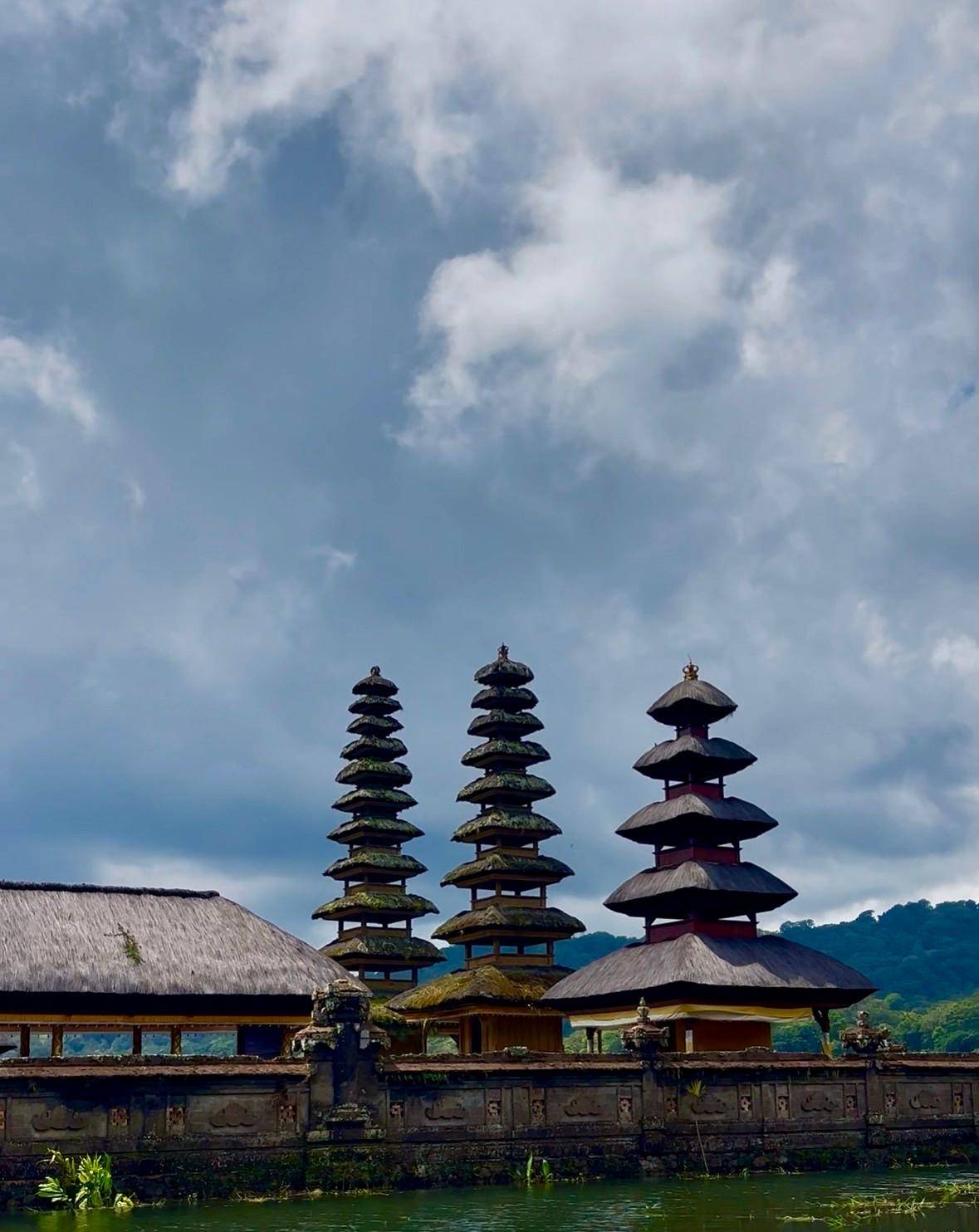
Taman Ayun and Ulun Danu Beratan make a natural pair: the royal temple of the plains and the lake temple that guards the water at its source. Both are water temples, both have tiered merus, and seeing them on the same day shows how the water of the mountains reaches the fields below.
Ulun Danu Beratan stands in Candikuning, Tabanan, about 1.5 to 2 hours from Denpasar or Kuta.2728 From Mengwi the tour on this page reaches it in 45 minutes. If you go on your own, start at Taman Ayun early, drive up into the cool air for lunch, and come back down before the evening traffic.
Tanah Lot, a sea temple on the southwest coast, is often sold together with these two. It deserves its own guide and its own sunset, and we leave it to one. Here the focus stays on the water temples, which reward a slower pace and an early start more than any other temples on the island.
Your temple day
Lempuyang, Tirta Gangga and Besakih in one day.
Pick a date and an option, and cancel free up to 24 hours before.


You ask,we answer.
Is Taman Ayun a UNESCO World Heritage Site?
Yes, as part of a larger property. It belongs to Bali's subak cultural landscape, inscribed on the World Heritage List in 2012.12
When was Taman Ayun built?
1634, by the King of Mengwi. So says the provincial tourism office; UNESCO describes it as an 18th-century royal water temple.31
How much is the entrance fee?
Rp 30,000 for foreign adults. Foreign children pay Rp 15,000; Indonesians pay Rp 15,000 and Rp 10,000.4
How far is it from Ubud?
About 1 hour by car. The Ministry gives about 1 hour from Denpasar or Ubud to Mengwi.5
Do I need a sarong at Taman Ayun?
Cover shoulders and knees. Sarongs and sashes are usually provided at temple entrances; the tour notes say they may be provided on site.36
What is the best time to visit?
Mid-morning. The Ministry recommends mid-morning for soft light on the roofs and lawns.6
What does the moat have to do with rice?
It is part of the subak. The water around the compound belongs to the island's cooperative irrigation system.11
Sources
Where the information comes from
- 1UNESCO World Heritage CentreCultural Landscape of Bali Province: the Subak System as a Manifestation of the Tri Hita Karana Philosophy (archived copy, 11 October 2026)↩
- 2UNESCO World Heritage CentreCultural Landscape of Bali Province: the Subak System as a Manifestation of the Tri Hita Karana Philosophy (archived copy, 11 October 2026)↩
- 3Bali Provincial Tourism Office (Dinas Pariwisata Provinsi Bali)Taman Ayun Temple↩
- 4Indonesia Ministry of Tourism (indonesia.travel)11 Must-Visit Temples in Bali and How to Get There↩
- 5Indonesia Ministry of Tourism (indonesia.travel)11 Must-Visit Temples in Bali and How to Get There↩
- 6Indonesia Ministry of Tourism (indonesia.travel)11 Must-Visit Temples in Bali and How to Get There↩
- 7WikipediaPura Taman Ayun↩
- 8WikipediaPura Taman Ayun↩
- 9UNESCO World Heritage CentreCultural Landscape of Bali Province: the Subak System as a Manifestation of the Tri Hita Karana Philosophy (archived copy, 11 October 2026)↩
- 10Bali Provincial Tourism Office (Dinas Pariwisata Provinsi Bali)Taman Ayun Temple↩
- 11WikipediaPura Taman Ayun↩
- 12UNESCO World Heritage CentreCultural Landscape of Bali Province: the Subak System as a Manifestation of the Tri Hita Karana Philosophy (archived copy, 11 October 2026)↩
- 13UNESCO World Heritage CentreCultural Landscape of Bali Province: the Subak System as a Manifestation of the Tri Hita Karana Philosophy (archived copy, 11 October 2026)↩
- 14UNESCO World Heritage CentreCultural Landscape of Bali Province: the Subak System as a Manifestation of the Tri Hita Karana Philosophy (archived copy, 11 October 2026)↩
- 15UNESCO World Heritage CentreCultural Landscape of Bali Province: the Subak System as a Manifestation of the Tri Hita Karana Philosophy (archived copy, 11 October 2026)↩
- 16UNESCO World Heritage CentreCultural Landscape of Bali Province: the Subak System as a Manifestation of the Tri Hita Karana Philosophy (archived copy, 11 October 2026)↩
- 17UNESCO World Heritage CentreCultural Landscape of Bali Province: the Subak System as a Manifestation of the Tri Hita Karana Philosophy (archived copy, 11 October 2026)↩
- 18WikipediaPura Taman Ayun↩
- 19Bali Provincial Tourism Office (Dinas Pariwisata Provinsi Bali)Lempuyang Temple↩
- 20Bali Provincial Tourism Office (Dinas Pariwisata Provinsi Bali)Tirta Gangga↩
- 21Indonesia Ministry of Tourism (indonesia.travel)Visiting Pura Besakih, the Largest Hindu Temple in Bali↩
- 22Indonesia Ministry of Tourism (indonesia.travel)Visiting Pura Besakih, the Largest Hindu Temple in Bali↩
- 23Indonesia Ministry of Tourism (indonesia.travel)The Beauty of Pura Tirta Empul↩
- 24Indonesia Ministry of Tourism (indonesia.travel)The Beauty of Pura Tirta Empul↩
- 25Bali Provincial Tourism Office (Dinas Pariwisata Provinsi Bali)Elephant Cave Temple↩
- 26Bali Provincial Tourism Office (Dinas Pariwisata Provinsi Bali)Elephant Cave Temple↩
- 27Bali Provincial Tourism Office (Dinas Pariwisata Provinsi Bali)Beratan Lake Temple↩
- 28Indonesia Ministry of Tourism (indonesia.travel)11 Must-Visit Temples in Bali and How to Get There↩
- 29Uluwatu Temple management (official website)Uluwatu Temple: The Iconic Cliffside Temple of Bali↩
- 30Uluwatu Temple management (official website)Uluwatu Temple: The Iconic Cliffside Temple of Bali↩
- 31Indonesia Ministry of Tourism (indonesia.travel)Pura Lempuyang, the Iconic East Bali Gate of Heaven↩
- 32Indonesia Ministry of Tourism (indonesia.travel)Pura Lempuyang, the Iconic East Bali Gate of Heaven↩
- 33Bali Provincial Tourism Office (Dinas Pariwisata Provinsi Bali)Gunung Kawi Temple↩
- 34WikipediaPura Ulun Danu Bratan↩
- 35WikipediaPura Ulun Danu Bratan↩
- 36Indonesia Ministry of Tourism (indonesia.travel)11 Must-Visit Temples in Bali and How to Get There↩