 Private, this page
Guides
Language
EnglishCurrency
US dollar · $GetYourGuide uses the currency you choose.
Guide · The carved cave
Goa Gajah, the carved cave in the river valley
Goa Gajah is a cave cut into a rock face above a stream, with a carved mouth, a statue of Ganesha inside and old bathing pools below: what you see, what it costs and how long to stay.
Check availabilityfrom $34 · free cancellation
Editorial team, balitempletour.comUpdated October 24, 2026Reading time 6 min37 sources
At a glance
A cave between two streams
Goa Gajah sits in Bedulu village in the Blahbatuh district of Gianyar, about 27 km from Denpasar and a short drive from the centre of Ubud.1 The Elephant Cave near Ubud is easy to miss from the road, because the site lies below street level in a green ravine. You reach it down a long flight of steps, and the climb back up is the only hard part of the visit.7
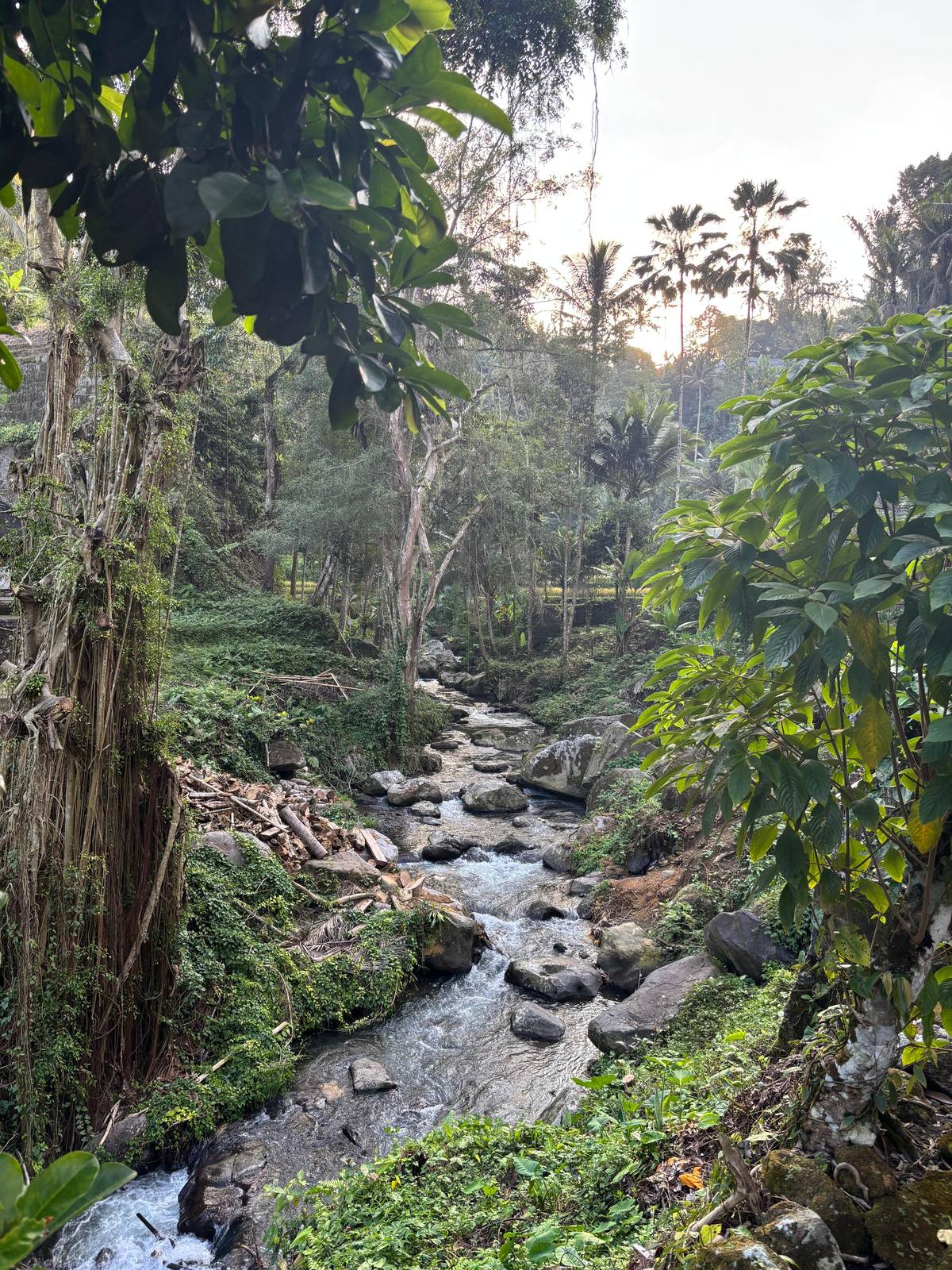
The setting is deliberate. The provincial tourism office explains that the temple was built where two streams meet, following the Balinese principle of Rwabineda, the balance of two opposing forces.8 Below the cave the water of the valley is still part of the place, and the paths lead down through the forest to it.
It is a small site, so do not expect a long day. Most visitors spend an hour or so walking from the courtyard to the cave, past the pools and down to the stream. The quiet comes from the trees and the sound of the water, and it is at its best in the cooler hours before the tour groups arrive.
Through the centuries
From hermitage to rediscovery
-
9th century
Carvings
The Ministry dates the caves and carvings to this century.9
-
11th century
Inscription
Kumon and Sahywangsa, dated by their letters.4
-
1365
Named in a poem
The Nagarakretagama by Mpu Prapanca mentions the site.3
-
1923
Rediscovered
Dutch archaeologists find the cave again.10
-
1954
Pools uncovered
The fountains and bathing pool come to light.10
-
1995 to 2015
Tentative List
On UNESCO's Tentative List, then withdrawn.11
The carved mouth and what is inside
The face of the cave is carved with a jungle and its creatures, with a great open mouth as the doorway.12 Inside, the cave is shaped like the letter T, and a statue of Ganesha, the elephant-headed god, stands in one arm.2 In the other arm stand fragments of statues and a trilingga surrounded by eight small lingams.13
The name may come from that Ganesha, or from the river: the provincial office traces it to Lwa Gajah, a Buddhist hermitage, and explains that lwa means river, the Gajah river.1415 Either way, the elephant you find here is the god inside.
The cave is small and dim, and the air is often heavy with incense. Let your eyes adjust before you look for the niches of the old hermitage in the walls.16 Keep your voice down: people still come here to pray, and the space carries every sound. Offerings of flowers and rice are often laid in front of the statues; step around them, and do not touch the carvings to steady yourself, however tempting the cool stone is after the steps.
Entrance fees
Who pays what at the gate
Rp
What to look for
The parts of the site
| Part | What you see | Look for |
|---|---|---|
| Cave mouth | A carved jungle and its creatures | The open mouth as a doorway |
| Inside the cave | Ganesha statue | Niches of the hermitage |
| Cave interior | Trilingga with small lingams | Statue fragments |
| Bathing pool | Female figures with pitchers | The pitchers they hold |
| Valley below | Stream and forest | The meeting of two streams |
From the Bali Provincial Tourism Office and Wikipedia's article on the site.1221613178
The Pakerisan valley
The cave, the spring or both
Private, this page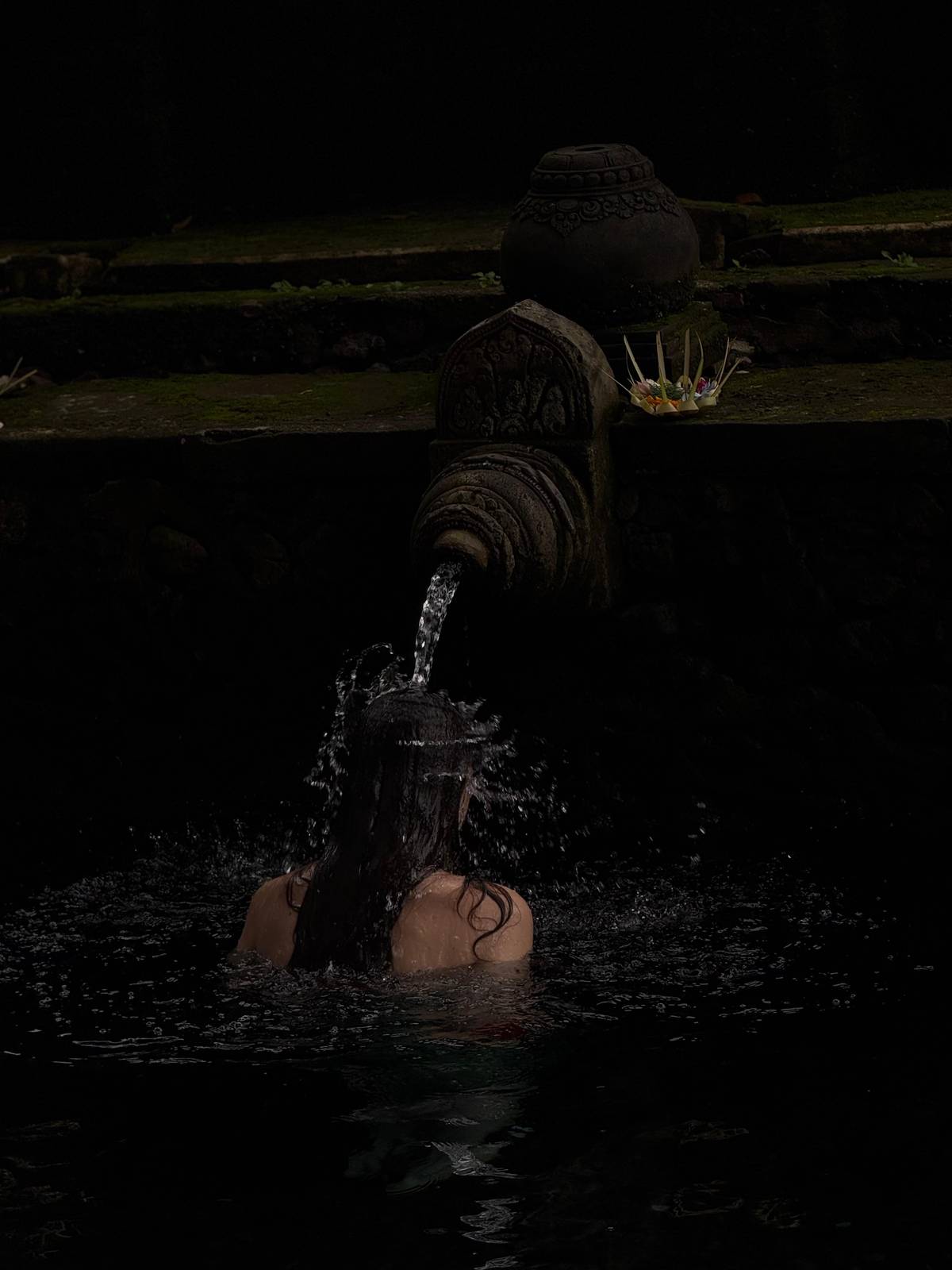 Half a day
 Full day
Decision helper
How much of the valley should you see?
Choose by your time and your knees
Goa Gajah on its own
About 27 km from Denpasar, close to Ubud, with one flight of steps.1
The archaeology day
Museum, Gunung Kawi, Yeh Pulu and Goa Gajah in 7 hours.
Add Tirta Empul
The spring temple lies about 30 minutes from Ubud.18
Skip Gunung Kawi
Its cliff shrines are reached down a long flight of steps.19
Go in the morning
The Ministry names the morning as the best time for Goa Gajah.20
In the northern part of the temple, lies a carved Cave of Nature in the shape of the letter ”T”. Inside this cave there is a Ganesha statue considered as the god of sciences.
Hindu and Buddhist in one place
Goa Gajah holds both Hindu and Buddhist imagery, which makes it one of the most interesting places on Bali for understanding how these traditions met on the island.21 The Ganesha and the lingams belong to the Hindu side, while carved stupas and parasols by the river speak of Buddhist monks.22
The name of the site already appears in the Nagarakretagama, a court poem compiled by Mpu Prapanca in 1365.3 A short inscription in the cave, reading Kumon and Sahywangsa, is thought from the style of its letters to date from the 11th century.4 The Ministry of Tourism dates the caves and rock carvings back to the 9th century.9
The dates in different sources do not line up neatly, and that is part of the appeal. What is certain is that this was a hermitage long before it was a sight, and that the cave, the pools and the stream were laid out as one sacred landscape. Walking from one to the other is the best way to feel it. A local guide can point out details that are easy to walk past, from the small figures in the carved jungle to the worn steps that pilgrims have used for centuries, and turns a short stop into a lesson in how Bali's religion took shape.
Map
Where the temples stand on Bali
First the whole island with the temples on this site, then the slopes of East Bali around Lempuyang, then the river valley north of Ubud.
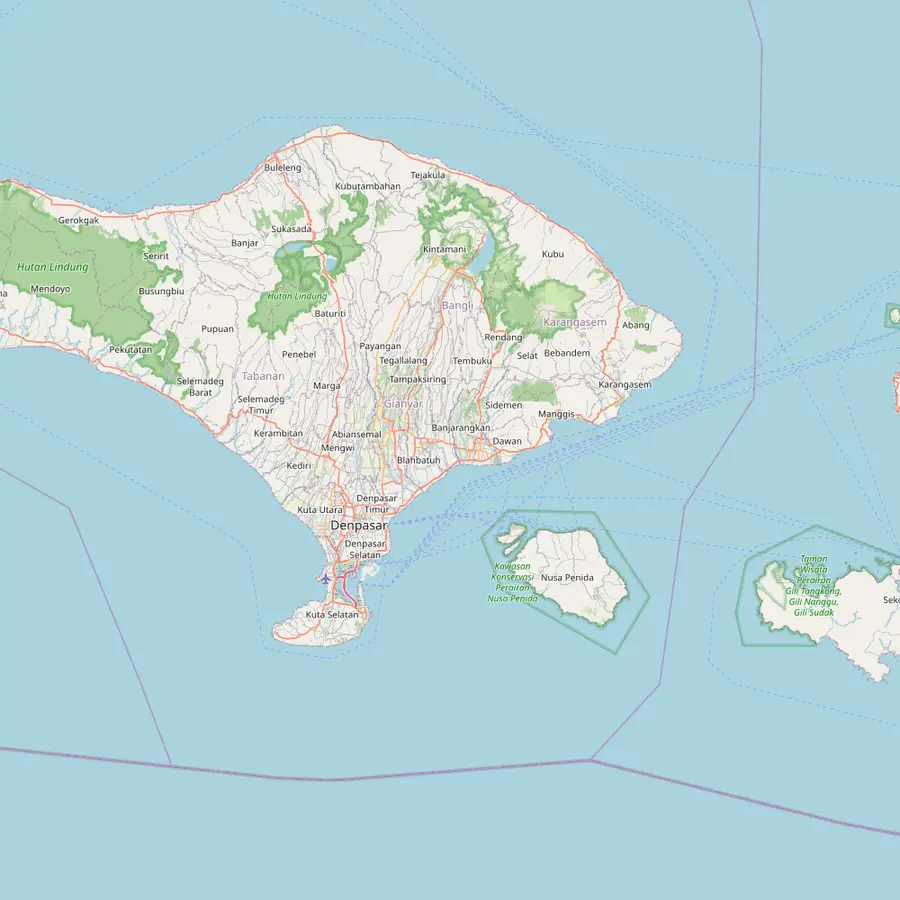 1Lempuyang gate2Tirta Gangga3Besakih4Tirta Empul5Goa Gajah6Ubud Palace7Taman Ayun8Ulun Danu Beratan9Uluwatu10Kuta
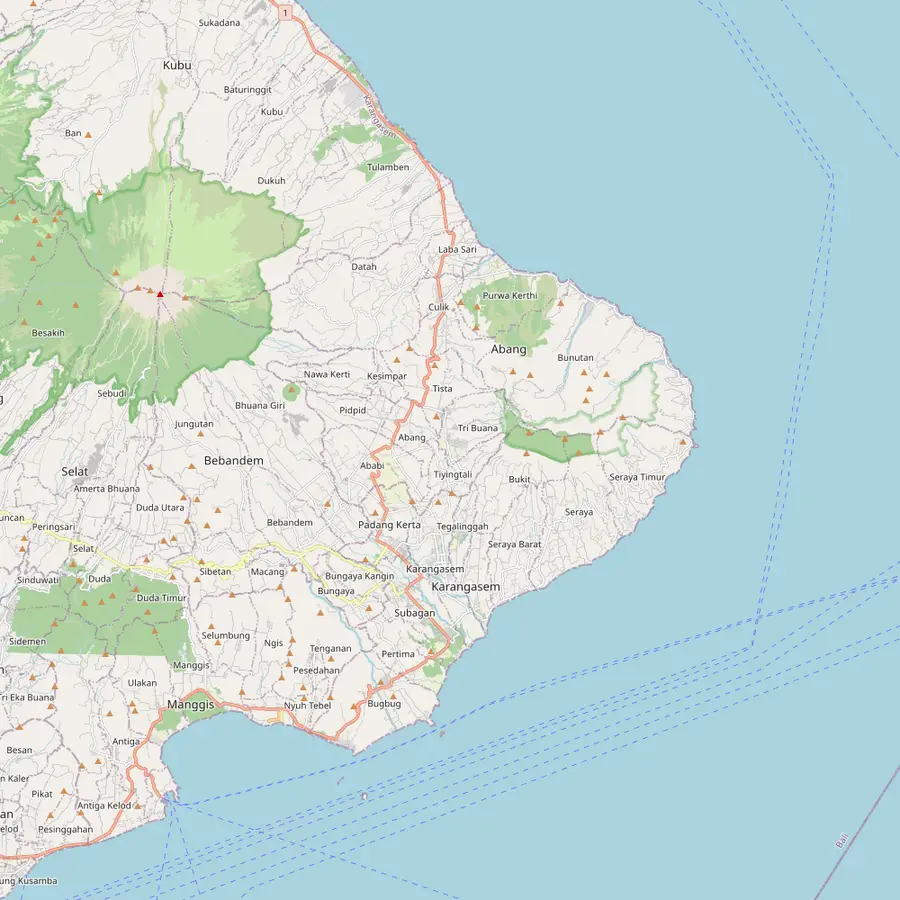 1Lempuyang gate2Tirta Gangga11Lempuyang Luhur
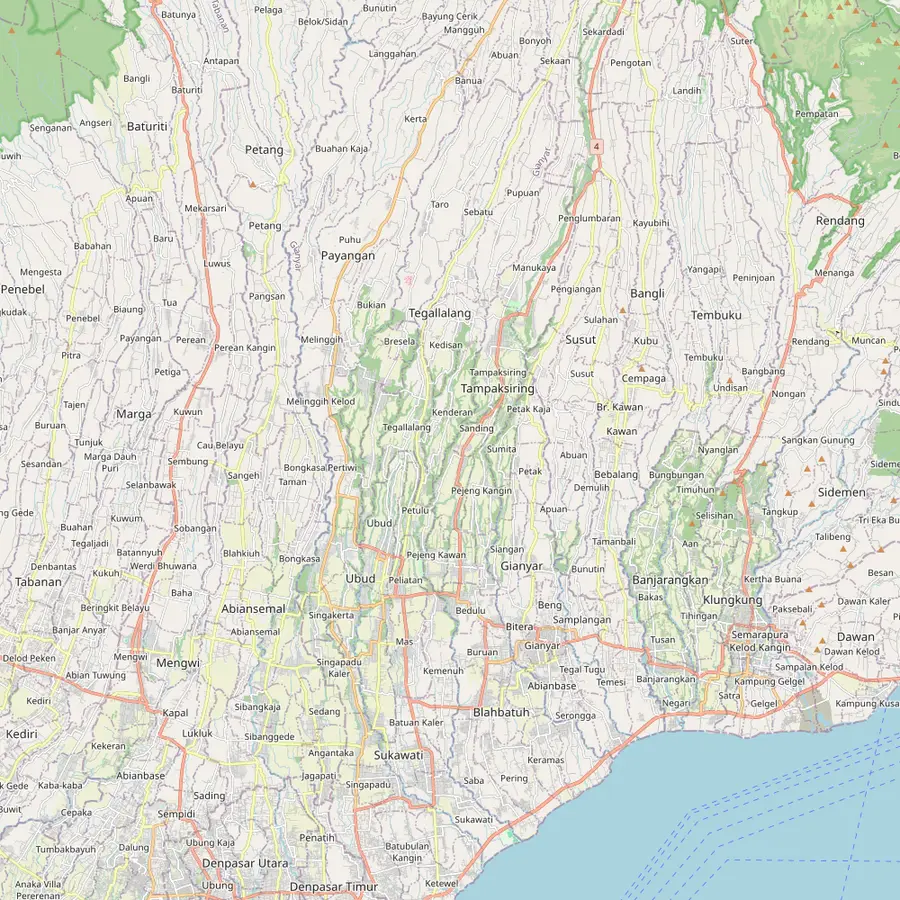 4Tirta Empul5Goa Gajah6Ubud Palace12Gunung Kawi
- 1Lempuyang gate
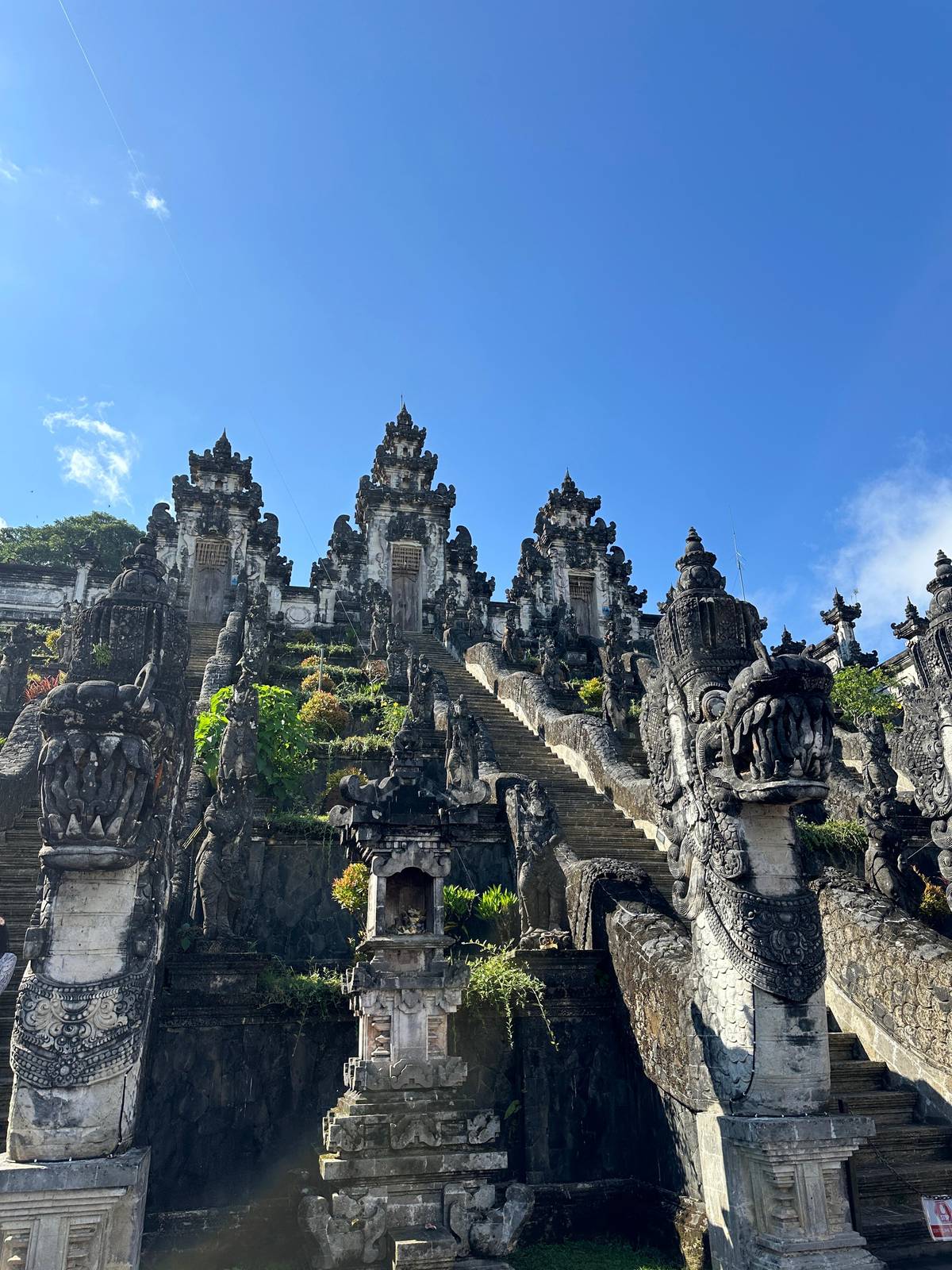
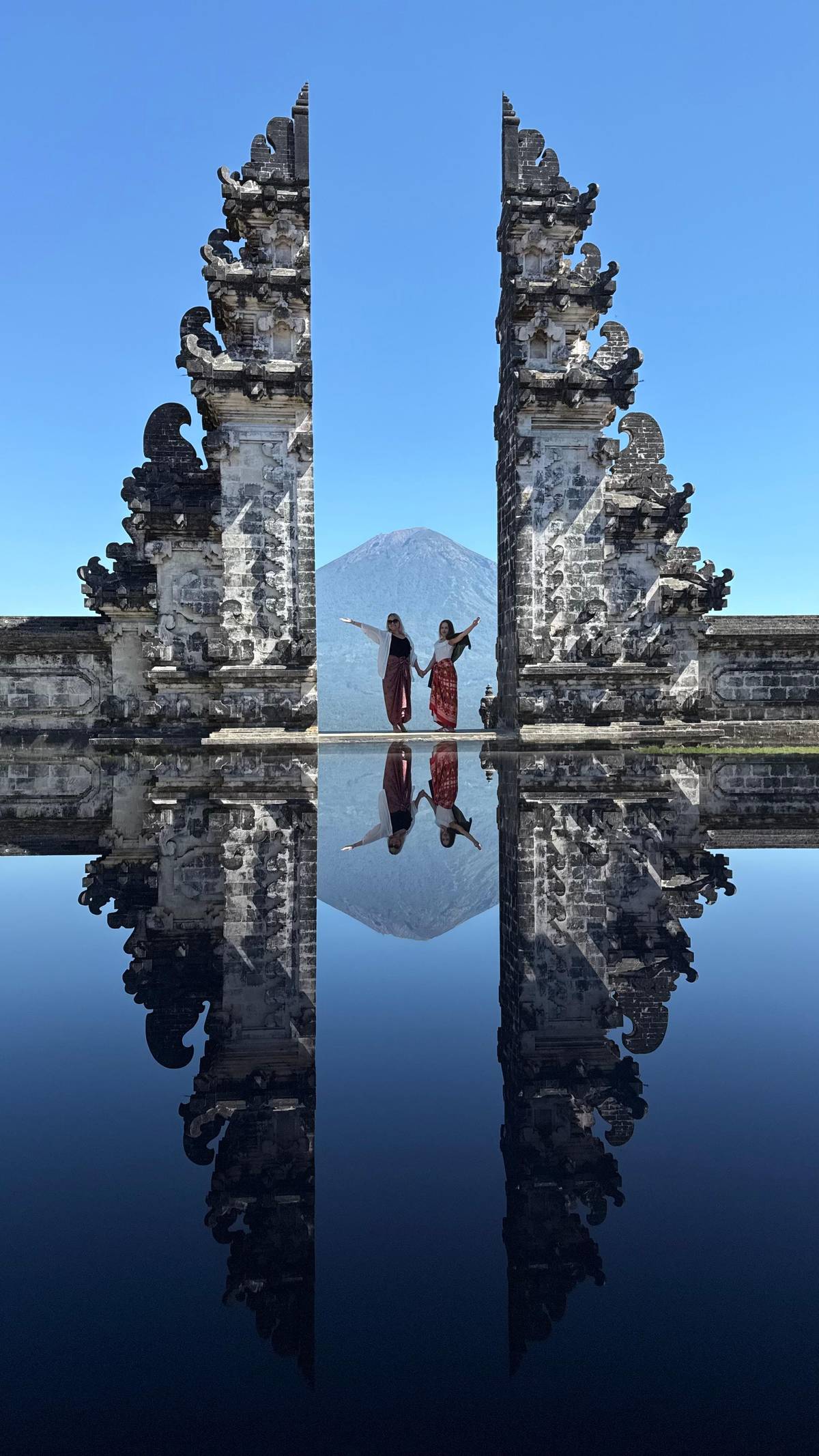
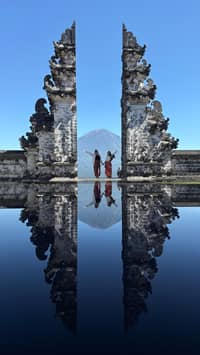
The lowest of seven temples on Mount Lempuyang, where the split gate frames Mount Agung on a clear day.23
In Google Maps ↗ - 2Tirta Gangga
A water palace built in 1948 by the King of Karangasem; a 1-hour stop of the site tour.24
In Google Maps ↗ - 3Besakih
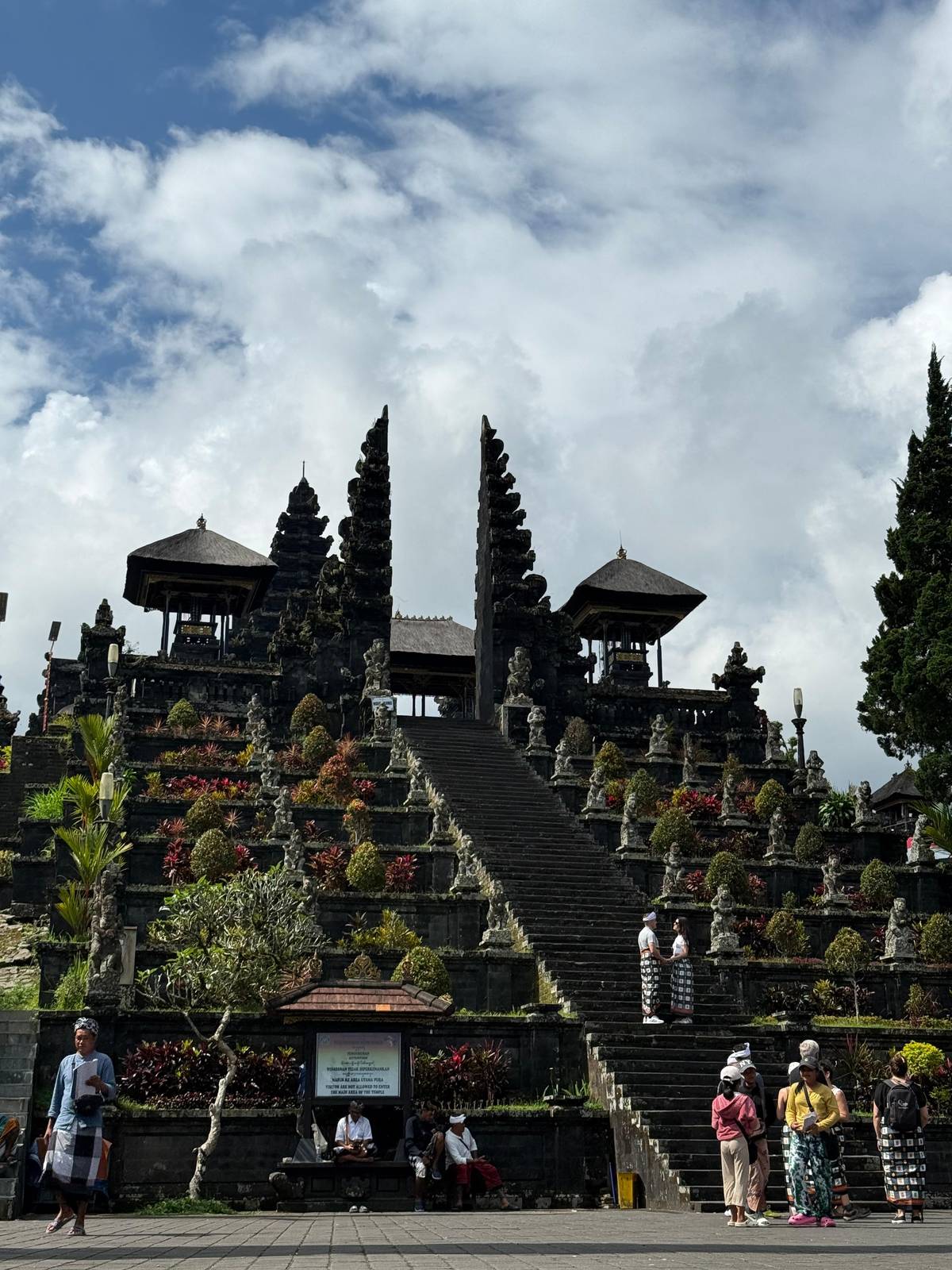
The mother temple, on the slope of Agung at about 1,000 m, a complex of 23 temples.2526
In Google Maps ↗ - 4Tirta Empul
A spring temple founded in 962 AD, with 30 showers fed by the spring.2728
In Google Maps ↗ - 5Goa Gajah
A carved cave about 27 km from Denpasar, named in a text of 1365.13
In Google Maps ↗ - 6Ubud Palace
Meeting point of the site tour's group options in Ubud.
In Google Maps ↗ - 7Taman Ayun
The royal water temple of Mengwi, part of the UNESCO subak landscape inscribed in 2012.2930
In Google Maps ↗ - 8Ulun Danu Beratan
A lake temple in Candikuning, Tabanan, about 1.5 to 2 hours from Denpasar.3132
In Google Maps ↗ - 9Uluwatu
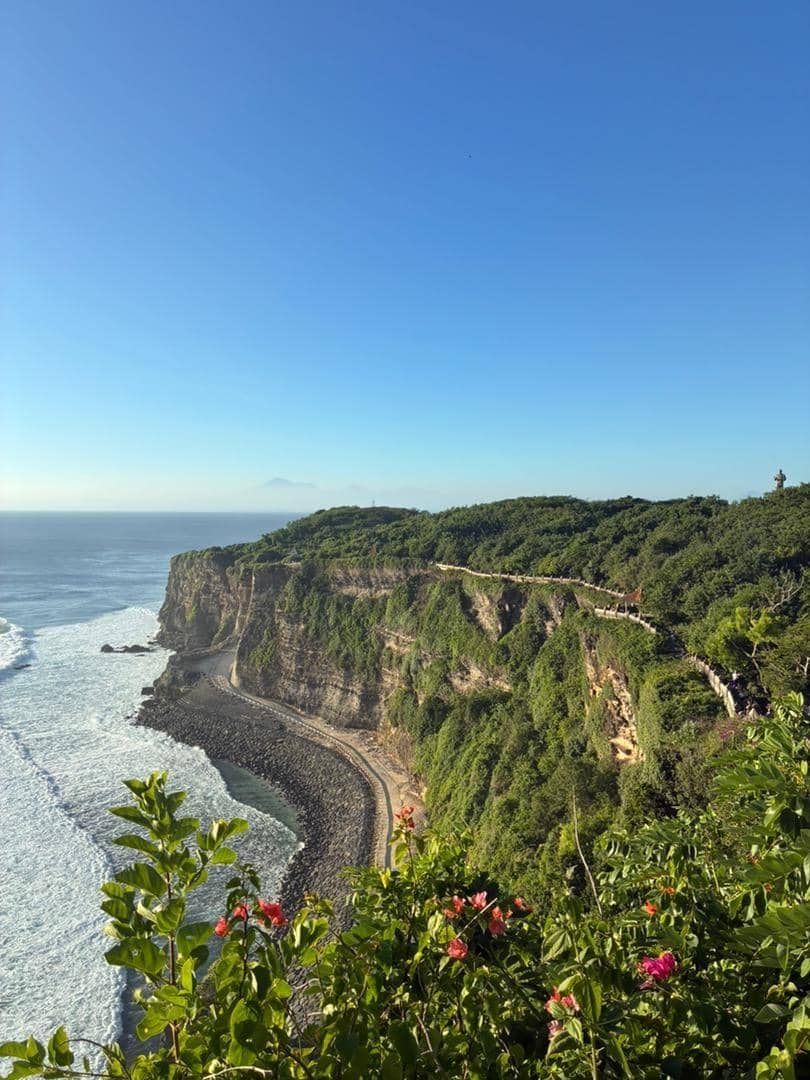
A sea temple on a 70-meter cliff, with the kecak at 6:00 PM.3334
In Google Maps ↗ - 10Kuta
Central Parking Kuta, the other group meeting point of the site tour.
In Google Maps ↗ - 11Lempuyang Luhur
The highest of the seven temples, at about 1,175 m, 2 to 4 hours there and back on foot.3536
In Google Maps ↗ - 12Gunung Kawi
Ancient shrines cut into a rock cliff above the Pakerisan River.19
In Google Maps ↗
Checklist
For the steps and the cave
01
Bring
- Small notes for the ticket and parking
- Shoes with grip for the steps
- Water for the climb back
02
Respect
- A sarong if your knees show
- Quiet voices inside the cave
- Stay out of the bathing pool
Cost calculator
Price a day in the valley
Pick a day out and enter your group size.
People
Total from$31
pp from $16
Check availabilityfree cancellationThe total is each temple day's lowest GetYourGuide price times your party size, shown in your currency at today's ECB rate; the booking page confirms the real amount.
Video
Exploring Goa Gajah, the Elephant Cave in Ubud
The player loads on your tap, not before.
The bathing pool uncovered last
In front of the cave lies a sunken bathing place. Dutch archaeologists rediscovered the cave in 1923, but the fountains and the bathing pool were only uncovered in 1954.10 The pool is lined with statues of women holding water pitchers.
There were seven of these figures, standing for seven holy rivers of India; one was destroyed in an earthquake.17 Many visitors stop here longer than at the cave itself, because the carving is fine and the open pool catches the light.
Do not climb on the edge of the pool or step into the water for a photo. The site is still a temple, and the bathing place is part of it. Stand on the paving above, look for the faces worn smooth by centuries of water, and then follow the path down towards the stream. The walk through the trees is shaded and cool even at midday, and it is where most visitors finally slow down and listen to the water.
Tickets, sarong and opening times
The Ministry of Tourism's temple guide lists the entrance at Rp 50,000 for adult foreign nationals and Rp 25,000 for children, with Rp 30,000 and Rp 15,000 for Indonesians.5 Pay at the counter by the car park, and keep small notes for parking.
Dress covers shoulders and knees, as at every temple, and visitors who arrive in shorts are given a sarong to tie around the waist before entering.637 Under local custom, people who are menstruating may not enter the temple; the tour on this page says so in its notes.
The Ministry gives the opening hours simply as morning to evening and recommends the morning.20 Early visits are cooler on the steps and quieter in the cave, and the light falls better on the carved face before midday. In the rainy season the paths down to the stream can be slippery, so wear shoes with grip.
Goa Gajah with Gunung Kawi and Yeh Pulu
Goa Gajah is short enough to combine with the other sacred sites of the Pakerisan valley. Gunung Kawi, a little to the north, has ancient shrines carved into a rock cliff above the river, reached down a long flight of steps.19 Yeh Pulu, close to Goa Gajah, is another stop on the tour described below.
The tour on this page is a 7-hour private day with an English-speaking guide and pickup included: the archaeology section of the Bali Museum, Gunung Kawi, Yeh Pulu and Goa Gajah. On weekends and public holidays the museum section may be closed, and another cultural site takes its place.
It has 81 reviews averaging 4.95 and starts from $34. The operator warns of extensive walking, stairs and uneven paths, and does not recommend it for travelers with mobility issues. If stairs are hard for you, Goa Gajah alone is the gentlest of the three.
Fitting the cave into a day near Ubud
Because the site is close to Ubud, you can visit it on your own in a morning, or fold it into a longer day. The spring temple of Tirta Empul is a short drive north, about 30 minutes from Ubud, and many travellers see both before lunch.18
Go first thing, before the heat and the groups. Give yourself an hour at Goa Gajah, a little more if you want to walk down to the stream, and keep a sarong in your bag for the next temple. The day works best at a slow pace; the valley is not a place to rush.
For background before you go, it helps to know that the site was on UNESCO's Tentative List from 1995 until it was withdrawn in 2015.11 It has no World Heritage label today, but it remains one of the most rewarding small sites on the island for anyone curious about how Bali's temples began.
Your temple day
Lempuyang, Tirta Gangga and Besakih in one day.
Pick a date and an option, and cancel free up to 24 hours before.


You ask,we answer.
Why is it called the Elephant Cave?
Probably after Ganesha or the river. Inside stands a statue of Ganesha, and the old name Lwa Gajah links it to the Gajah river.215
How much is the entrance fee?
Rp 50,000 for foreign adults. Children pay Rp 25,000; Indonesians pay Rp 30,000 and Rp 15,000.5
How old is Goa Gajah?
At least the 11th century. An inscription in the cave is thought 11th century; the Ministry dates the carvings to the 9th century.49
Do I need a sarong?
If your knees show, yes. Visitors in shorts are given a sarong to tie around the waist before entering.6
How far is it from Denpasar?
About 27 km. It lies in Bedulu village, Blahbatuh district, in the Gianyar regency.1
When were the bathing pools found?
In 1954. The cave was rediscovered in 1923, the fountains and bathing pool only in 1954.10
Is Goa Gajah on the UNESCO list?
No, not today. It was on the Tentative List from 1995 and was withdrawn in 2015.11
Sources
Where the information comes from
- 1Bali Provincial Tourism Office (Dinas Pariwisata Provinsi Bali)Elephant Cave Temple↩
- 2Bali Provincial Tourism Office (Dinas Pariwisata Provinsi Bali)Elephant Cave Temple↩
- 3Bali Provincial Tourism Office (Dinas Pariwisata Provinsi Bali)Elephant Cave Temple↩
- 4Bali Provincial Tourism Office (Dinas Pariwisata Provinsi Bali)Elephant Cave Temple↩
- 5Indonesia Ministry of Tourism (indonesia.travel)11 Must-Visit Temples in Bali and How to Get There↩
- 6WikipediaGoa Gajah↩
- 7WikipediaGoa Gajah↩
- 8Bali Provincial Tourism Office (Dinas Pariwisata Provinsi Bali)Elephant Cave Temple↩
- 9Indonesia Ministry of Tourism (indonesia.travel)11 Must-Visit Temples in Bali and How to Get There↩
- 10WikipediaGoa Gajah↩
- 11WikipediaGoa Gajah↩
- 12Bali Provincial Tourism Office (Dinas Pariwisata Provinsi Bali)Elephant Cave Temple↩
- 13Bali Provincial Tourism Office (Dinas Pariwisata Provinsi Bali)Elephant Cave Temple↩
- 14Bali Provincial Tourism Office (Dinas Pariwisata Provinsi Bali)Elephant Cave Temple↩
- 15Bali Provincial Tourism Office (Dinas Pariwisata Provinsi Bali)Elephant Cave Temple↩
- 16Bali Provincial Tourism Office (Dinas Pariwisata Provinsi Bali)Elephant Cave Temple↩
- 17WikipediaGoa Gajah↩
- 18Indonesia Ministry of Tourism (indonesia.travel)11 Must-Visit Temples in Bali and How to Get There↩
- 19Bali Provincial Tourism Office (Dinas Pariwisata Provinsi Bali)Gunung Kawi Temple↩
- 20Indonesia Ministry of Tourism (indonesia.travel)11 Must-Visit Temples in Bali and How to Get There↩
- 21WikipediaGoa Gajah↩
- 22WikipediaGoa Gajah↩
- 23Bali Provincial Tourism Office (Dinas Pariwisata Provinsi Bali)Lempuyang Temple↩
- 24Bali Provincial Tourism Office (Dinas Pariwisata Provinsi Bali)Tirta Gangga↩
- 25Indonesia Ministry of Tourism (indonesia.travel)Visiting Pura Besakih, the Largest Hindu Temple in Bali↩
- 26Indonesia Ministry of Tourism (indonesia.travel)Visiting Pura Besakih, the Largest Hindu Temple in Bali↩
- 27Indonesia Ministry of Tourism (indonesia.travel)The Beauty of Pura Tirta Empul↩
- 28Indonesia Ministry of Tourism (indonesia.travel)The Beauty of Pura Tirta Empul↩
- 29UNESCO World Heritage CentreCultural Landscape of Bali Province: the Subak System as a Manifestation of the Tri Hita Karana Philosophy (archived copy, 11 October 2026)↩
- 30UNESCO World Heritage CentreCultural Landscape of Bali Province: the Subak System as a Manifestation of the Tri Hita Karana Philosophy (archived copy, 11 October 2026)↩
- 31Bali Provincial Tourism Office (Dinas Pariwisata Provinsi Bali)Beratan Lake Temple↩
- 32Indonesia Ministry of Tourism (indonesia.travel)11 Must-Visit Temples in Bali and How to Get There↩
- 33Uluwatu Temple management (official website)Uluwatu Temple: The Iconic Cliffside Temple of Bali↩
- 34Uluwatu Temple management (official website)Uluwatu Temple: The Iconic Cliffside Temple of Bali↩
- 35Indonesia Ministry of Tourism (indonesia.travel)Pura Lempuyang, the Iconic East Bali Gate of Heaven↩
- 36Indonesia Ministry of Tourism (indonesia.travel)Pura Lempuyang, the Iconic East Bali Gate of Heaven↩
- 37Indonesia Ministry of Tourism (indonesia.travel)11 Must-Visit Temples in Bali and How to Get There↩