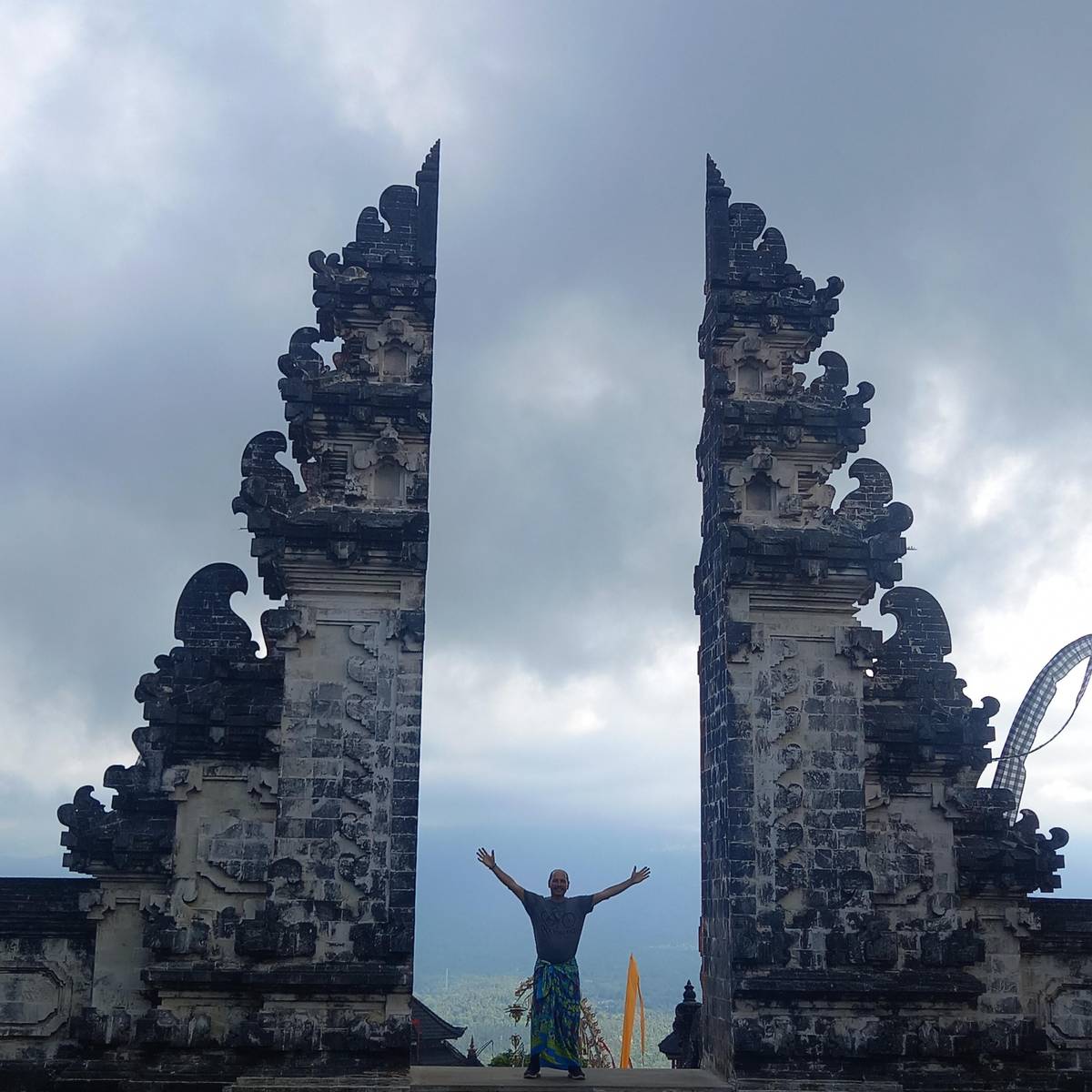
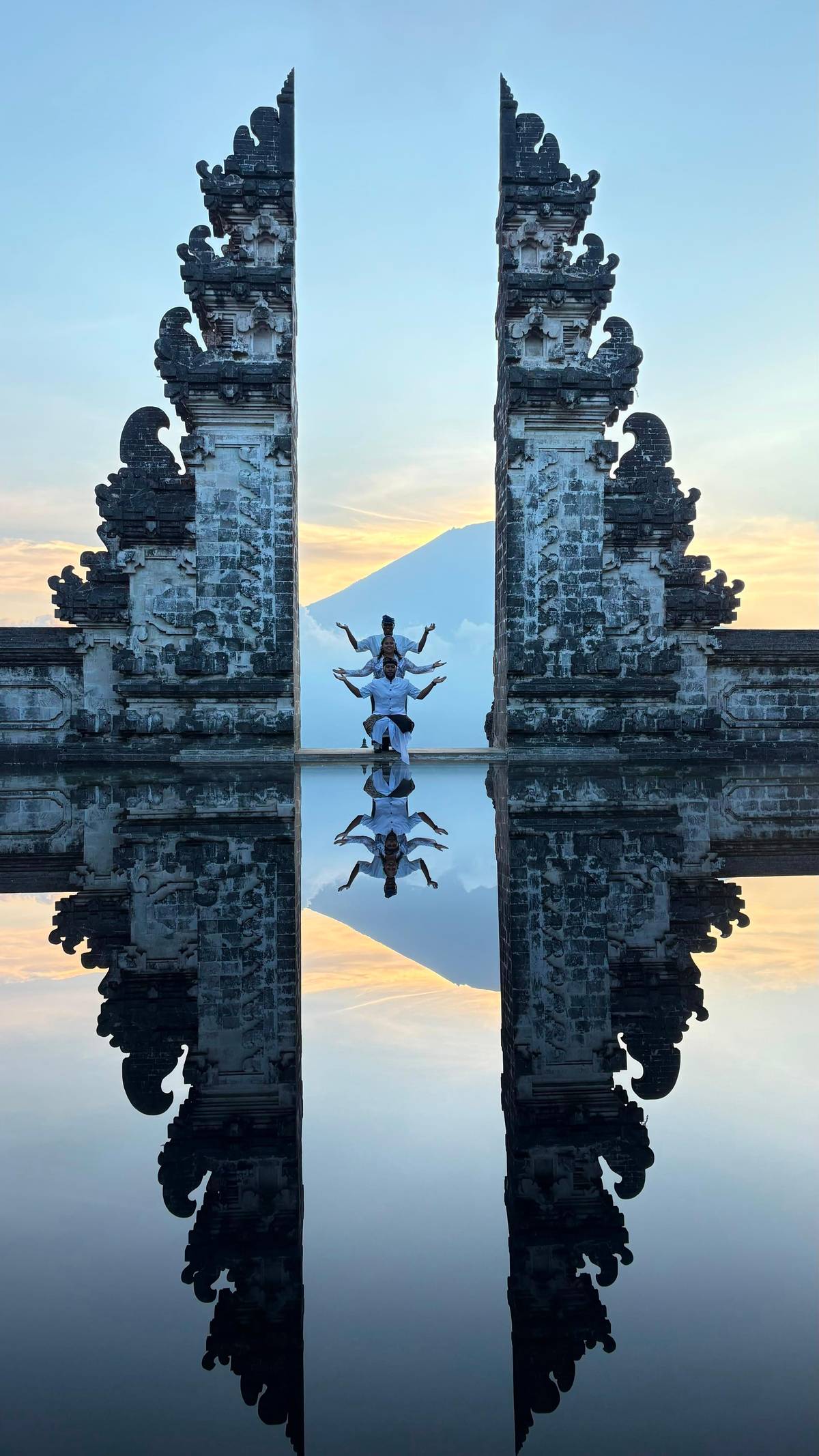
 This site's tour
East Bali day
Lempuyang, Tirta Gangga, Besakih
- Hours
- 9 to 10
- Best in
- Dry-season mornings
- Price
- from $28
Guides
Language
EnglishCurrency
US dollar · $GetYourGuide uses the currency you choose.
Guide · When to go
Rain, festivals and crowds decide the best time to visit Bali temples more than heat does: the drier months, the ceremony dates that close gates, and the hour that suits each temple.
Editorial team, balitempletour.comUpdated October 24, 2026Reading time 6 min17 sources
The timing in brief
Bali's year divides into a drier half and a wetter half, and that matters more for temple visits than the heat, which hardly changes. The Ministry of Tourism recommends the dry season, April to October, for the best views of the island, a tip it gives for Lempuyang, where the view of Mount Agung is the whole point.1
The figures from Indonesia's meteorological agency for Denpasar show the pattern clearly. January is the wettest month, with 345 mm of rain on average, and August the driest, with 25 mm.2 April, at 88 mm, already brings far less rain than March at 234 mm.2
The heat, by contrast, stays steady. Midday in Denpasar is warm all year: August averages a high of 29.6 °C, April a high of 34.4 °C.2 Whatever month you choose, you will want a hat, water and clothes that cover your shoulders without making you too warm. Light linen or cotton works better than synthetic fabrics on the long temple stairways, and a sarong of your own doubles as shade for your neck when you are waiting in a queue.
The temple year
January
345 mm of rain on average in Denpasar.2
March to April
Ida Bhatara Turun Kabeh in the month of Kedasa.3
April to October
The Ministry's season for the best views.1
17 to 21 June
A ceremony closure named on the site tour's listing; another temple is swapped in.
August
25 mm of rain on average in Denpasar.2
11 August 2027
Kuningan follows on 21 August 2027.4
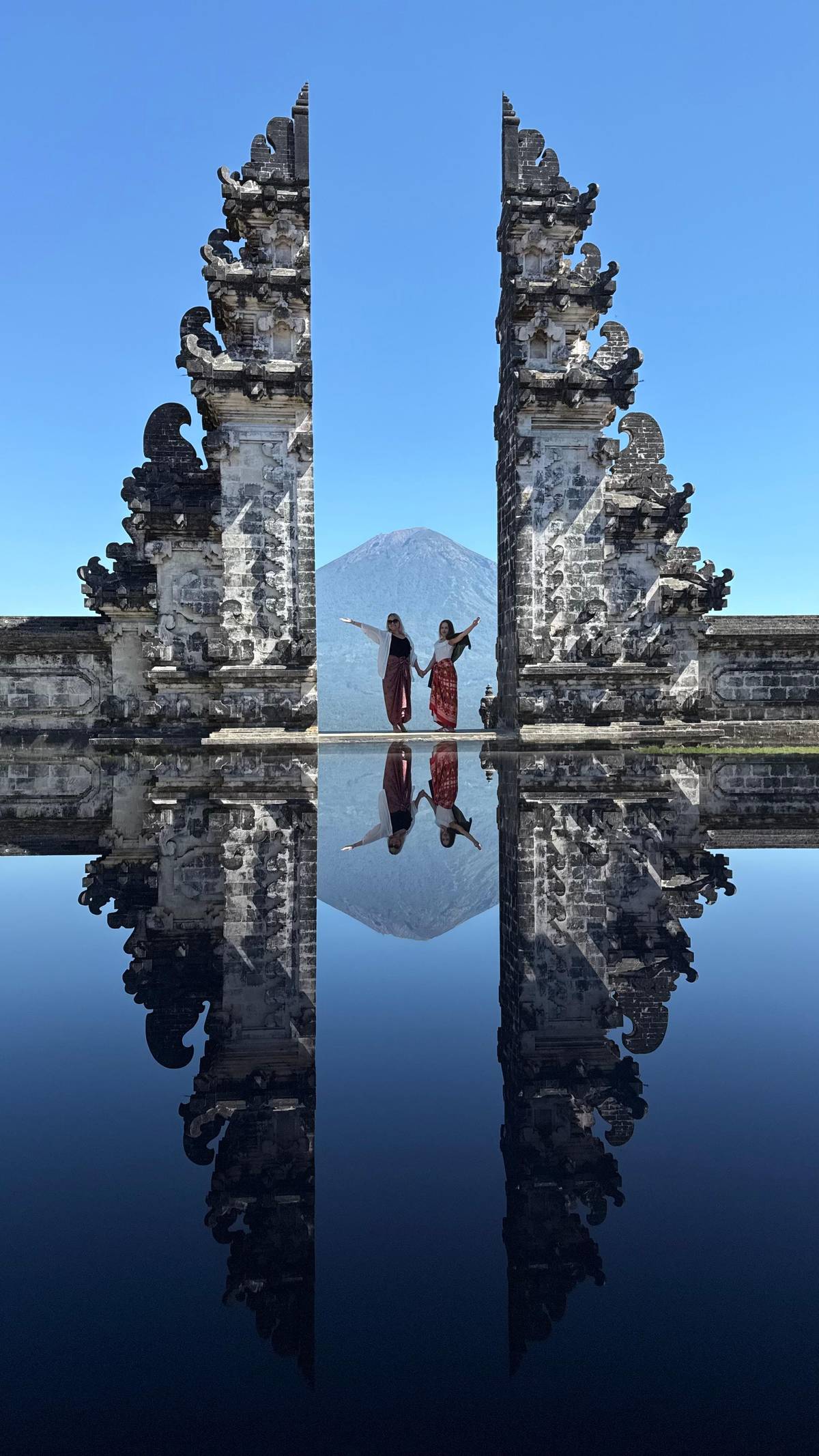
Rain rarely closes a temple; what it changes is the view and the state of the paths. At Lempuyang, the view of Agung through the gate depends on the weather and is never guaranteed, and the tour on this site warns of that whatever the month.
In the highlands at Ulun Danu Beratan, one tour operator warns of mist or rain at any time of year, and visibility over the lake can change quickly. At Uluwatu, rain moves the kecak to a smaller stage, and some ticket sellers hand out raincoats.
December, with 276 mm, and February, with 274 mm, are nearly as wet as January.2 If you travel then, keep your plans flexible, start early, and save the cave of Goa Gajah or the covered pavilions of Tirta Empul for a grey afternoon.
Rainfall
Month by month
| Months | Rain | Highs | For the temples |
|---|---|---|---|
| Jan, Feb | 345, 274 mm | 33, 33.4 °C | Wettest; stay flexible |
| Mar, Apr | 234, 88 mm | 33.6, 34.4 °C | Besakih festival |
| May, Jun | 93, 53 mm | 33.1, 31.4 °C | Dry season |
| Jul, Aug | 55, 25 mm | 30.4, 29.6 °C | Driest, busiest |
| Sep, Oct | 47, 63 mm | 31.4, 33.6 °C | Dry, clear mornings |
| Nov, Dec | 179, 276 mm | 32.7, 33 °C | Rain returns |
BMKG normals for Denpasar, 1961 to 1990, as the WMO weather service publishes them; average monthly rainfall and average daily highs.2
Tours that run all year
This site's tourLempuyang, Tirta Gangga, Besakih
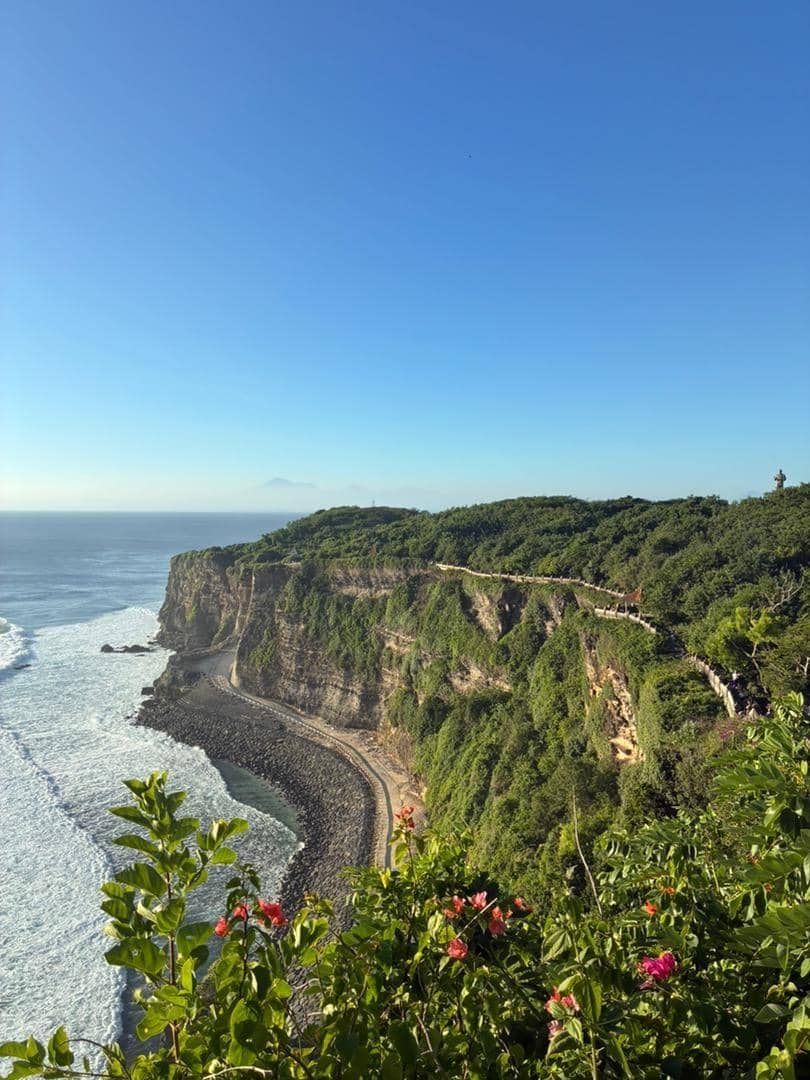 For any evening
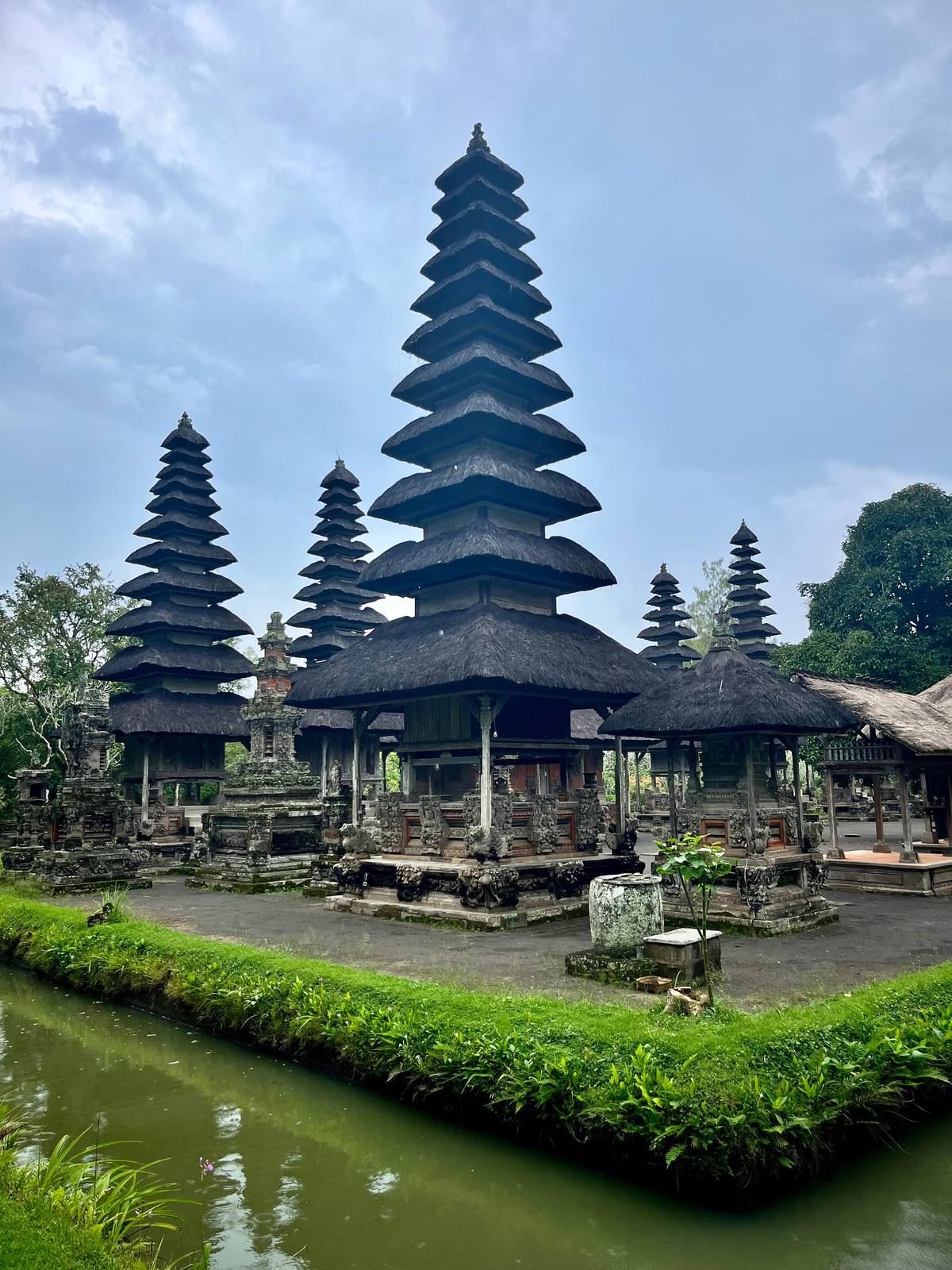 Cooler highlands
coming during the dry season (April to October) will provide the best views of the island
Balinese temple life follows the 210-day Pawukon calendar, so festivals do not fall on the same date every year.10 Galungan falls on 13 January and 11 August 2027, and Kuningan, its closing day, on 23 January and 21 August 2027.4 The roads are lined with penjor, tall bamboo poles hung with offerings.11
At Besakih, Ida Bhatara Turun Kabeh is held every year in the Balinese month of Kedasa, around March to April.3 Each temple also has its own anniversary every 210 days; at Uluwatu it is called the Piodalan.12 On such days the courts are full of worshippers and some areas close to visitors.
The tour on this site names a ceremony closure of Lempuyang from 17 to 21 June, when another temple replaces it; like the festivals, such closures move with the Balinese calendar. The Ministry advises avoiding major ceremonies in general, because temples may be temporarily closed.13 If you do find one, stay at the edges and enjoy it; few travellers are so lucky. Processions with gamelan music, women carrying offerings on their heads and priests in white make these days the most memorable a visitor can have, provided you keep out of the way and let the ritual come first.
Checklist
Cost calculator
Set your travel group and see each season's total.
Total from$55
pp from $28
Check availabilityfree cancellationThe total is each temple day's lowest GetYourGuide price times your party size, shown in your currency at today's ECB rate; the booking page confirms the real amount.
Video
The player loads on your tap, not before.
Mornings win almost everywhere. At Lempuyang the Ministry advises arriving before 07:00 to avoid the queue for the gate, and mornings give the clearest view of Agung.147 At Besakih it recommends the cooler, calmer early hours.5 At Tirta Empul, around 8 to 10 a.m. is the quiet window, before the buses.8
The highland and water temples follow the same rule. At Ulun Danu Beratan, early morning brings mist on the lake, and Goa Gajah is at its best in the morning, the Ministry says.1516 Taman Ayun is the exception that proves it: the Ministry suggests mid-morning, for soft light on the tiered roofs.17
The best time to visit Uluwatu Temple is the other way round. The kecak starts at 6:00 PM and its gates open at 4:00 PM, and one operator warns of crowds from around 5 PM, when the sun is going down.6 If you want the cliff paths to yourself, the temple opens at 7:00 AM; for the dance, come late.6
Holy days bring more worshippers. At Tirta Empul, the Ministry notes that Purnama, the full moon, and Kuningan are more solemn but much busier, and one purification tour warns of longer waits on full moon and new moon days.9
At Lempuyang, the wait for the gate photo can be long, above all in peak season, and one tour warns it can exceed one hour. The only reliable way around it is the early start, whatever the month. A guide who knows the site will often suggest taking the photo first and visiting the courts afterwards, or the reverse if the clouds are still sitting on the mountain.
Weekdays outside holidays are calmer at every temple, and the drier months bring more visitors as well as better views. That makes the shoulder months, April and October, a good compromise: rainfall in Denpasar averages 88 mm and 63 mm, and the dry-season views are already there.21
If you can choose your dates, aim for April to October and avoid the major ceremony days unless you want to see them. Check the Galungan dates before you book, because the island is beautiful then but some temples are busy with worship from morning to night.4
If you are already on Bali in the wet months, simply shift the schedule: early starts for the open-air temples, flexible days for Lempuyang so you can go when the sky is clear, and Uluwatu for the evening, since the kecak runs every day.6 A guided day lets the driver read the weather for you, and local drivers are usually quick to change the order of the stops when clouds build over the mountains in the east.
The tour on this site takes 9 to 10 hours, with Lempuyang, Tirta Gangga and Besakih. It has 3,587 reviews averaging 4.79 and starts from $28, with free cancellation up to 24 hours before, which makes it easy to move the day if the forecast turns.
In the dry months, sun is the main concern. Even in August, the coolest month, Denpasar averages highs of 29.6 °C and lows of 22.5 °C, so pack light, covering clothes, a hat and sunscreen.2 The site tour's own list adds sunglasses, comfortable shoes, long trousers and cash.
In the wet months, add a light rain jacket and shoes with grip. Temple steps and the pools of Tirta Empul are slippery when wet, and the highlands around Ulun Danu Beratan are cooler than the coast in any season. A plastic bag for your sarong keeps it dry between temples, and a spare shirt in the car is welcome after a humid climb or a downpour on the way back to the vehicle.
Whatever the month, carry small notes for entrance fees and sarong rentals, water for the long stairways, and a little patience for the queue. The temples have weathered every season for centuries; a shower or a crowd rarely spoils a visit for long.
Your temple day
Pick a date and an option, and cancel free up to 24 hours before.
April to October. The Ministry calls it the dry season; August is the driest month in Denpasar, with 25 mm.12
January. Denpasar averages 345 mm of rain in January, BMKG's figures show.2
13 January and 11 August. Kuningan follows on 23 January and 21 August 2027, closing each festival period.410
For its ceremonies. The tour listing names 17 to 21 June; dates move with the Balinese calendar, and the tour visits another temple instead.
Usually the morning. Lempuyang before 07:00, Tirta Empul around 8 to 10 a.m., Uluwatu in the evening.1486
Around March to April. Ida Bhatara Turun Kabeh falls every year in the Balinese month of Kedasa.3
It is the warmest month. Average highs in Denpasar reach 34.4 °C in April, with 88 mm of rain.2
Sources