 This page's pick
Guides
Language
EnglishCurrency
US dollar · $GetYourGuide uses the currency you choose.
Guide · The sea temple
Uluwatu Temple, the sea temple on the cliff
Uluwatu Temple stands high above the Indian Ocean: when to arrive for the kecak, what the gate charges, how to handle the monkeys and where to stand as the sun goes down.
Check availabilityfrom $23 · free cancellation
Editorial team, balitempletour.comUpdated October 24, 2026Reading time 6 min43 sources
In brief
- 01Opening hours
- Daily from 7:00 AM to 7:00 PM, the temple management says.1
A guardian temple at the southwest tip
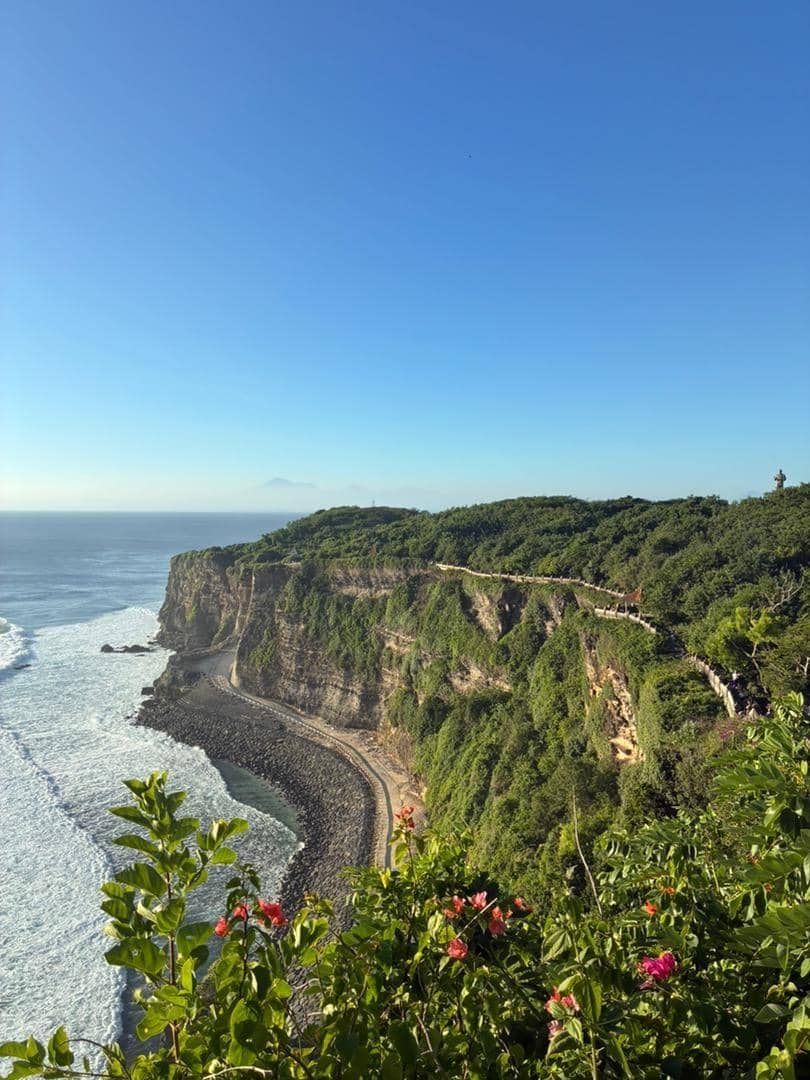
Uluwatu Temple, Pura Luhur Uluwatu in Balinese, sits at the very tip of the Bukit peninsula, where the island ends in a wall of rock above the surf. Its management calls it a sea temple, established to protect Bali from negative spiritual forces coming from the ocean.5 The Ministry of Tourism counts it among the Sad Kahyangan, the main temples believed to keep the island's spiritual balance.4
It is old. An ancient split gateway on the site carries a chronogram for the year 808 in the Balinese Saka calendar, 886 AD, so the temple dates back at least to the 9th century.8 Its management also connects it with the priest Danghyang Nirartha and explains the name: ulu means head and watu means stone.9 The temple is dedicated to Shiva Rudra.10
Look closely at the walls. The Ministry describes the buildings as made almost entirely of white and grey blocks of petrified coral, which is why they look so pale against the green of the forest.11 The shrines are small and plain compared with the stone carving of the gates, and that restraint is part of the point: the cliff and the sea are the real architecture here.
An evening at the cliff
From the open gate to the last chant
-
7:00 AM
The temple opens
The gates open for the day; mornings are the quiet time.1
-
4:00 PM
Kecak gates open
Seats in the amphitheatre fill from here.1
-
Around 5 PM
The crowd peaks
One operator warns of crowds and few free photo spots.
-
6:00 PM
The kecak begins
The chorus starts as the sun drops into the sea.1
-
7:00 PM
Show ends, temple closes
The Ministry gives the show as 18:00 to 19:00; the temple closes at 7:00 PM.121
Opening hours, tickets and the sarong at the gate
The temple management gives opening hours of 7:00 AM to 7:00 PM every day.1 The Uluwatu Temple entrance fee it lists is IDR 50,000 for international adults and IDR 30,000 for international children, with IDR 30,000 and IDR 20,000 for domestic visitors.2 The kecak is a separate ticket, bought on top of the temple entry.2
Not every official page gives the same figure. A Ministry of Tourism page lists Rp60,000 for foreign adults and Rp40,000 for children, and one kecak ticket seller tells buyers to bring 60,000 rupiah in cash for the temple counter.13 Fees change, so treat the lower figure as the official minimum and carry a little more in small notes.
You do not need to bring your own temple dress. Visitors must wear a sarong and sash, which are provided at the entrance, and the management asks everyone to cover shoulders and knees.3 Drones may only be flown with permission, a rule worth knowing before you unpack one on the cliff path.14
What guests say
Ratings of the Uluwatu listings
of 5
Three ways to go
Full day, sunset trip or temple only
This page's pick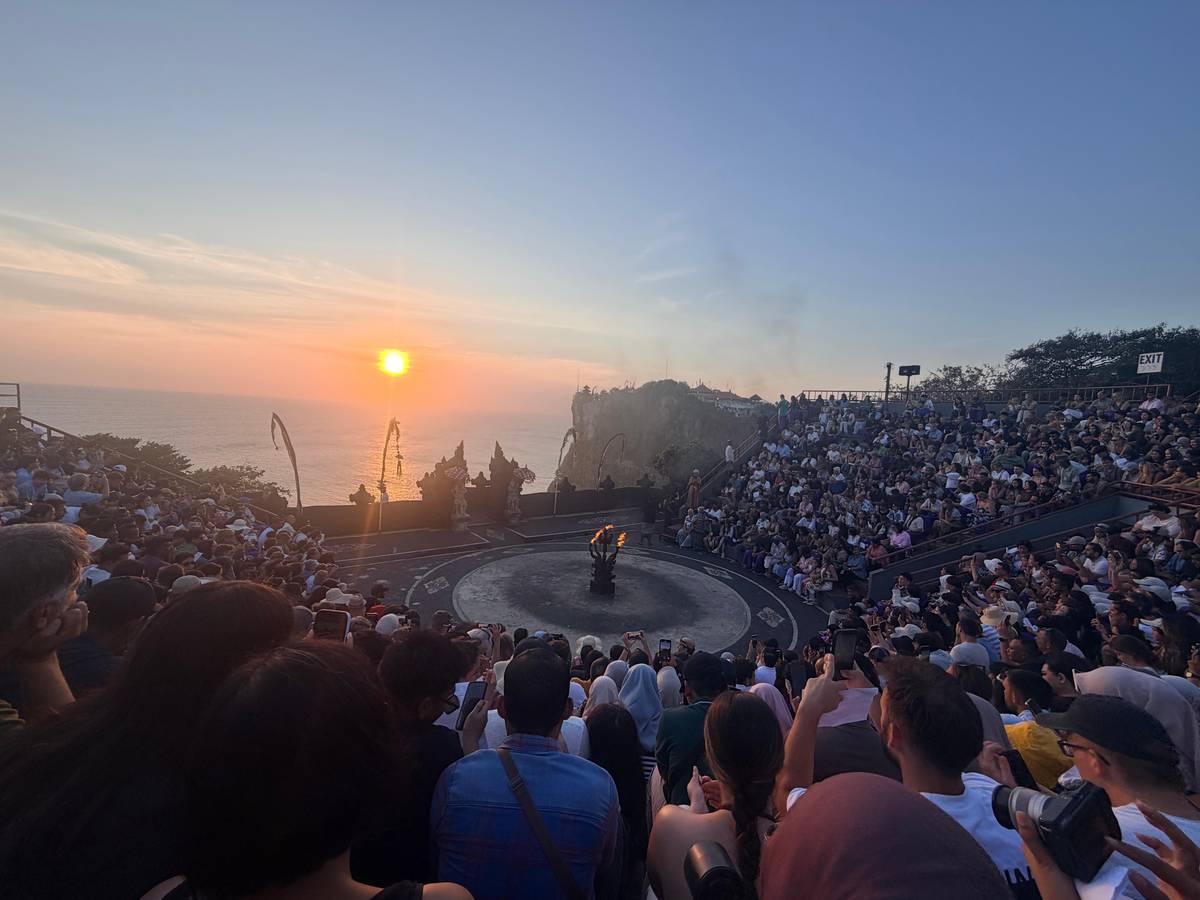 Most reviewed tour
 Shortest
Decision helper
Which kind of Uluwatu visit suits you?
Match the visit to how you want to spend the evening
Arrive by 5 PM
Gates open at 4:00 PM, the show starts at 6:00 PM, and crowds build from around 5 PM.1
Come in the morning
The temple opens at 7:00 AM, hours before the crowds.1
The highlights day
Beaches and a cultural park first, then the temple and the kecak.
Kecak ticket only
From $9; the temple fee is paid separately.
The Jimbaran trip
A 6-hour sunset trip that ends at Jimbaran Bay.
The performance climaxes with Hanoman's fire dance, where he burns down Rahwana's palace
How the kecak works on the clifftop stage
The kecak dance at Uluwatu Temple is held every evening in an open amphitheatre near the entrance. The Ministry of Tourism lists the gates opening at 16:00 local time and the performance running from 18:00 to 19:00.12 It recommends arriving about an hour early for a seat, and warns that tickets can sell out faster in busy season.16
The kecak is young by Balinese standards. Its management credits Wayan Limbak, a Balinese artist, and Walter Spies, a German painter and musician, with shaping it in the 1930s.17 It grew out of sanghyang, a trance dance meant to ward off harm.18 There are no instruments at all: a large male chorus keeps the rhythm with its voices, and a circle can hold as many as 150 performers.1920
The story is from the Ramayana, and the climax is Hanoman's fire dance, when the white monkey warrior burns the palace of Rahwana.15 On the temple's own price list the dance is IDR 150,000 for an adult and IDR 75,000 for a child.2 If it rains, the show moves to a smaller stage, and some ticket sellers hand out raincoats.
Map
Where the temples stand on Bali
First the whole island with the temples on this site, then the slopes of East Bali around Lempuyang, then the river valley north of Ubud.
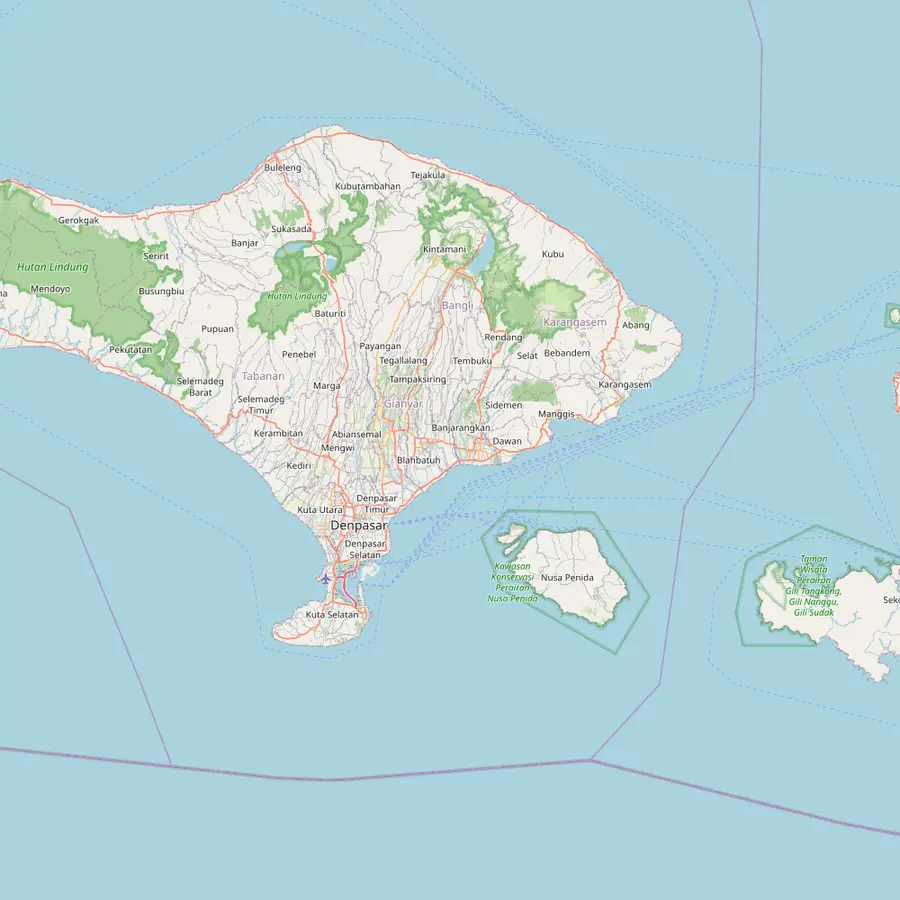 1Lempuyang gate2Tirta Gangga3Besakih4Tirta Empul5Goa Gajah6Ubud Palace7Taman Ayun8Ulun Danu Beratan9Uluwatu10Kuta
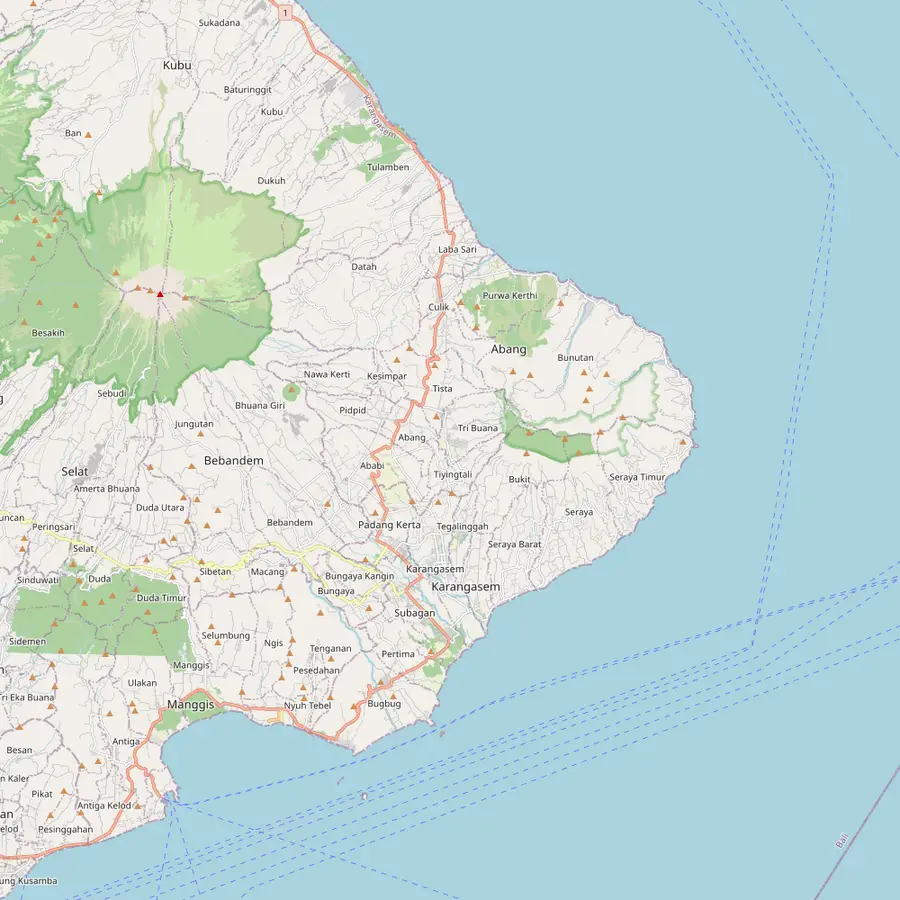 1Lempuyang gate2Tirta Gangga11Lempuyang Luhur
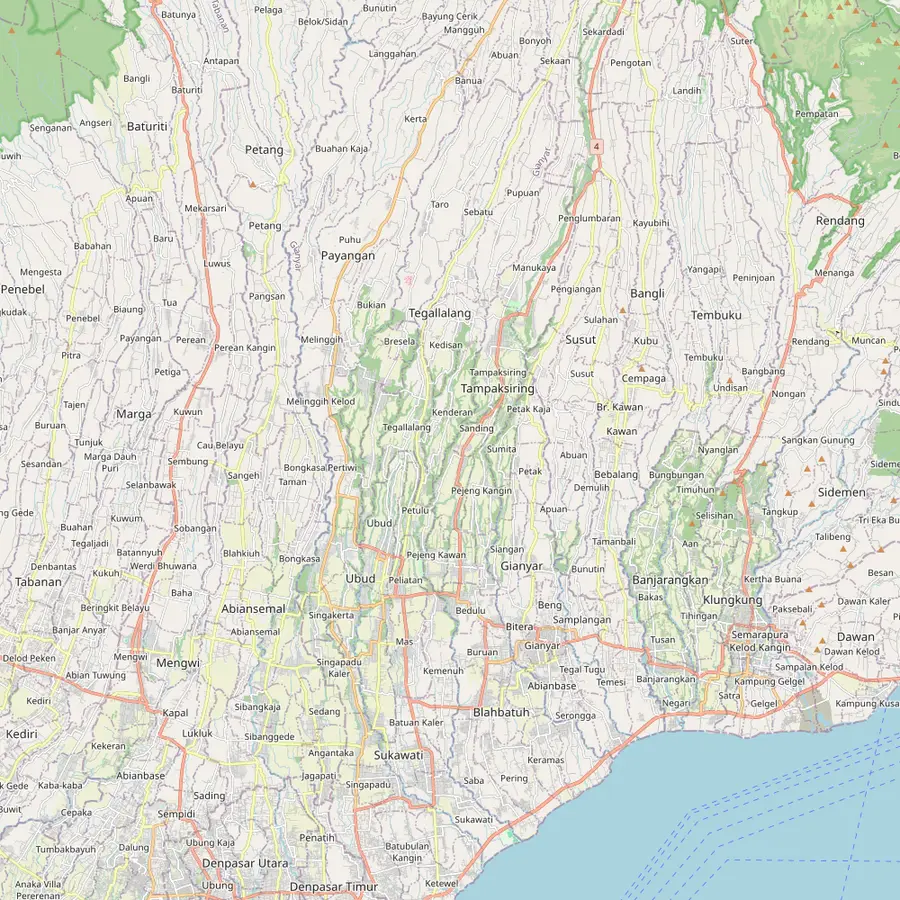 4Tirta Empul5Goa Gajah6Ubud Palace12Gunung Kawi
- 1Lempuyang gate
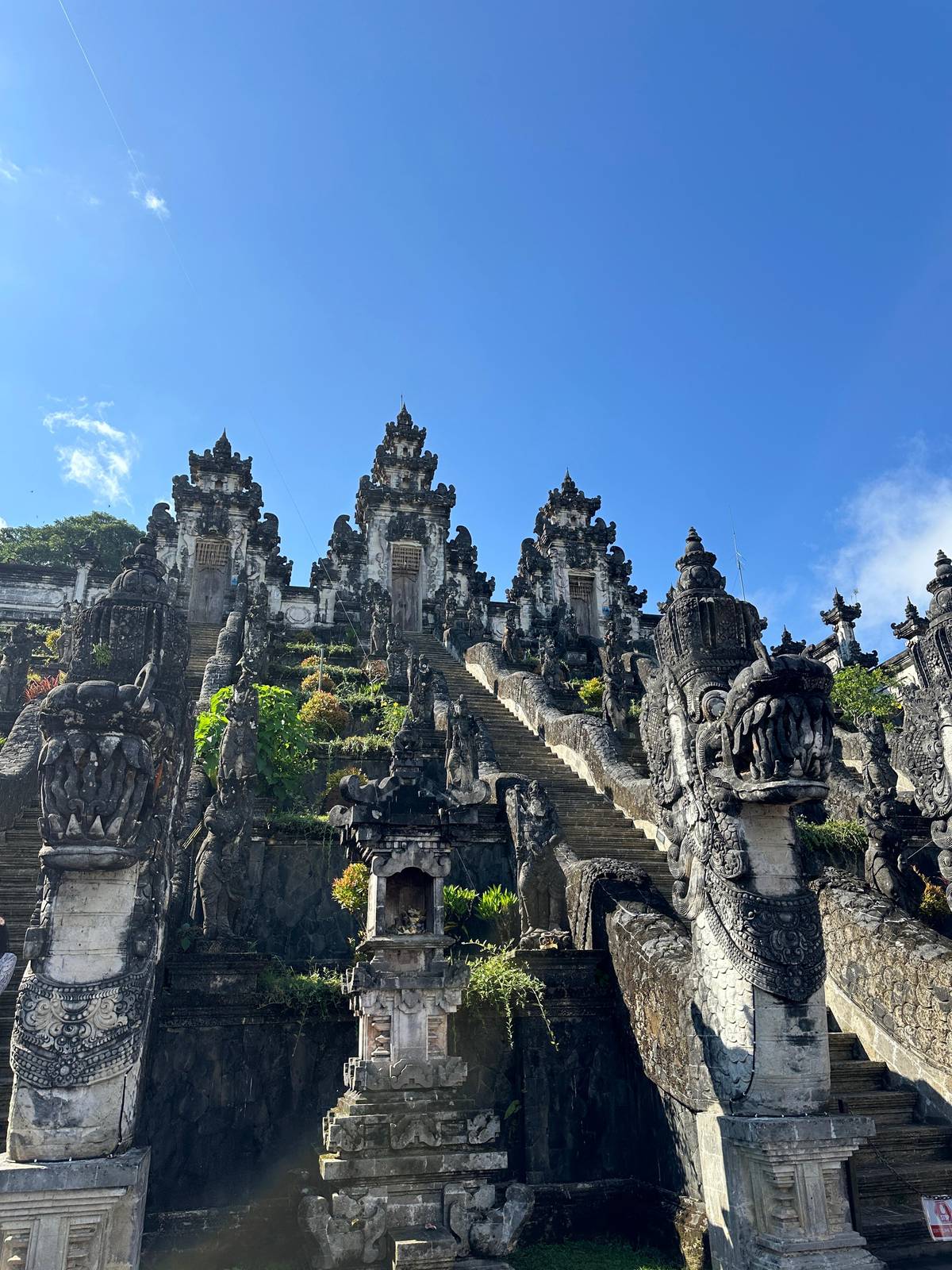
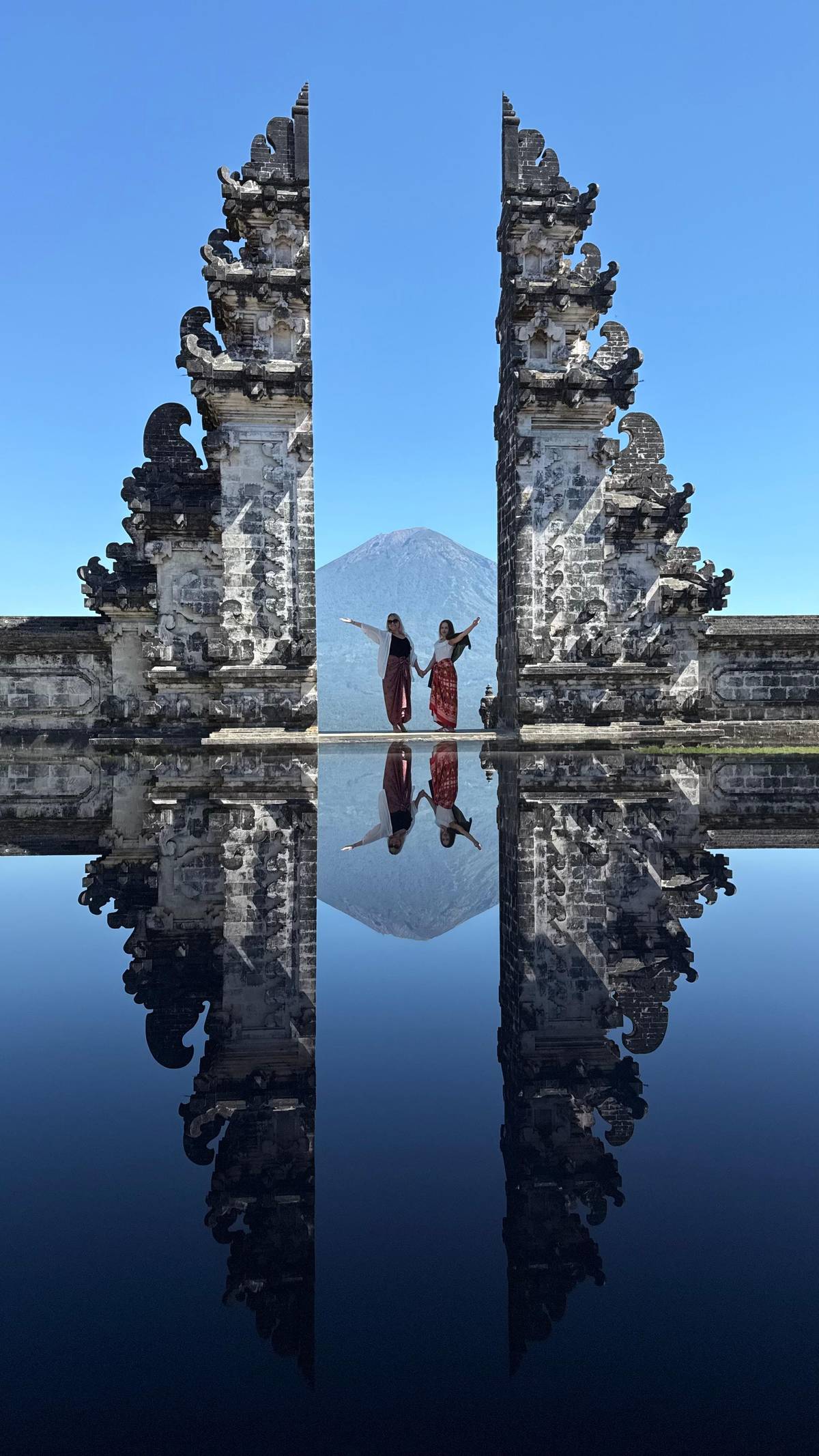
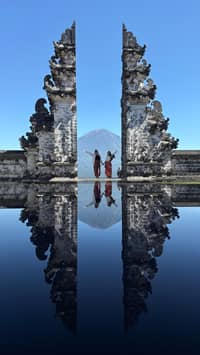
The lowest of seven temples on Mount Lempuyang, where the split gate frames Mount Agung on a clear day.21
In Google Maps ↗ - 2Tirta Gangga
A water palace built in 1948 by the King of Karangasem; a 1-hour stop of the site tour.22
In Google Maps ↗ - 3Besakih
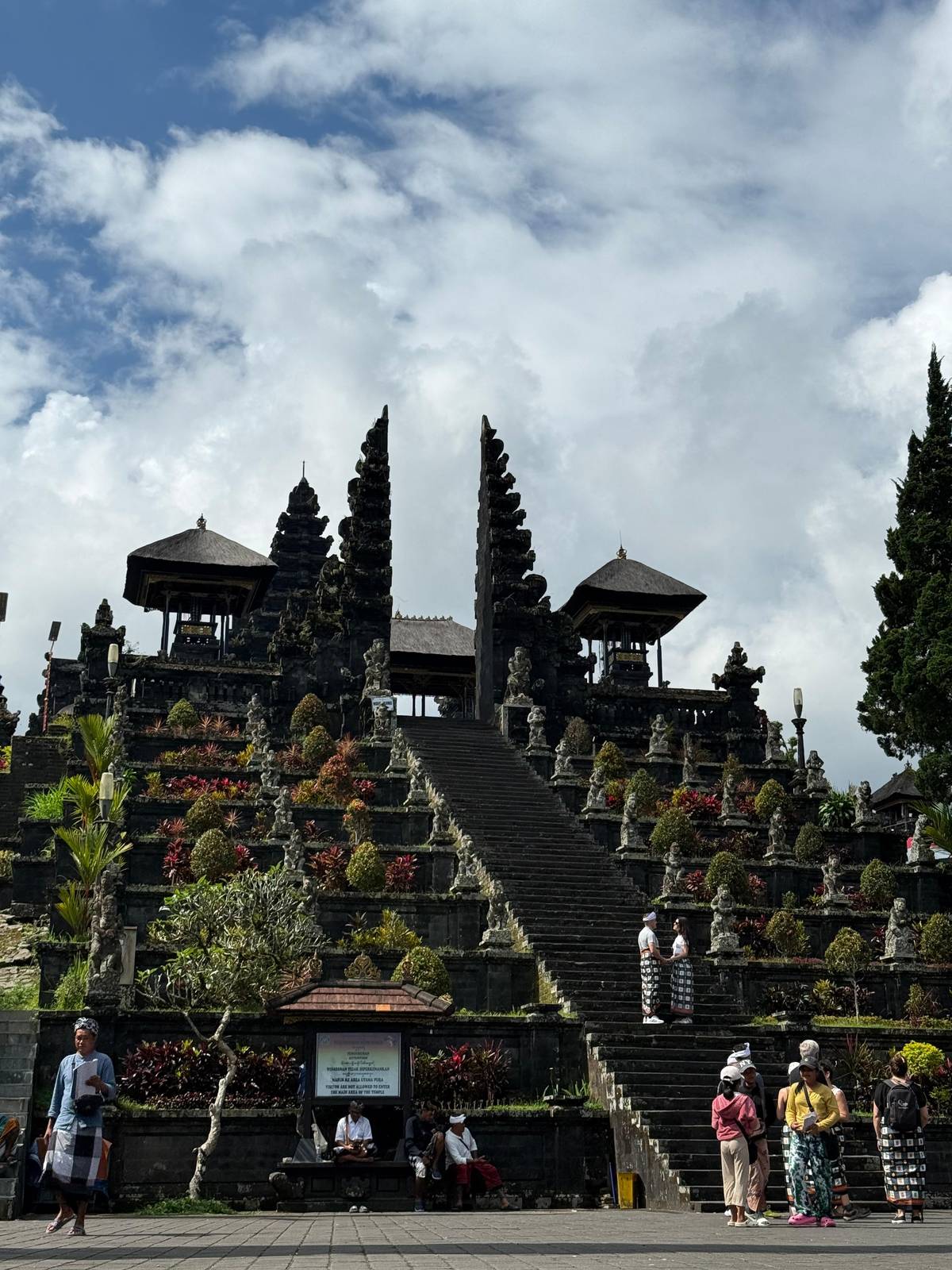
The mother temple, on the slope of Agung at about 1,000 m, a complex of 23 temples.2324
In Google Maps ↗ - 4Tirta Empul
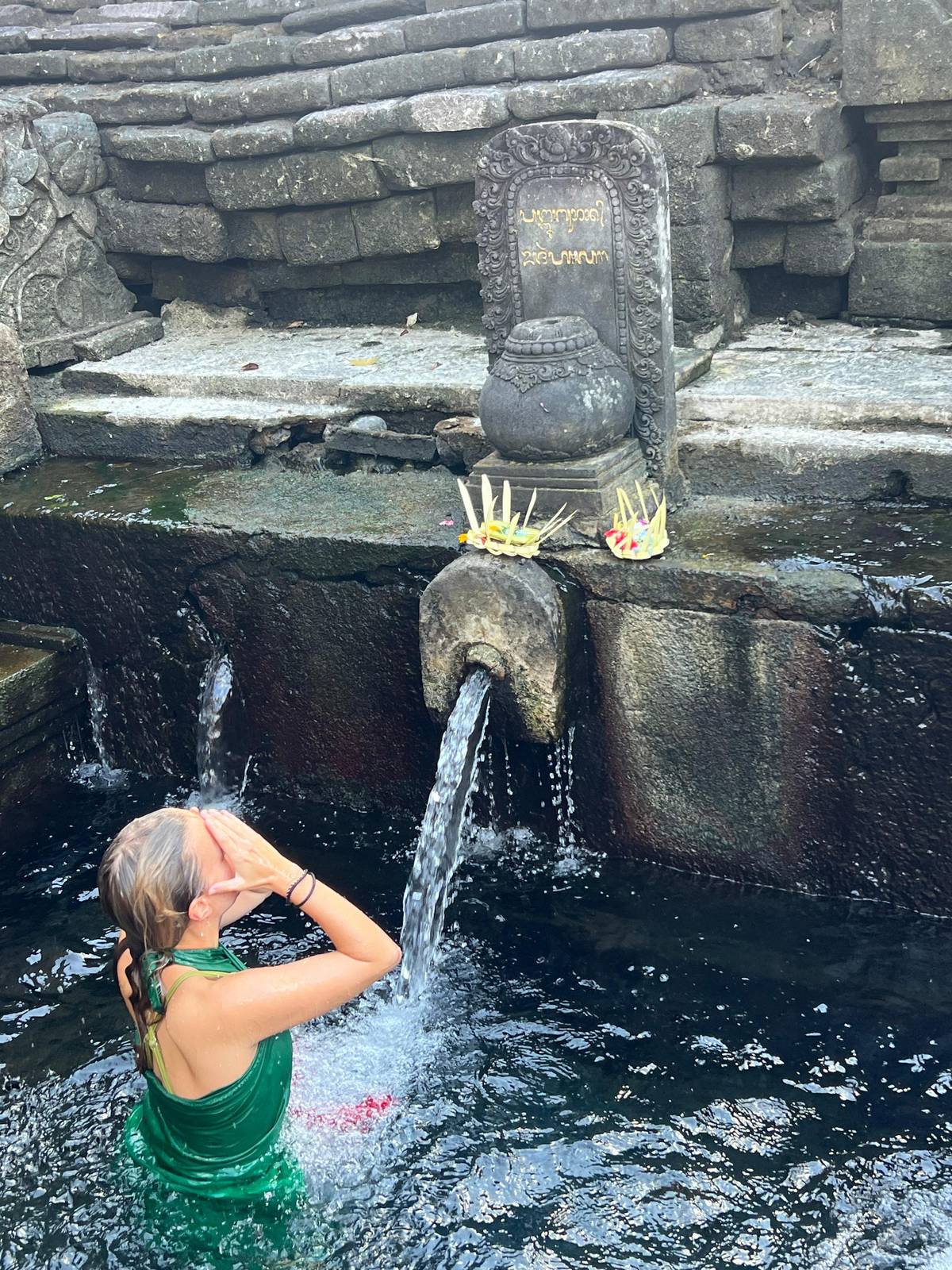
A spring temple founded in 962 AD, with 30 showers fed by the spring.2526
In Google Maps ↗ - 5Goa Gajah
A carved cave about 27 km from Denpasar, named in a text of 1365.2728
In Google Maps ↗ - 6Ubud Palace
Meeting point of the site tour's group options in Ubud.
In Google Maps ↗ - 7Taman Ayun
The royal water temple of Mengwi, part of the UNESCO subak landscape inscribed in 2012.2930
In Google Maps ↗ - 8Ulun Danu Beratan
A lake temple in Candikuning, Tabanan, about 1.5 to 2 hours from Denpasar.3132
In Google Maps ↗ - 9Uluwatu
A sea temple on a 70-meter cliff, with the kecak at 6:00 PM.331
In Google Maps ↗ - 10Kuta
Central Parking Kuta, the other group meeting point of the site tour.
In Google Maps ↗ - 11Lempuyang Luhur
The highest of the seven temples, at about 1,175 m, 2 to 4 hours there and back on foot.3435
In Google Maps ↗ - 12Gunung Kawi
Ancient shrines cut into a rock cliff above the Pakerisan River.36
In Google Maps ↗
Checklist
Before an evening at the cliff
01
Bring
- Cash for the temple and the kecak
- Water for the warm seats
- A cord or case for your glasses
02
Mind
- Keep food out of the monkeys' sight
- Be seated well before the show
- Let worshippers pass at the gates
Cost calculator
Price your Uluwatu evening for the group
Choose a trip, enter your group size, compare.
People
Total from$45
pp from $23
Check availabilityfree cancellationThe total is each temple day's lowest GetYourGuide price times your party size, shown in your currency at today's ECB rate; the booking page confirms the real amount.
Video
The kecak dance at Uluwatu, full performance
The player loads on your tap, not before.
Watching the light go down over the ocean
The provincial tourism office describes the cliff as an ideal place to watch the sun set, and that is the reason most people come in the late afternoon. Sunset at Uluwatu Temple is also the busiest time: one tour operator warns of crowds from around 5 PM and few free photo spots. The kecak stage faces the sea, so the show and the sunset happen at the same moment.
If you want the cliff views without the press of people, come earlier. With the gates open from 7:00 AM, a morning visit gives you the paths along the cliff top nearly to yourself, and you can come back for the dance in the evening.1 Morning light also suits the view south along the cliffs, where the white surf line is easier to photograph.
Bring water and something to sit on, because the stone seats get warm in the afternoon sun. A light layer helps once the sun has gone and the wind picks up off the ocean. After the show, the car park empties slowly, so either leave a few minutes before the end or wait until the queue for the cars has cleared.
Living alongside the temple's macaques
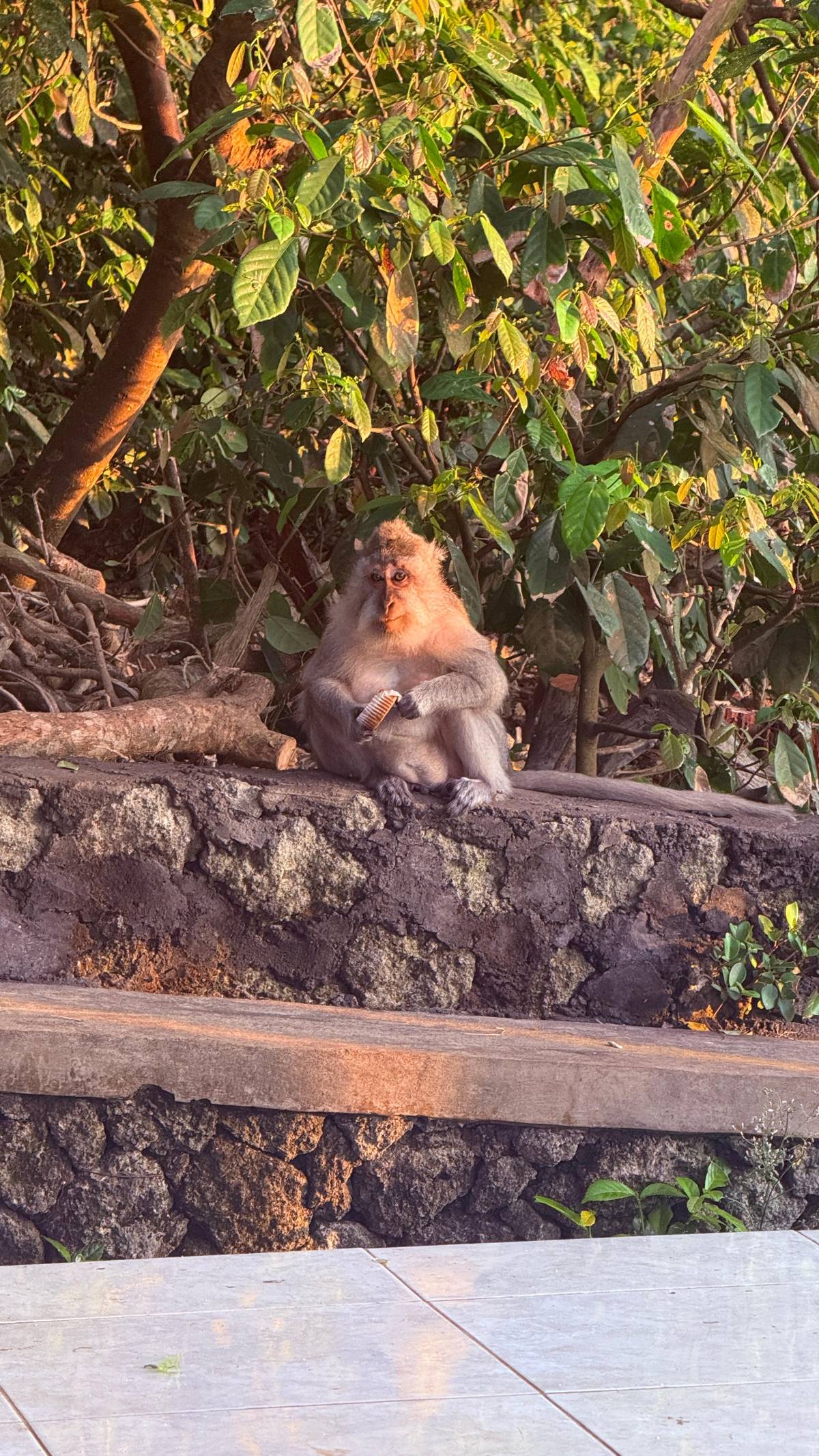
The Uluwatu Temple monkeys are long-tailed macaques, and they are part of the place. The management counts about 650 at the temple and around 50 at Labuan Sait Beach nearby.6 Balinese see them as guardians of the sacred site, and their health is watched with the Faculty of Veterinary Medicine of Udayana University.37
They are also skilled thieves. The management asks visitors not to feed them and to secure sunglasses, hats and phones.7 If one takes something, do not chase it: report it to the temple staff, who are trained to get lost items back.38 Glasses on a cord, a zipped bag and empty hands on the cliff path are the simplest defence.
Children often find the monkeys the highlight of the visit, and they are best watched from a short distance. Keep food out of sight, avoid staring games, and do not crouch down to their level for a photo. A calm walk past is all it takes; the trouble usually starts when someone holds out a hand.
What is closed to visitors, and why
Uluwatu is a working temple first. The provincial tourism office says only Hindu worshippers may enter the second, smaller temple inside, so you see the main shrines from the courts and the cliff path.39 The forest around the temple, Alas Kekeran, is part of the sacred area as well.40
Under local custom, women who are menstruating may not enter the temple area.41 It is a rule of the temple, not a tourist regulation, and it is applied quietly; if it concerns you, the cliff paths outside the gate still give you the view and the sunset.
The temple has its own festival calendar. Its anniversary, the Piodalan, comes round every 210 days by the Balinese Pawukon calendar, and on such days worshippers fill the courts.42 Visitors are usually still welcome around the edges, but expect more closed areas, more traffic on the narrow road and a far more beautiful atmosphere.
Getting there and the tours that include it
From Ngurah Rai airport the drive takes about 45 minutes to an hour, and from Ubud about 1.5 to 2 hours, the Ministry says.43 Traffic on the peninsula builds towards the evening, so allow more time if you plan to reach the kecak.
The tour on this page is a full south-Bali day that stops at Nusa Dua Beach, the Garuda Wisnu Kencana Cultural Park and Melasti Beach before 40 minutes at the temple and the kecak. It has 1,075 reviews averaging 4.73 and starts from $23. A shorter sunset trip of 6 hours includes the kecak ticket and ends at Jimbaran Bay, from $40.
If you only want the temple, a guide meets visitors at the north entry gate on a 2 to 6-hour visit with an optional kecak ticket, from $16. A kecak ticket on its own costs from $9 and does not include the temple fee.
Your temple day
Lempuyang, Tirta Gangga and Besakih in one day.
Pick a date and an option, and cancel free up to 24 hours before.


You ask,we answer.
When does the kecak dance at Uluwatu Temple start?
At 6:00 PM every evening. The gates open at 4:00 PM; the Ministry advises arriving about an hour early for a seat.116
What is the Uluwatu Temple entrance fee?
IDR 50,000 for a foreign adult. Children pay IDR 30,000; one Ministry page gives higher figures, so carry extra cash.213
Is the kecak included in the temple ticket?
No, it is separate. Adults pay IDR 150,000 for the dance and children IDR 75,000, on top of temple entry.2
What are the opening hours?
7:00 AM to 7:00 PM. That is every day, as the temple management lists it; mornings are the quietest time to walk the cliff.1
Do I need my own sarong?
No. A sarong and sash are provided at the entrance; cover shoulders and knees.3
Are the monkeys dangerous?
They steal more than they bite. Do not feed them, secure your belongings and let staff retrieve anything taken.738
Can I go inside the inner temple?
Only Hindu worshippers can. Visitors see the smaller inner temple from outside and from the cliff paths.39
Sources
Where the information comes from
- 1Uluwatu Temple management (official website)Uluwatu Temple: The Iconic Cliffside Temple of Bali↩
- 2Uluwatu Temple management (official website)Uluwatu Temple: The Iconic Cliffside Temple of Bali↩
- 3Uluwatu Temple management (official website)Uluwatu Temple: The Iconic Cliffside Temple of Bali↩
- 4Indonesia Ministry of Tourism (indonesia.travel)Pura Uluwatu: Sejarah, Daya Tarik, dan Panduan Berkunjung↩
- 5Uluwatu Temple management (official website)Uluwatu Temple: History↩
- 6Uluwatu Temple management (official website)Conservation & Wildlife↩
- 7Uluwatu Temple management (official website)Uluwatu Temple: The Iconic Cliffside Temple of Bali↩
- 8Uluwatu Temple management (official website)Uluwatu Temple: History↩
- 9Uluwatu Temple management (official website)Uluwatu Temple: The Iconic Cliffside Temple of Bali↩
- 10Uluwatu Temple management (official website)Uluwatu Temple: History↩
- 11Indonesia Ministry of Tourism (indonesia.travel)Cultural Experience in Bali: Uluwatu, Kecak Dance↩
- 12Indonesia Ministry of Tourism (indonesia.travel)Pura Uluwatu: Sejarah, Daya Tarik, dan Panduan Berkunjung↩
- 13Indonesia Ministry of Tourism (indonesia.travel)Pura Uluwatu: Sejarah, Daya Tarik, dan Panduan Berkunjung↩
- 14Indonesia Ministry of Tourism (indonesia.travel)Pura Uluwatu: Sejarah, Daya Tarik, dan Panduan Berkunjung↩
- 15Uluwatu Temple management (official website)Uluwatu Kecak Dance↩
- 16Indonesia Ministry of Tourism (indonesia.travel)Pura Uluwatu: Sejarah, Daya Tarik, dan Panduan Berkunjung↩
- 17Uluwatu Temple management (official website)Uluwatu Kecak Dance↩
- 18WikipediaKecak↩
- 19Uluwatu Temple management (official website)Uluwatu Kecak Dance↩
- 20WikipediaKecak↩
- 21Bali Provincial Tourism Office (Dinas Pariwisata Provinsi Bali)Lempuyang Temple↩
- 22Bali Provincial Tourism Office (Dinas Pariwisata Provinsi Bali)Tirta Gangga↩
- 23Indonesia Ministry of Tourism (indonesia.travel)Visiting Pura Besakih, the Largest Hindu Temple in Bali↩
- 24Indonesia Ministry of Tourism (indonesia.travel)Visiting Pura Besakih, the Largest Hindu Temple in Bali↩
- 25Indonesia Ministry of Tourism (indonesia.travel)The Beauty of Pura Tirta Empul↩
- 26Indonesia Ministry of Tourism (indonesia.travel)The Beauty of Pura Tirta Empul↩
- 27Bali Provincial Tourism Office (Dinas Pariwisata Provinsi Bali)Elephant Cave Temple↩
- 28Bali Provincial Tourism Office (Dinas Pariwisata Provinsi Bali)Elephant Cave Temple↩
- 29UNESCO World Heritage CentreCultural Landscape of Bali Province: the Subak System as a Manifestation of the Tri Hita Karana Philosophy (archived copy, 11 October 2026)↩
- 30UNESCO World Heritage CentreCultural Landscape of Bali Province: the Subak System as a Manifestation of the Tri Hita Karana Philosophy (archived copy, 11 October 2026)↩
- 31Bali Provincial Tourism Office (Dinas Pariwisata Provinsi Bali)Beratan Lake Temple↩
- 32Indonesia Ministry of Tourism (indonesia.travel)11 Must-Visit Temples in Bali and How to Get There↩
- 33Uluwatu Temple management (official website)Uluwatu Temple: The Iconic Cliffside Temple of Bali↩
- 34Indonesia Ministry of Tourism (indonesia.travel)Pura Lempuyang, the Iconic East Bali Gate of Heaven↩
- 35Indonesia Ministry of Tourism (indonesia.travel)Pura Lempuyang, the Iconic East Bali Gate of Heaven↩
- 36Bali Provincial Tourism Office (Dinas Pariwisata Provinsi Bali)Gunung Kawi Temple↩
- 37Uluwatu Temple management (official website)Conservation & Wildlife↩
- 38Uluwatu Temple management (official website)Uluwatu Temple: The Iconic Cliffside Temple of Bali↩
- 39Bali Provincial Tourism Office (Dinas Pariwisata Provinsi Bali)Pura Uluwatu↩
- 40Indonesia Ministry of Tourism (indonesia.travel)Pura Uluwatu: Sejarah, Daya Tarik, dan Panduan Berkunjung↩
- 41Indonesia Ministry of Tourism (indonesia.travel)Pura Uluwatu: Sejarah, Daya Tarik, dan Panduan Berkunjung↩
- 42Uluwatu Temple management (official website)Uluwatu Temple: History↩
- 43Indonesia Ministry of Tourism (indonesia.travel)Pura Uluwatu: Sejarah, Daya Tarik, dan Panduan Berkunjung↩