 This page's pick
Guides
Language
EnglishCurrency
US dollar · $GetYourGuide uses the currency you choose.
Guide · The holy spring
Tirta Empul, the spring temple and its purification
At Tirta Empul a spring rises inside the temple and flows out through rows of stone spouts: how the melukat purification works, what to wear and bring, and when to go.
Check availabilityfrom $21 · free cancellation
Editorial team, balitempletour.comUpdated October 24, 2026Reading time 6 min32 sources
The quick version
A spring at the source of a river
Tirta Empul lies near Tampaksiring, about 30 minutes from Ubud, and it is built around a spring.4 The Ministry of Tourism dates it to 962 AD, in the reign of King Candrabhaya Warmadewa.1 The spring is the source of the Pakerisan River, which runs south past some of the oldest sacred sites on the island.7
Its story is told in a legend. The spring was made by the god Indra to revive his troops after the evil king Mayadenawa poisoned them, the Ministry relates.8 Locals believe the water still has the power to heal and to cleanse body and soul, which is why the pools are busy with Balinese families as well as visitors.9
On the hill above the temple stands a villa built for President Sukarno's visit in 1954, a sign of how much the place has meant to the country.10 For a traveller it is above all a working holy water temple in Bali, and the one where you can take part rather than only watch. Expect a practical place, too: changing rooms, lockers and stalls selling offerings line the outer court, and the pools are often full of school groups and families as well as travellers.
The ritual in order
From the outer court to the spring
-
Outer court
Dress
Put on a kamen and shawl, rented for around Rp10,000.11
-
Before the pool
Offering
Place a small offering and pray in your own way.12
-
First spout
Enter from the left
Start at the first shower on the left.13
-
Along the row
Wash and move on
Face, head and body under each spout, then the next.13
-
Skip
Spouts for the dead
Two showers serve death ceremonies; ask the attendant.14
-
Afterwards
Inner court
Non-Hindus may enter if dressed properly.12
Three courts and the bathing pools
Like most Balinese temples, the complex has three parts. The outer court, Jaba Pura, is where you prepare and put on your kamen; the middle court, Jaba Tengah, holds the bathing pools; and the inner court, Jeroan, is the quiet place of worship.12 The Ministry says non-Hindus may enter the inner court too, as long as they are dressed properly and respectful.12
A total of 30 showers carry water from the spring into the pools, and each has its own name and purpose.15 Two of the spouts are reserved for ceremonies for the dead, and the attendants show visitors which ones to use.14 Watch the people ahead of you before you step in, because the order matters.
Behind the pools, the spring itself bubbles up into a clear basin where you can see the sand moving on the bottom. It is worth standing there for a minute before or after the bath. It is the quietest place in a busy temple, and it makes the meaning of the whole complex obvious: everything here starts with this water. Koi drift in the pond in front of the bathing pools, and the carved gates around them are some of the finest in the region, so leave time to look before you get wet.
What guests say
Ratings of the Tirta Empul listings
of 5
What it costs
Tirta Empul fees as official pages give them
| Item | Adult | Child |
|---|---|---|
| Entrance, Tirta Empul page | IDR 50,000 | IDR 25,000 |
| Entrance, temple guide | Rp 75,000 | Rp 50,000 |
| Kamen and shawl rental | Rp10,000 to 15,000 | Rp10,000 to 15,000 |
| Melukat ritual | No special fee | No special fee |
Two pages of the Ministry of Tourism give two entrance figures; carry cash for the higher one.3411
Three ways to the spring
Temple tour, ritual only or a full day
This page's pick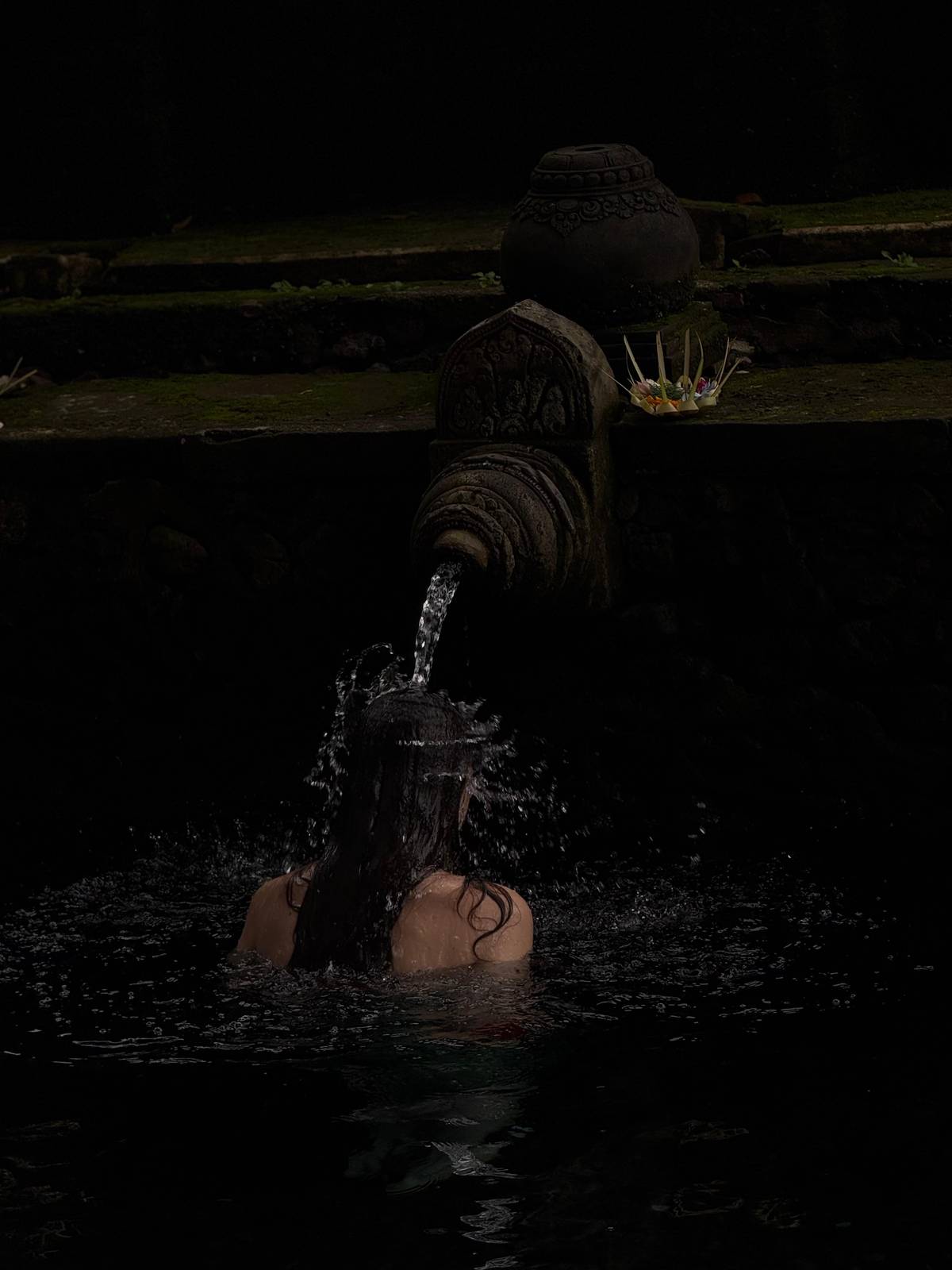 Shortest
 Fullest day
Decision helper
How should you visit the spring?
Pick by the hours you can spare
Morning, from the side
Around 8 to 10 a.m. is quieter, the Ministry says.5
The purification tour
3 hours from Ubud Palace, 2 of them at the temple.
The waterfall day
Tegallalang, Tirta Empul and waterfalls in 6 to 7 hours.
Full moon or Kuningan
More solemn on Purnama and Kuningan, but much busier at the pools.16
Locals believe that the sacred water flowing at the Tirta Empul Temple has the power to heal and cleanse their bodies and souls.
Melukat, step by step
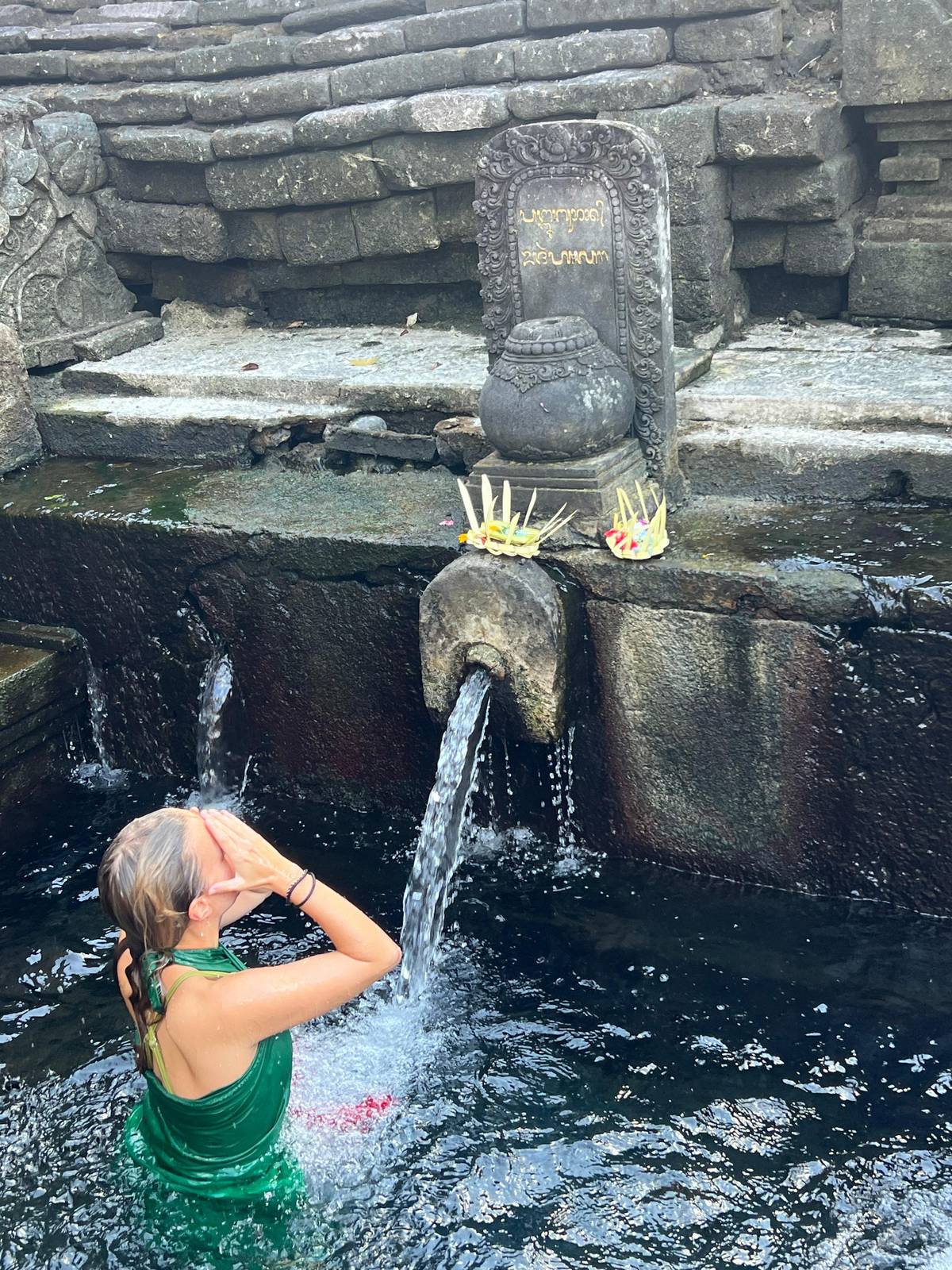
Melukat is a purification under the running water, and the Ministry stresses it is open to anyone, regardless of religion.2 Before the pool you put on a kamen and a shawl, then place a small offering and pray in your own way; no Hindu mantra is required.12 On the tour on this page, a short holy-water purification of about 30 seconds also comes before entering the temple.
Enter the pool from the left side and start at the first shower on the left, moving to the right in order.13 Under each spout you wash your face, head and body, then move on to the next. Skip the spouts the attendants point out as reserved for ceremonies for the dead.14
Afterwards, sit for a while in the courtyard and let your clothes dry. There is no fee for the ritual itself; you pay only the entrance ticket.3 The operator of this page's tour suggests packing spare clothes, a towel and a dry bag for valuables.
Map
Where the temples stand on Bali
First the whole island with the temples on this site, then the slopes of East Bali around Lempuyang, then the river valley north of Ubud.
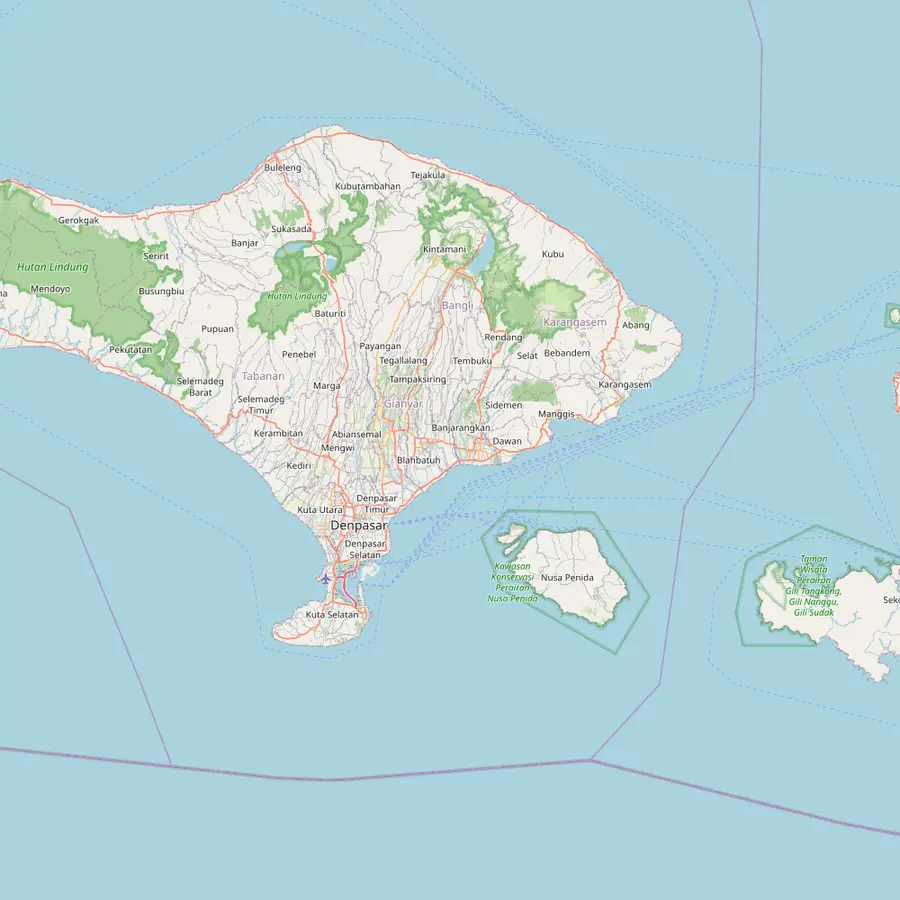 1Lempuyang gate2Tirta Gangga3Besakih4Tirta Empul5Goa Gajah6Ubud Palace7Taman Ayun8Ulun Danu Beratan9Uluwatu10Kuta
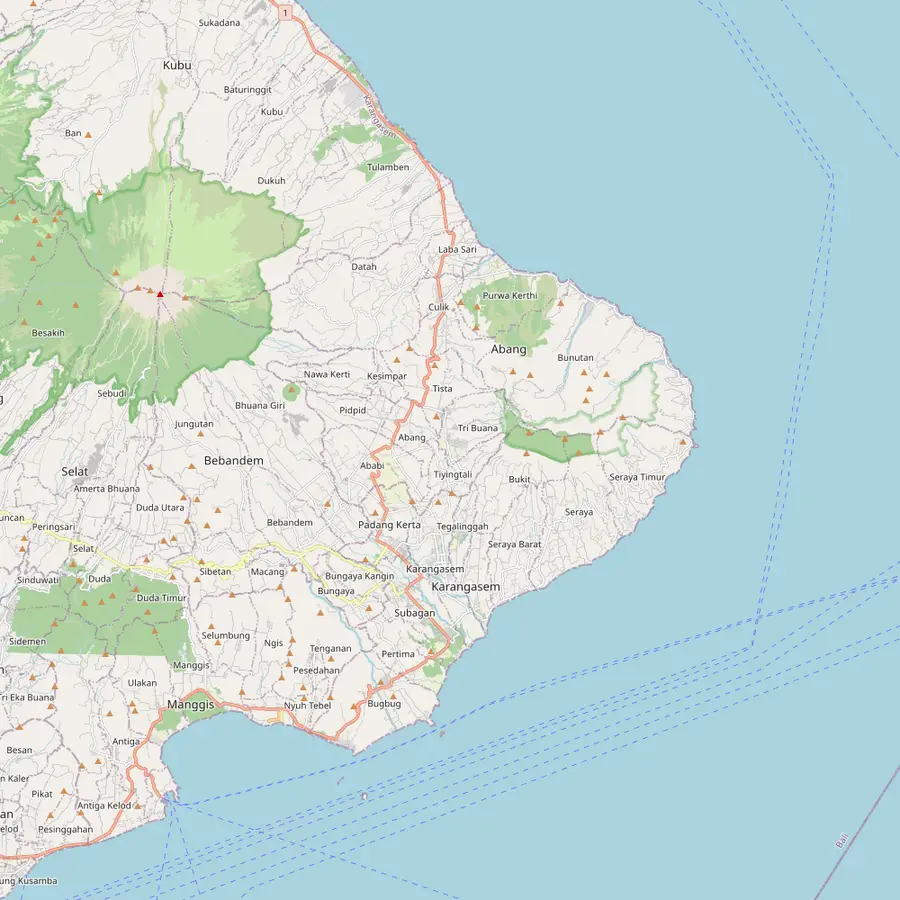 1Lempuyang gate2Tirta Gangga11Lempuyang Luhur
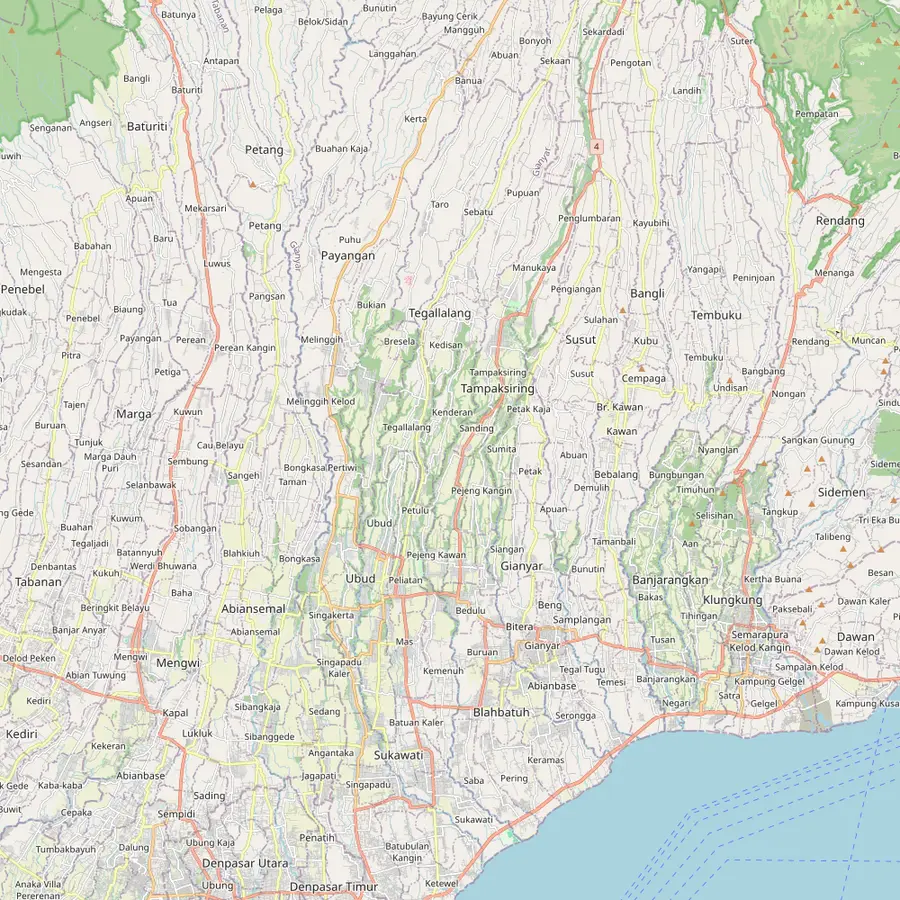 4Tirta Empul5Goa Gajah6Ubud Palace12Gunung Kawi
- 1Lempuyang gate
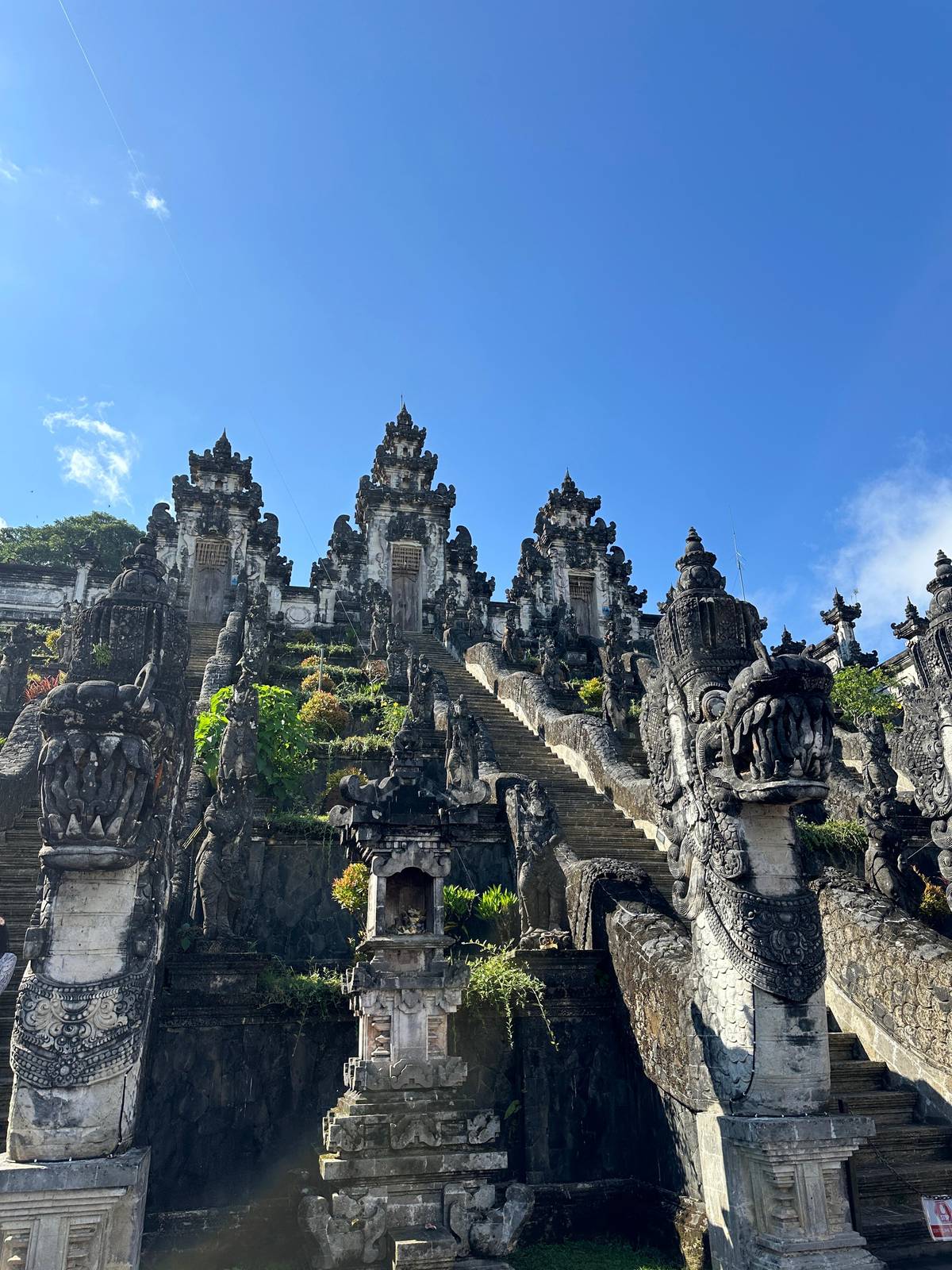
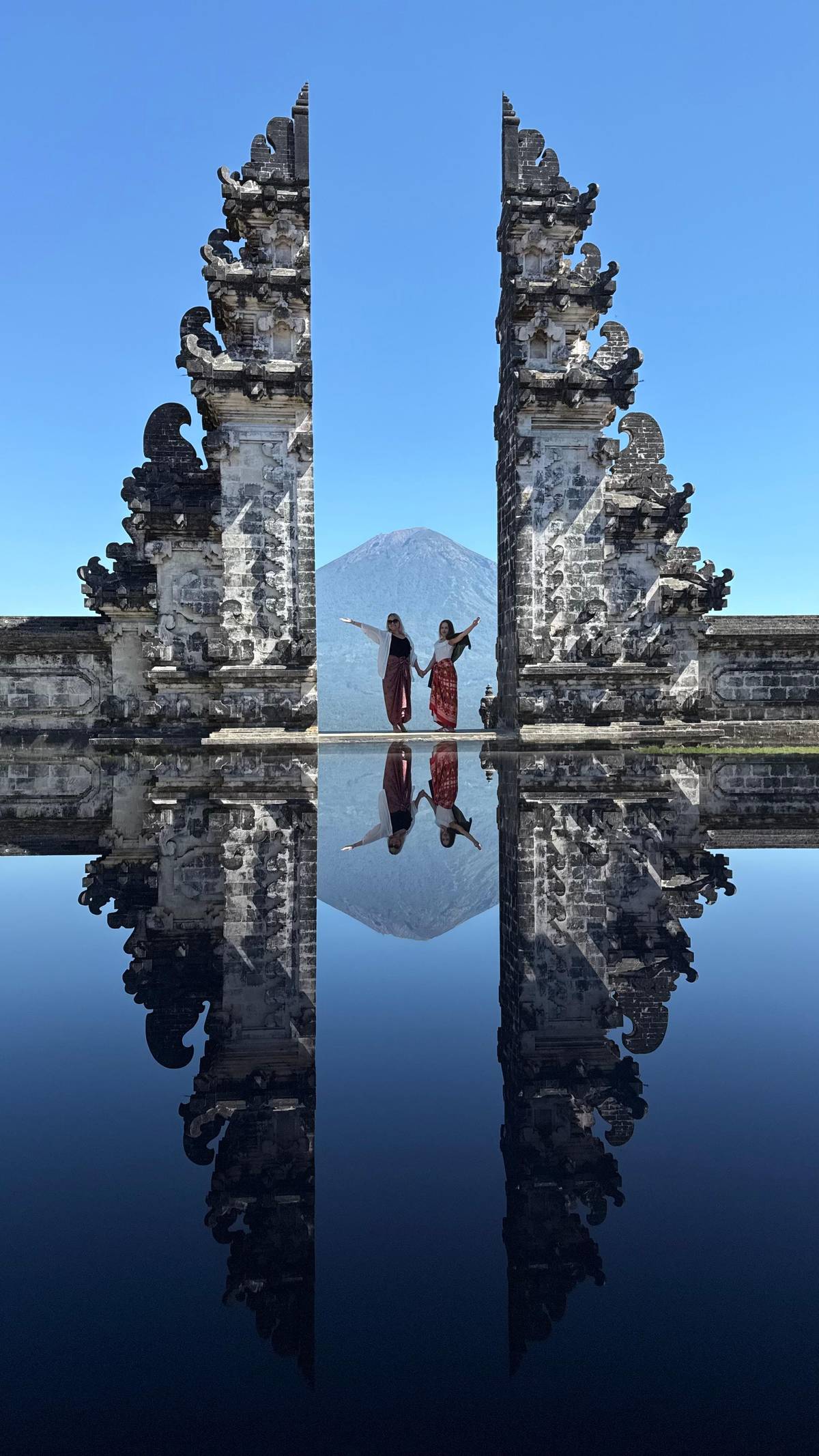
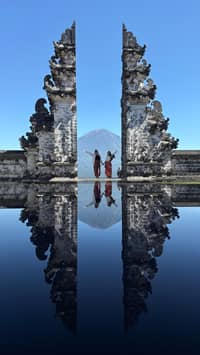
The lowest of seven temples on Mount Lempuyang, where the split gate frames Mount Agung on a clear day.17
In Google Maps ↗ - 2Tirta Gangga
A water palace built in 1948 by the King of Karangasem; a 1-hour stop of the site tour.18
In Google Maps ↗ - 3Besakih
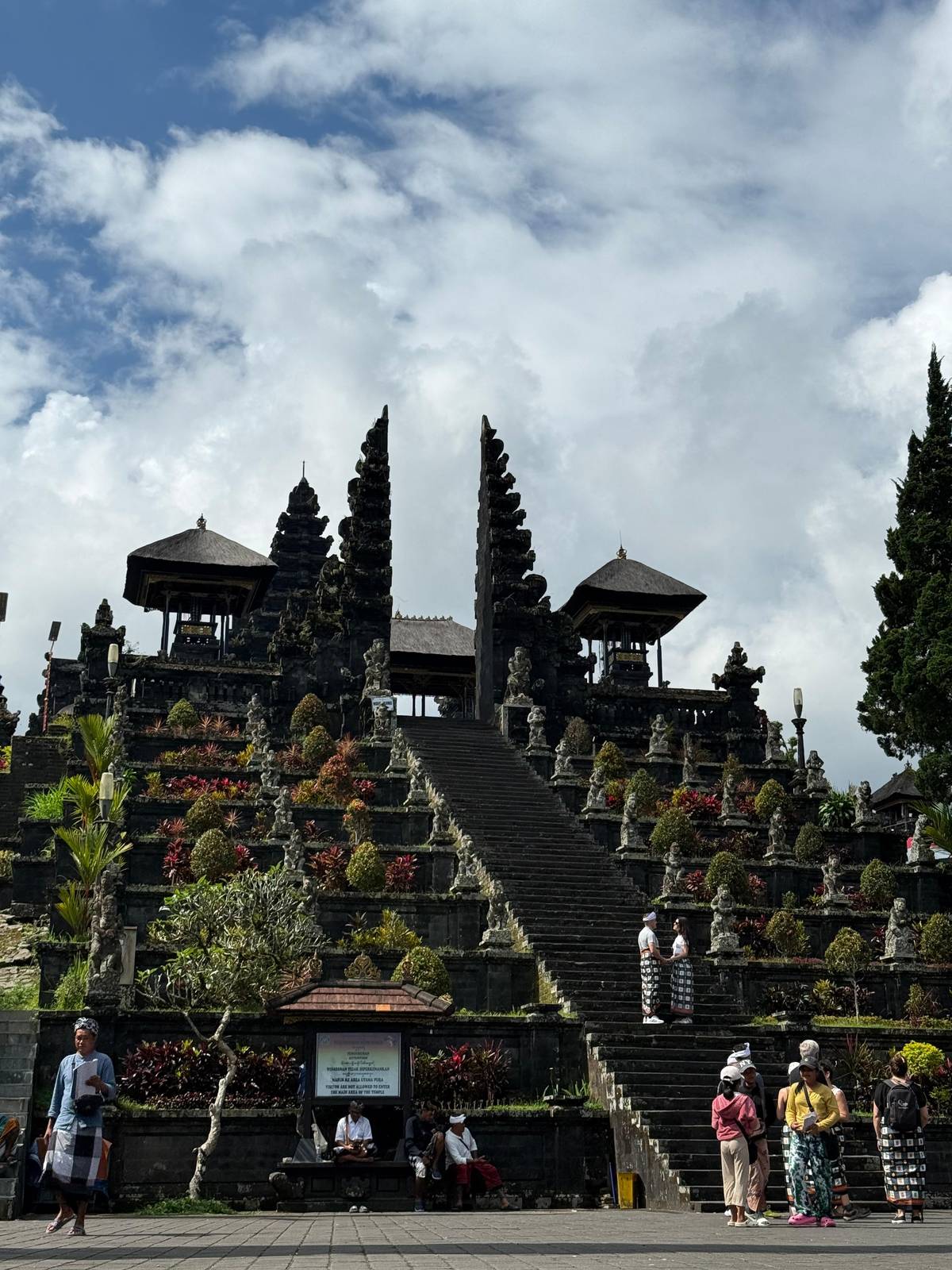
The mother temple, on the slope of Agung at about 1,000 m, a complex of 23 temples.1920
In Google Maps ↗ - 4Tirta Empul
A spring temple founded in 962 AD, with 30 showers fed by the spring.115
In Google Maps ↗ - 5Goa Gajah
A carved cave about 27 km from Denpasar, named in a text of 1365.2122
In Google Maps ↗ - 6Ubud Palace
Meeting point of the site tour's group options in Ubud.
In Google Maps ↗ - 7Taman Ayun
The royal water temple of Mengwi, part of the UNESCO subak landscape inscribed in 2012.2324
In Google Maps ↗ - 8Ulun Danu Beratan
A lake temple in Candikuning, Tabanan, about 1.5 to 2 hours from Denpasar.2526
In Google Maps ↗ - 9Uluwatu
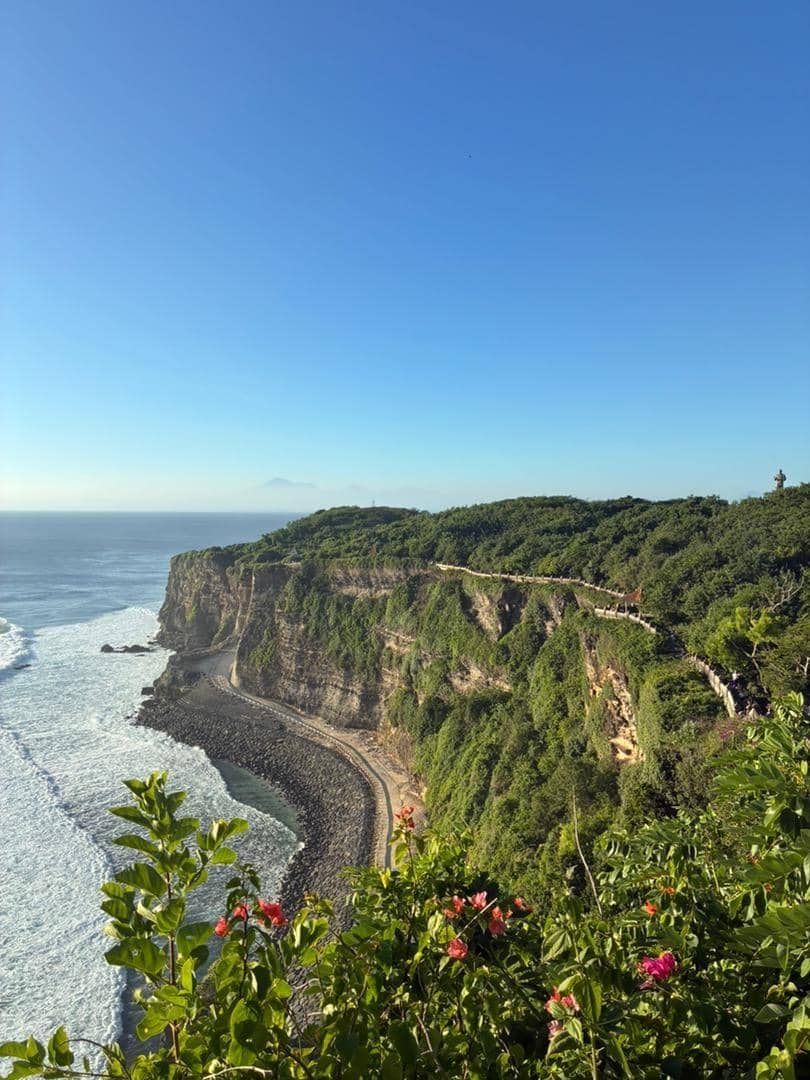
A sea temple on a 70-meter cliff, with the kecak at 6:00 PM.2728
In Google Maps ↗ - 10Kuta
Central Parking Kuta, the other group meeting point of the site tour.
In Google Maps ↗ - 11Lempuyang Luhur
The highest of the seven temples, at about 1,175 m, 2 to 4 hours there and back on foot.2930
In Google Maps ↗ - 12Gunung Kawi
Ancient shrines cut into a rock cliff above the Pakerisan River.31
In Google Maps ↗
Checklist
For the purification
01
Bring
- A change of clothes and a towel
- A waterproof bag for your phone
- Cash for the ticket and rental
02
Remember
- Follow the attendants' directions
- Skip the spouts kept for the dead
- Come early, before the tour buses
Cost calculator
Price a visit to the spring for your group
Select a spring visit and how many will bathe.
People
Total from$41
pp from $21
Check availabilityfree cancellationThe total is each temple day's lowest GetYourGuide price times your party size, shown in your currency at today's ECB rate; the booking page confirms the real amount.
Video
The holy water spring temple and its purification ritual
The player loads on your tap, not before.
Tickets, sarong and parking
Official figures differ. The Ministry's Tirta Empul page gives IDR 50,000 for adults and IDR 25,000 for children, while its temple guide lists IDR 75,000 for adults and IDR 50,000 for children aged 5 to 12.34 Carry enough for the higher figure, and keep small notes for parking and rental.
If you do not bring your own kamen and shawl, you can rent them for around Rp10,000 to Rp15,000.11 The shorter purification tour from Ubud provides a sarong, its notes say; on other tours, ask. The rental cloth is usually green and tied at the waist with a sash; do not wear a swimsuit alone into the pool, because the kamen is part of the ritual dress.
Under Balinese custom, people who are menstruating may not enter the temple, and the tour notes repeat it. Temple floors are wet and slippery, so wear sandals with grip, and keep valuables to a minimum. Photography is allowed in most areas, but put the camera away when people near you are praying.
The best hours and the busy holy days
The Ministry suggests the morning, around 8 to 10 a.m., when it is less crowded and the water feels fresh.5 By late morning tour buses arrive, and the queue at each spout grows.
Holy days change everything. On Purnama, the full moon, and on Kuningan, the temple is more solemn and much busier.16 One purification tour warns that full moon and new moon days bring more worshippers and longer waits. Kuningan closes the Galungan festival period, so check the dates if your trip falls near either.32
For a first visit, a weekday morning outside the holy days gives you the calmest pools. If you would like to see the temple at its most devout, come on a full moon, keep to the side and watch the families before you join them. Either way, take your time: the ritual loses its meaning if it is rushed.
Tours from Ubud and how long they take
The tour on this page is a 3 to 6-hour visit with the purification as an option, meeting at Bali Pulina Coffee in Sebatu or at Ubud Palace. It has 1,389 reviews averaging 4.88 and starts from $21.
If you want only the ritual, a 3-hour tour from Ubud Palace drives 35 minutes, spends 2 hours at Tirta Empul and drives 25 minutes back, from $16. It has 147 reviews averaging 4.99.
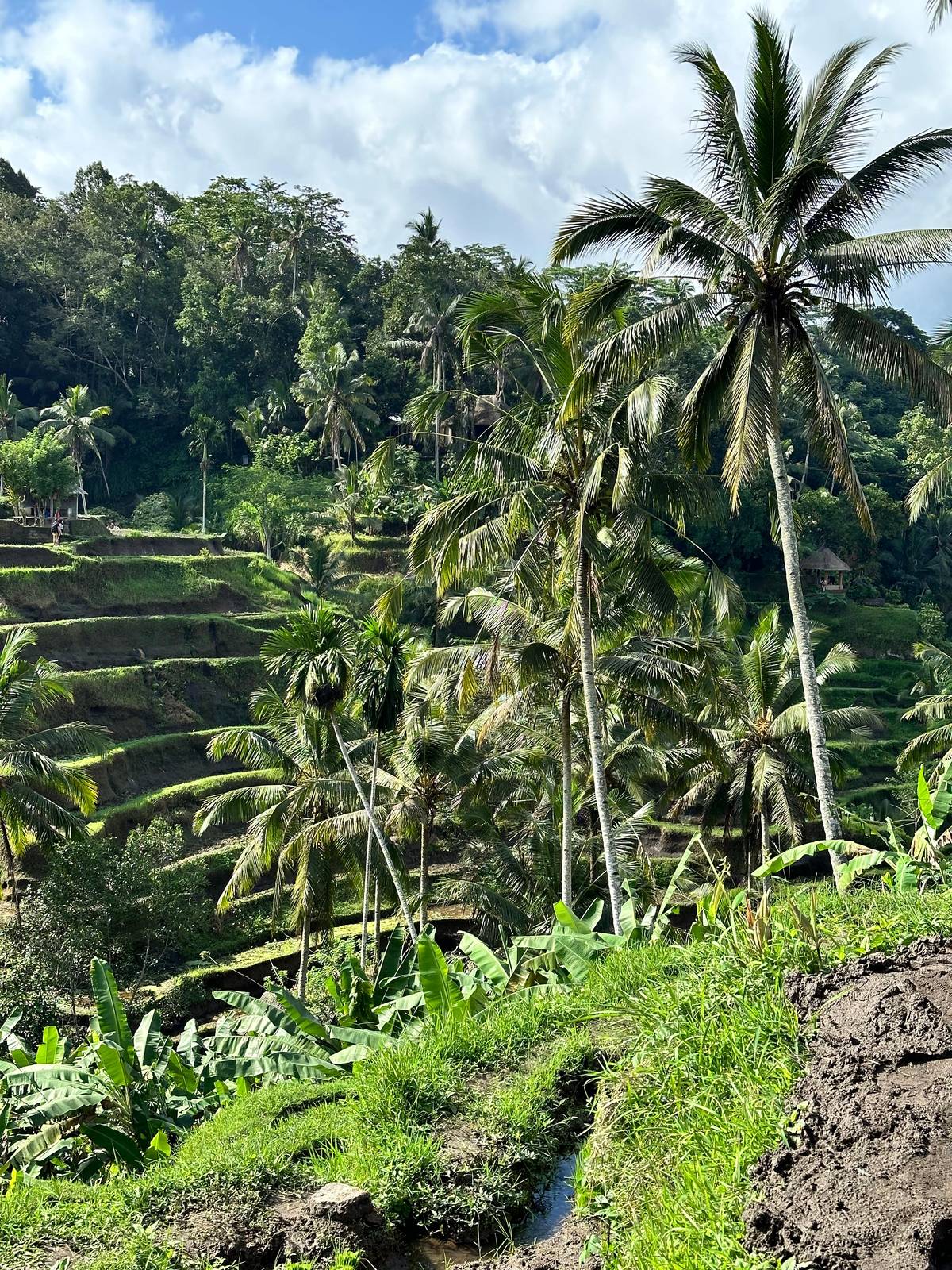
For a fuller day, a 6 to 7-hour tour adds Tegallalang and the Tibumana and Kanto Lampo waterfalls to an hour at Tirta Empul, from $26. Whichever you choose, give the spring itself unhurried time, because that is what you came for.
Bathing as a guest, not a tourist
The pools are a place of prayer, and the people in them are praying. Keep your voice low, move along the row without pushing, and wait your turn at each spout rather than reaching past someone. If a family is performing a fuller ceremony, give them space and let them go ahead of you, even if it means waiting a little longer.
Photographs are where most visitors go wrong. A friend taking pictures from the edge is usually fine, but a camera held in someone else's face is not, and selfies under the spouts slow everyone down. Agree with your companions beforehand who takes the photos and when, so that the time in the water stays your own.
Afterwards, many visitors walk up to the spring basin and the inner court in their wet kamen before changing. Take a moment there. Whatever your beliefs, standing beside a spring that has been honoured since 962 AD is the real reason to come, and it is easy to miss in the bustle of the pools.1
Your temple day
Lempuyang, Tirta Gangga and Besakih in one day.
Pick a date and an option, and cancel free up to 24 hours before.


You ask,we answer.
Can non-Hindus take part in melukat?
Yes. The Ministry says melukat is open to anyone, regardless of religion, if they come with respect.2
How much is the ticket at Tirta Empul?
IDR 50,000 to 75,000 for adults. The Ministry's pages give IDR 50,000 and IDR 75,000; children pay less.34
Is there a fee for the purification?
No special fee. You pay only the entrance ticket; a kamen and shawl rent for around Rp10,000 to Rp15,000.311
How many showers are there?
30 in all. Two are reserved for ceremonies for the dead, so follow the attendants' directions.1514
What should I bring?
A change of clothes and a towel. You will get soaked in the pools; a towel and a waterproof bag for your phone help too.6
What is the best time to go?
Around 8 to 10 a.m. Mornings are quieter and the water feels fresh; full moon and Kuningan are much busier.516
How far is it from Ubud?
About 30 minutes. The Ministry gives about 30 minutes from Ubud, near the town of Tampaksiring.4
Sources
Where the information comes from
- 1Indonesia Ministry of Tourism (indonesia.travel)The Beauty of Pura Tirta Empul↩
- 2Indonesia Ministry of Tourism (indonesia.travel)The Beauty of Pura Tirta Empul↩
- 3Indonesia Ministry of Tourism (indonesia.travel)The Beauty of Pura Tirta Empul↩
- 4Indonesia Ministry of Tourism (indonesia.travel)11 Must-Visit Temples in Bali and How to Get There↩
- 5Indonesia Ministry of Tourism (indonesia.travel)The Beauty of Pura Tirta Empul↩
- 6Indonesia Ministry of Tourism (indonesia.travel)The Beauty of Pura Tirta Empul↩
- 7WikipediaTirta Empul↩
- 8Indonesia Ministry of Tourism (indonesia.travel)The Beauty of Pura Tirta Empul↩
- 9Bali Provincial Tourism Office (Dinas Pariwisata Provinsi Bali)Tirta Empul↩
- 10WikipediaTirta Empul↩
- 11Indonesia Ministry of Tourism (indonesia.travel)The Beauty of Pura Tirta Empul↩
- 12Indonesia Ministry of Tourism (indonesia.travel)The Beauty of Pura Tirta Empul↩
- 13Indonesia Ministry of Tourism (indonesia.travel)The Beauty of Pura Tirta Empul↩
- 14Indonesia Ministry of Tourism (indonesia.travel)The Beauty of Pura Tirta Empul↩
- 15Indonesia Ministry of Tourism (indonesia.travel)The Beauty of Pura Tirta Empul↩
- 16Indonesia Ministry of Tourism (indonesia.travel)The Beauty of Pura Tirta Empul↩
- 17Bali Provincial Tourism Office (Dinas Pariwisata Provinsi Bali)Lempuyang Temple↩
- 18Bali Provincial Tourism Office (Dinas Pariwisata Provinsi Bali)Tirta Gangga↩
- 19Indonesia Ministry of Tourism (indonesia.travel)Visiting Pura Besakih, the Largest Hindu Temple in Bali↩
- 20Indonesia Ministry of Tourism (indonesia.travel)Visiting Pura Besakih, the Largest Hindu Temple in Bali↩
- 21Bali Provincial Tourism Office (Dinas Pariwisata Provinsi Bali)Elephant Cave Temple↩
- 22Bali Provincial Tourism Office (Dinas Pariwisata Provinsi Bali)Elephant Cave Temple↩
- 23UNESCO World Heritage CentreCultural Landscape of Bali Province: the Subak System as a Manifestation of the Tri Hita Karana Philosophy (archived copy, 11 October 2026)↩
- 24UNESCO World Heritage CentreCultural Landscape of Bali Province: the Subak System as a Manifestation of the Tri Hita Karana Philosophy (archived copy, 11 October 2026)↩
- 25Bali Provincial Tourism Office (Dinas Pariwisata Provinsi Bali)Beratan Lake Temple↩
- 26Indonesia Ministry of Tourism (indonesia.travel)11 Must-Visit Temples in Bali and How to Get There↩
- 27Uluwatu Temple management (official website)Uluwatu Temple: The Iconic Cliffside Temple of Bali↩
- 28Uluwatu Temple management (official website)Uluwatu Temple: The Iconic Cliffside Temple of Bali↩
- 29Indonesia Ministry of Tourism (indonesia.travel)Pura Lempuyang, the Iconic East Bali Gate of Heaven↩
- 30Indonesia Ministry of Tourism (indonesia.travel)Pura Lempuyang, the Iconic East Bali Gate of Heaven↩
- 31Bali Provincial Tourism Office (Dinas Pariwisata Provinsi Bali)Gunung Kawi Temple↩
- 32WikipediaGalungan↩