 This site's tour
Guides
Language
EnglishCurrency
US dollar · $GetYourGuide uses the currency you choose.
Guide · The mother temple
Besakih Temple, the mother temple on Mount Agung
Besakih Temple climbs the slope of Bali's highest volcano in terraces of shrines and tiered roofs: what you see there, when the great ceremonies fall, and how to visit it with respect.
Check availabilityfrom $28 · free cancellation
Editorial team, balitempletour.comUpdated October 24, 2026Reading time 6 min43 sources
What to know first
Why Besakih is called the mother temple
Besakih Temple is the place the Balinese mean when they speak of a mother temple. The provincial tourism office describes it as Bali's mother temple, high on the slopes of Gunung Agung, and says it has been regarded as a holy place since prehistoric times.7 Since the Gelgel dynasty of the 15th century it has served as the central holy temple for the whole island.8
That role shows in the layout. Each regency of Bali has its own temple within the compound, and so does each caste group, which is why the complex keeps unfolding as you climb.9 The Ministry of Tourism calls it the principal place of worship of the Three Gods, Brahma, Vishnu and Shiva.10
The name itself is a blessing. According to the Ministry, Besakih comes from the Sanskrit Wasuki, meaning safe.11 Standing below Agung, the highest point on Bali, the temple seems to borrow the mountain's height for its own.12
Through the centuries
Besakih from first record to today
-
1007 AD
First inscription
The first recorded mention of Besakih.4
-
15th century
State temple
The Gelgel dynasty makes it the island's holy centre.8
-
1963
Agung erupts
Lava flows miss the temple complex by mere meters.13
-
1979
Eka Dasa Rudra
-
1995 to 2015
World Heritage bid
Nominated in 1995, withdrawn in 2015.16
-
2017 to 2019
Agung active again
The volcano's most recent eruptions.17
The biggest temple in Bali, terrace by terrace
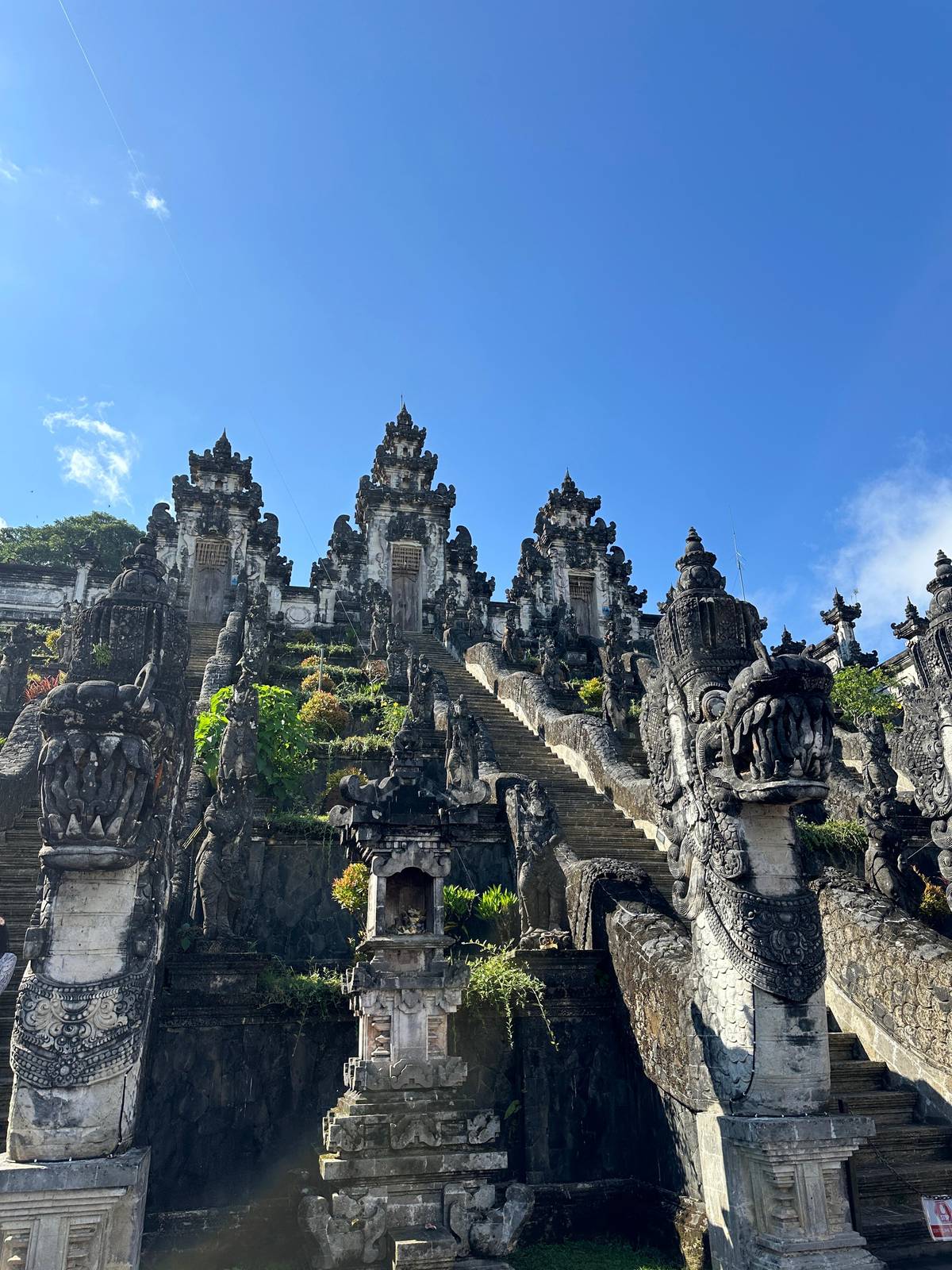
Besakih is the biggest temple in Bali by any measure that matters to a visitor. The Ministry counts 23 large and small temples in the complex, with Penataran Agung at its centre, where the major ceremonies take place.3 The main complex is built on six levels, terraced up the slope, so most of a visit is spent on stairs.18
The provincial tourism office names three main temples: Penataran Agung for Sang Hyang Widi Wasa, Kiduling Kreteg for Brahma and Batu Madeg for Wisnu.19 You will not see all of them on a short visit. A good guide picks a line through the complex that shows the split gates, the tiered meru towers and the view back down the valley. Ask to stop at the top terrace for a few minutes: on a clear morning the whole complex falls away below you towards the sea, and the scale of the place makes sense at last.
Official pages give slightly different heights: the provincial office places the temple over 900 m up the mountain, while the Ministry gives about 1,000 m.71 The difference depends on which terrace you measure. On the ground it hardly matters, because the scale is obvious the moment you reach the first gate.
The ritual calendar
How often the great ceremonies come round
| Ceremony | How often | When or last held |
|---|---|---|
| Temple anniversaries | Each shrine yearly | At least 70 a year |
| Bhatara Turun Kabeh | Every year | Kedasa, around March to April |
| Panca Wali Krama | Every ten years | Grand purification |
| Eka Dasa Rudra | Every 100 years | Last held in 1979 |
From the Ministry of Tourism's Besakih page and Wikipedia's article on the temple, which follows the 210-day Pawukon year.2021221514
Tours that stop here
Besakih in a day, three ways
This site's tour Limited to 10
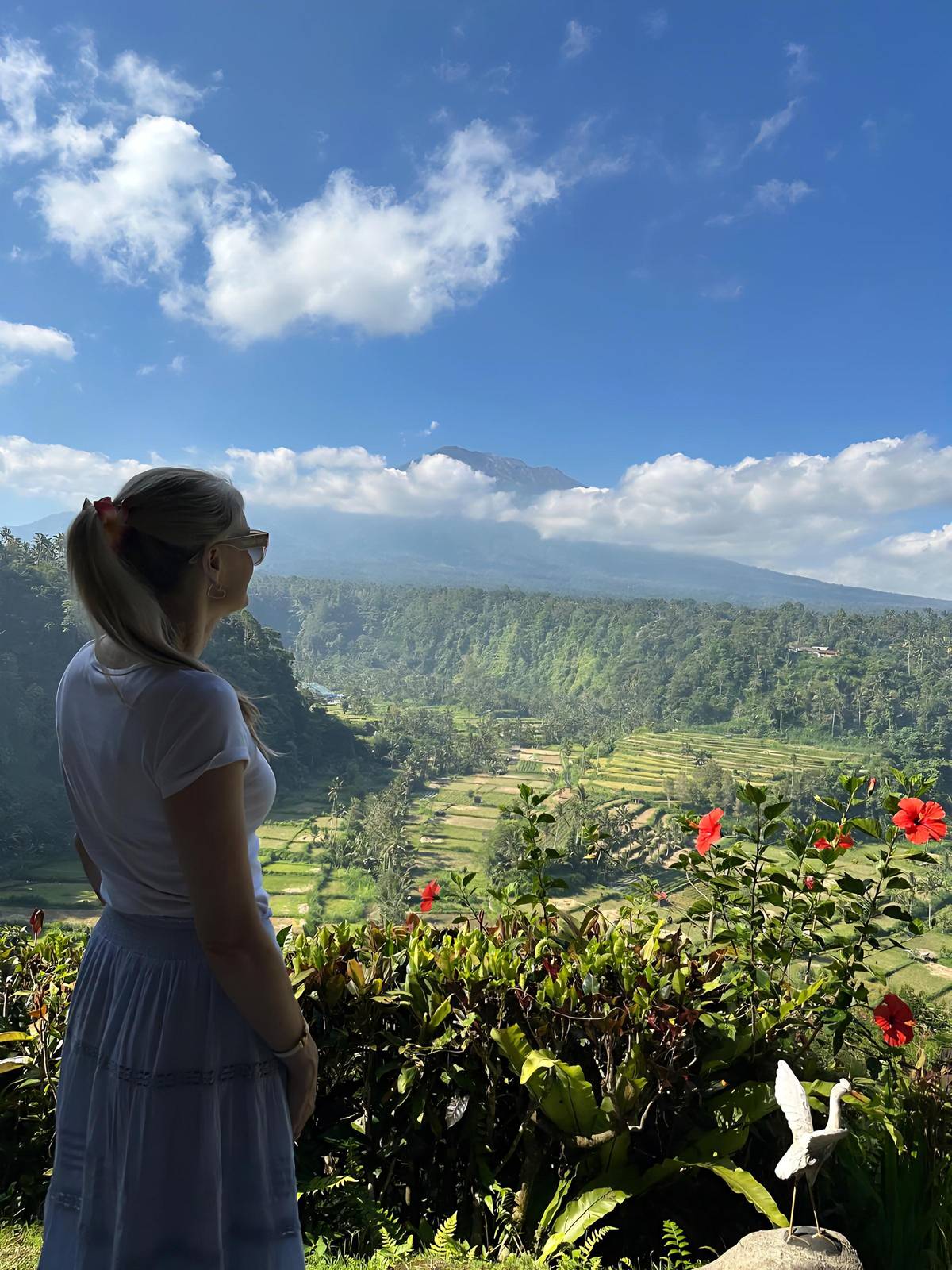 Most time inside
Decision helper
How should you fit Besakih into your trip?
Choose by what else you want from the day
The East Bali day
Lempuyang, Tirta Gangga and Besakih in 9 to 10 hours.
The small-group day
Limited to 10 participants, with Penglipuran village.
Besakih and waterfall
1.5 hours at the temple, after Tegallalang and a waterfall.
Go in the morning
The Ministry calls the early hours cooler and calmer.23
March or April
Ida Bhatara Turun Kabeh falls in Kedasa every year.21
Since the Gelgel dynasty of the fifteenth century it has been regarded as a central, holy temple for the entire island.
From the first inscription to a near miss
The first written record of Besakih is an inscription dated 1007 AD.4 The provincial office speaks of a holy place since prehistoric times, long before any writing.7 By the 15th century the Gelgel kings had made it the state temple of the whole island.8
Its most dramatic moment came in 1963. A series of eruptions of Mount Agung killed about 1,700 people, and the lava flows missed the temple complex by mere meters.13 The Balinese saw its survival as miraculous, a sign that the gods wished to show their power without destroying the temple, and it still shapes how people speak of the place today.24 The volcano's most recent eruptions came from 2017 to 2019.17
Besakih was nominated as a World Heritage Site as early as 1995, but the nomination was withdrawn in 2015.16 That leaves it one of the few major Balinese sites without a UNESCO label, which changes nothing about its standing at home: for Balinese Hindus it is the centre, whatever the lists say.
Map
Where the temples stand on Bali
First the whole island with the temples on this site, then the slopes of East Bali around Lempuyang, then the river valley north of Ubud.
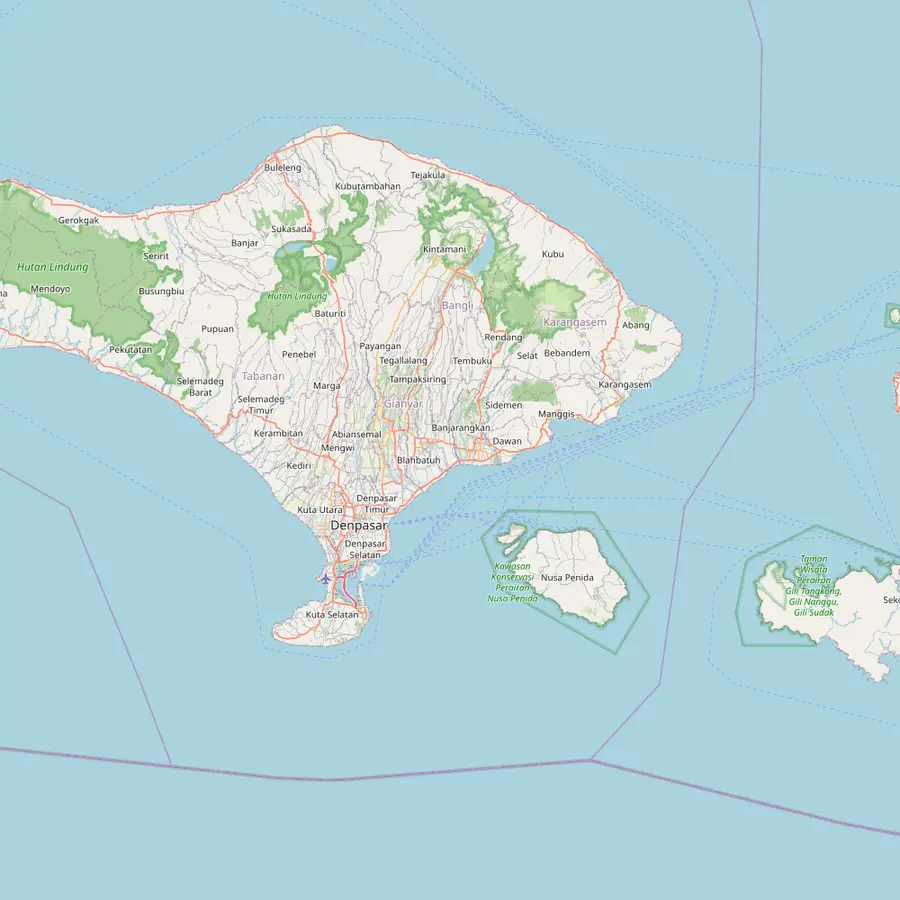 1Lempuyang gate2Tirta Gangga3Besakih4Tirta Empul5Goa Gajah6Ubud Palace7Taman Ayun8Ulun Danu Beratan9Uluwatu10Kuta
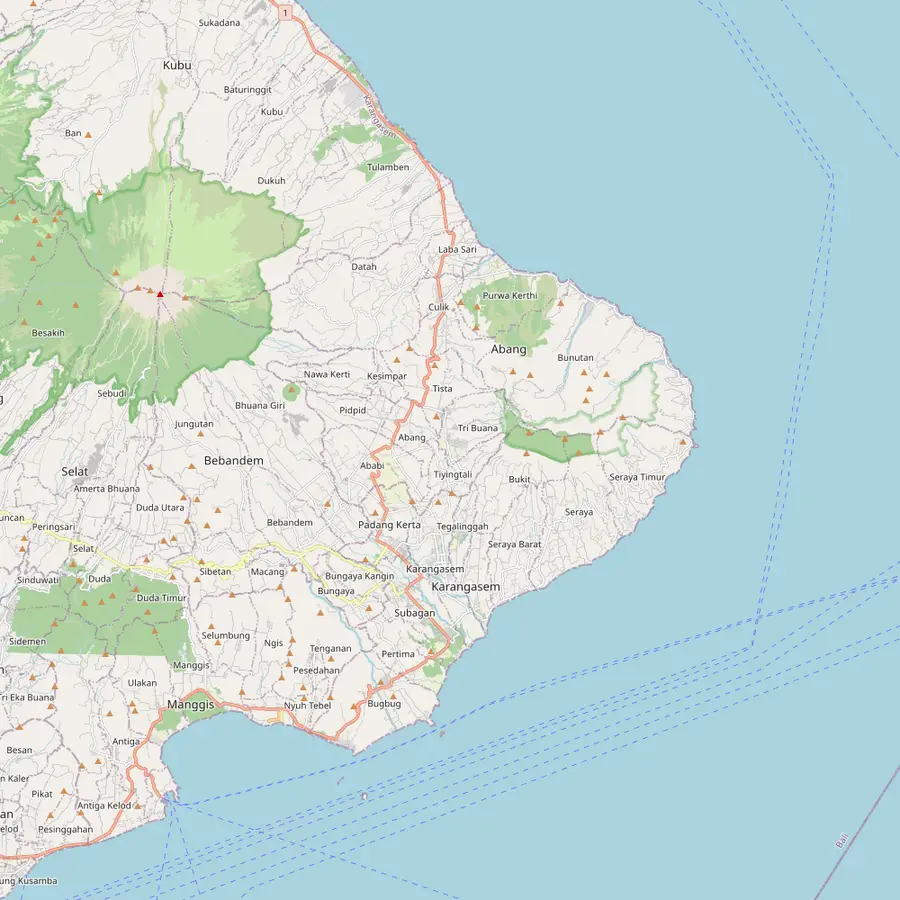 1Lempuyang gate2Tirta Gangga11Lempuyang Luhur
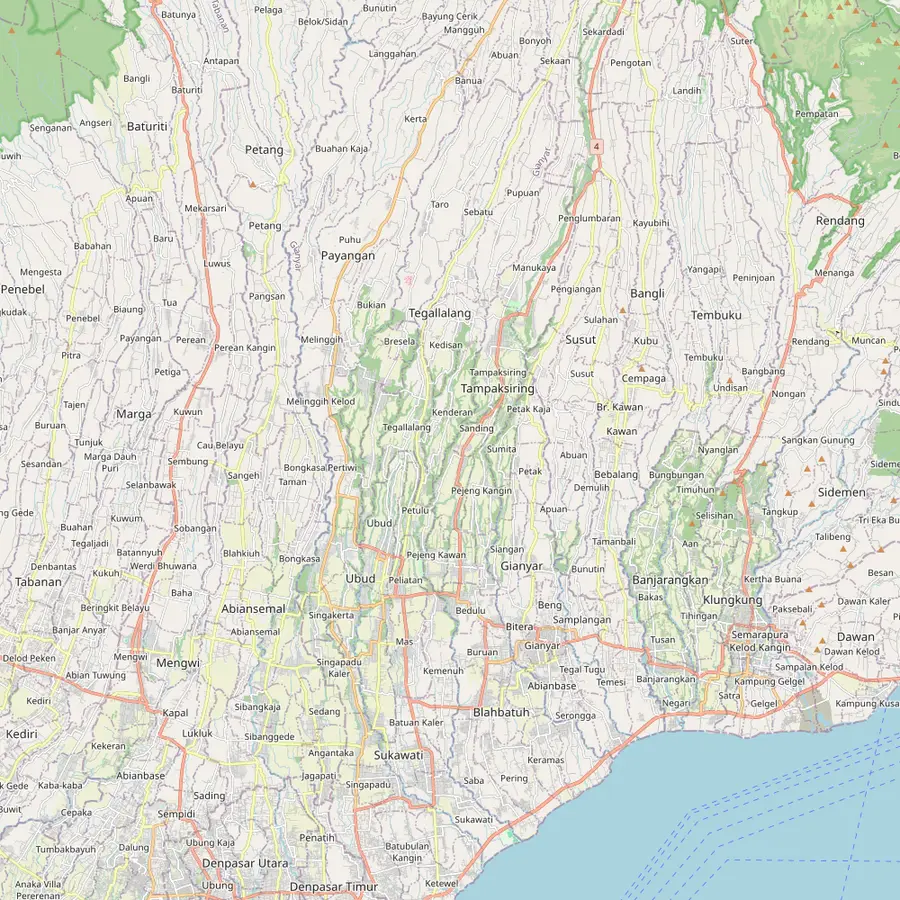 4Tirta Empul5Goa Gajah6Ubud Palace12Gunung Kawi
- 1Lempuyang gate
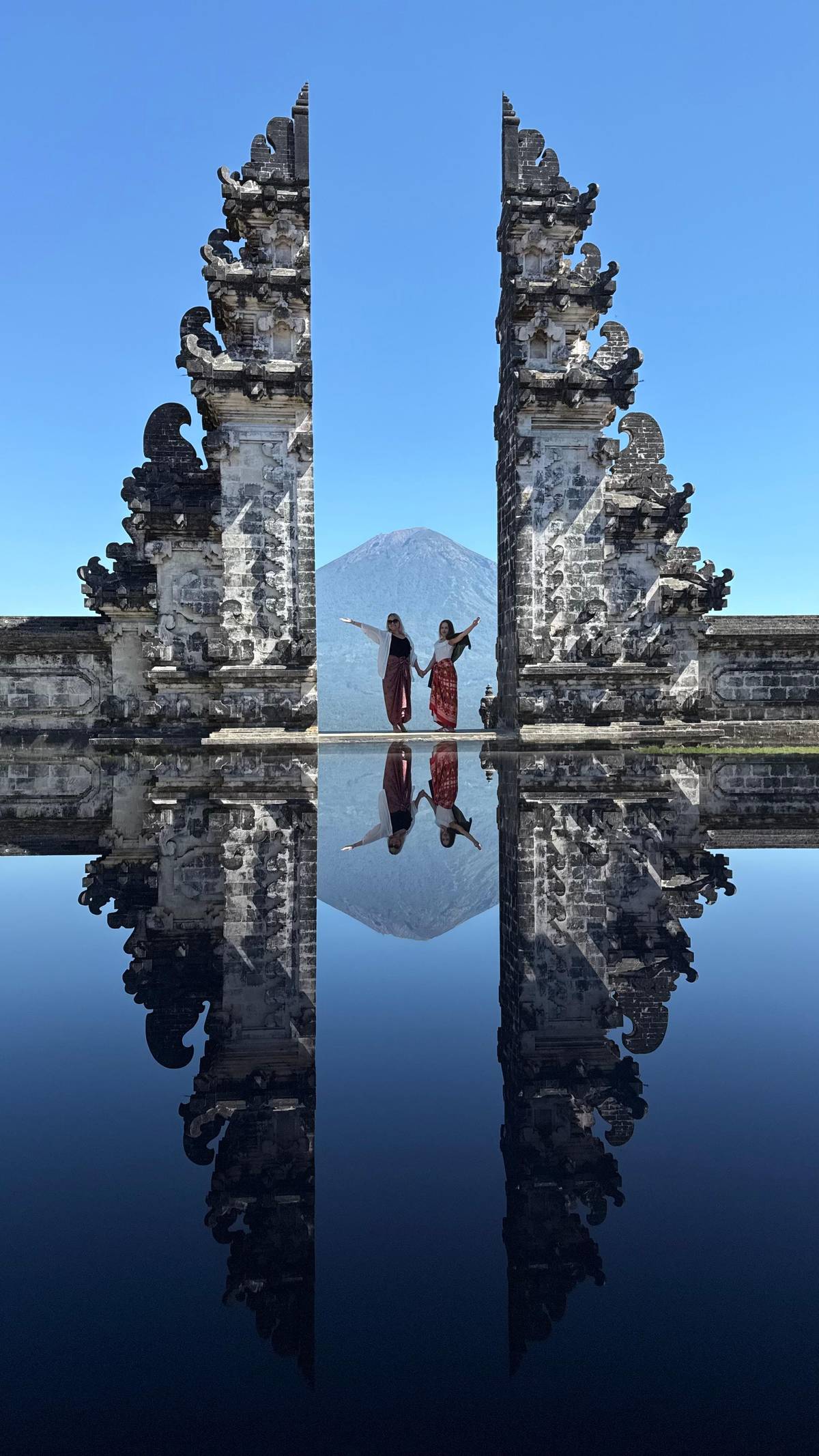
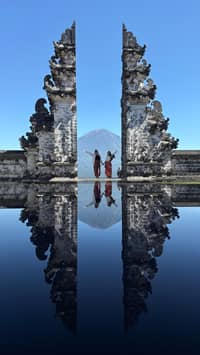
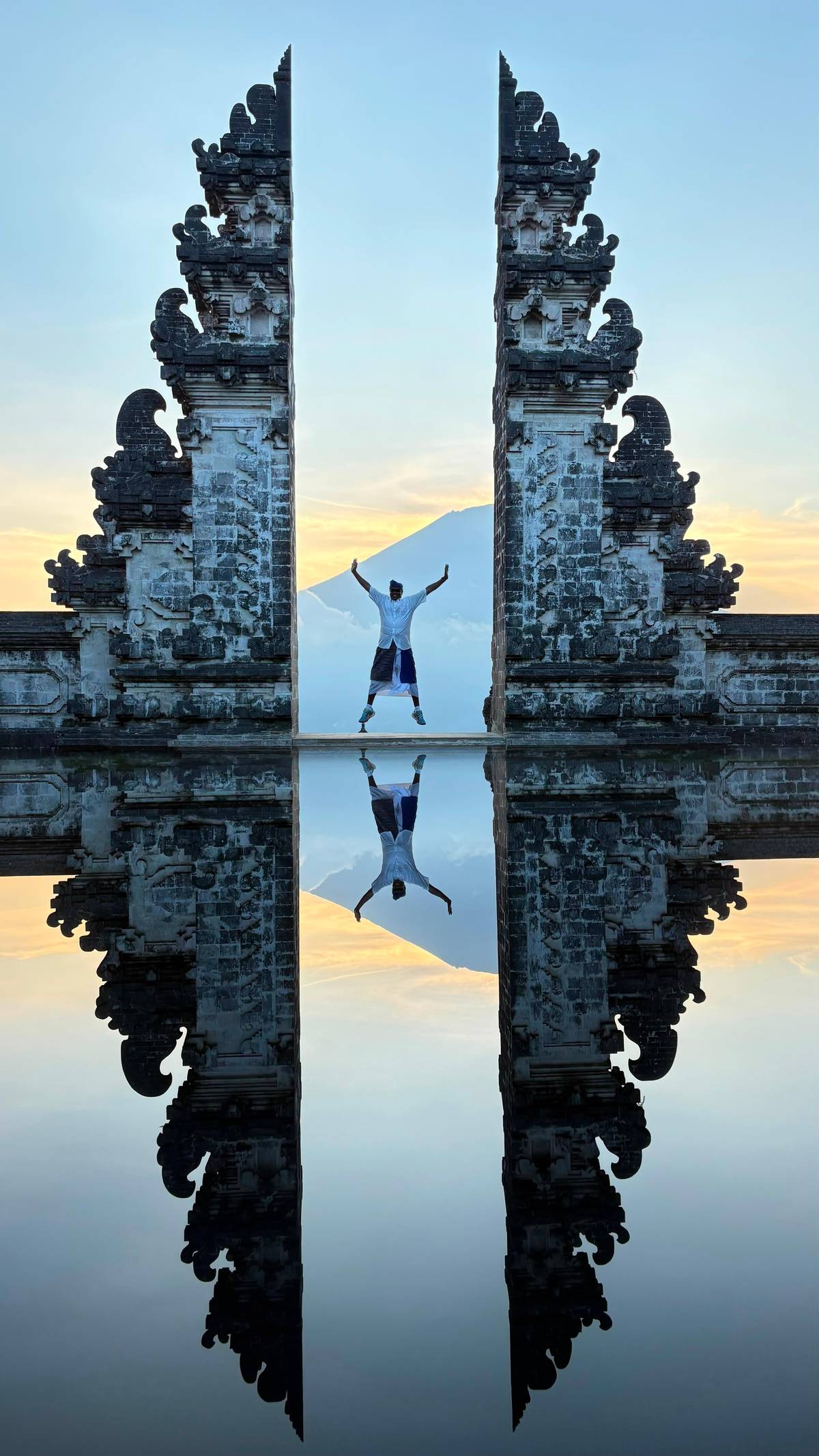
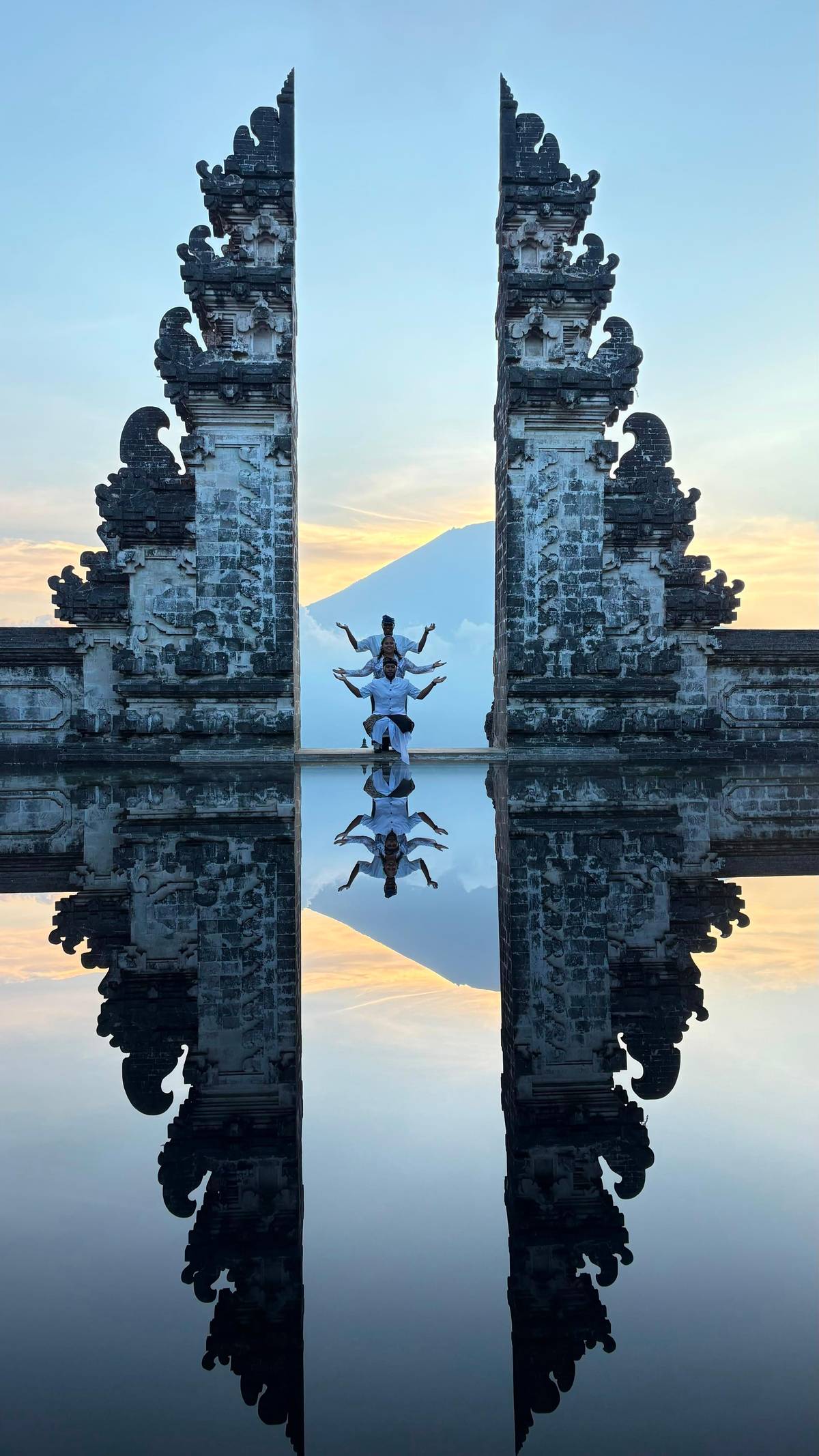
The lowest of seven temples on Mount Lempuyang, where the split gate frames Mount Agung on a clear day.25
In Google Maps ↗ - 2Tirta Gangga
A water palace built in 1948 by the King of Karangasem; a 1-hour stop of the site tour.26
In Google Maps ↗ - 3Besakih
The mother temple, on the slope of Agung at about 1,000 m, a complex of 23 temples.13
In Google Maps ↗ - 4Tirta Empul
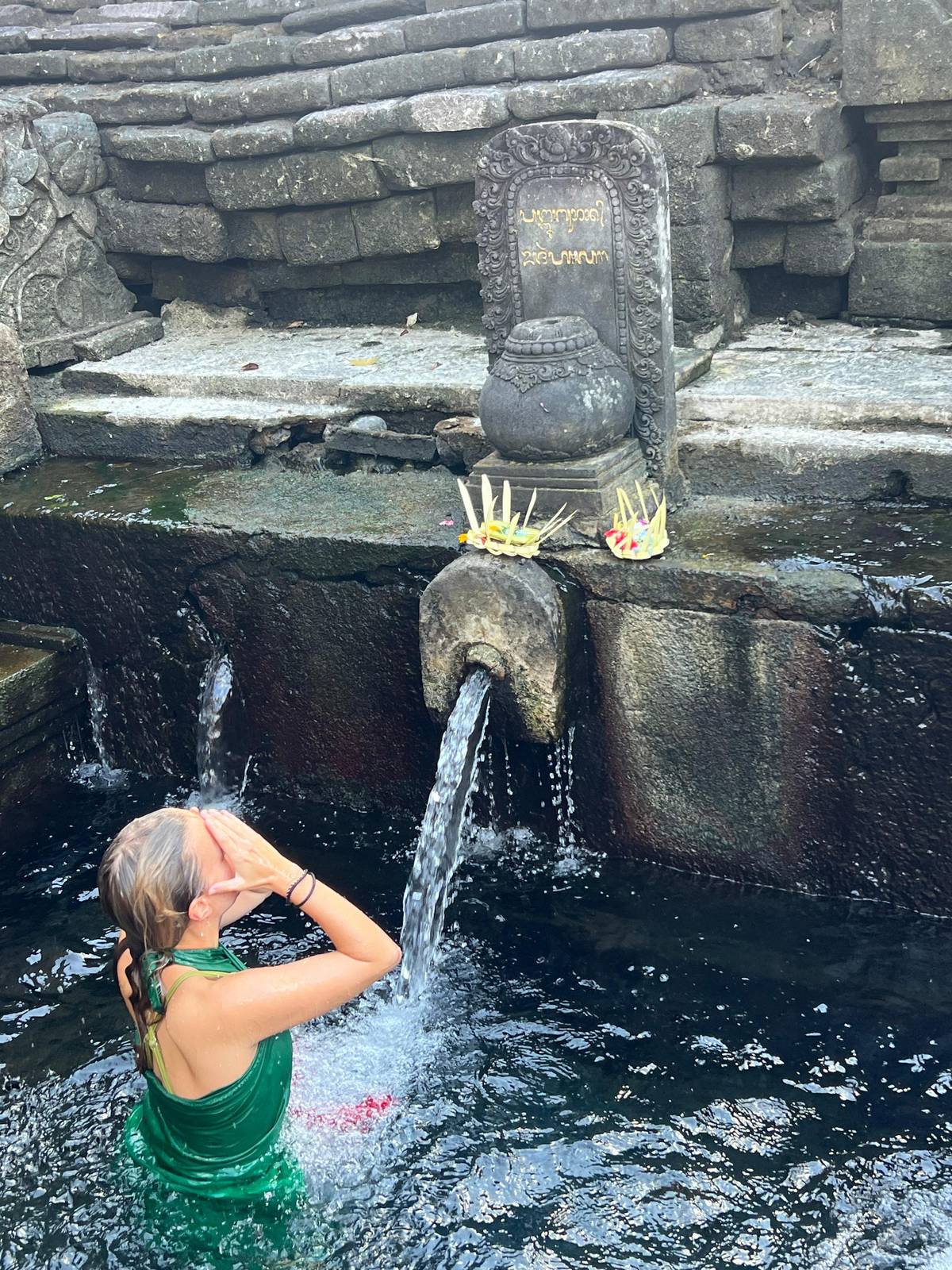
A spring temple founded in 962 AD, with 30 showers fed by the spring.2728
In Google Maps ↗ - 5Goa Gajah
A carved cave about 27 km from Denpasar, named in a text of 1365.2930
In Google Maps ↗ - 6Ubud Palace
Meeting point of the site tour's group options in Ubud.
In Google Maps ↗ - 7Taman Ayun
The royal water temple of Mengwi, part of the UNESCO subak landscape inscribed in 2012.3132
In Google Maps ↗ - 8Ulun Danu Beratan
A lake temple in Candikuning, Tabanan, about 1.5 to 2 hours from Denpasar.3334
In Google Maps ↗ - 9Uluwatu
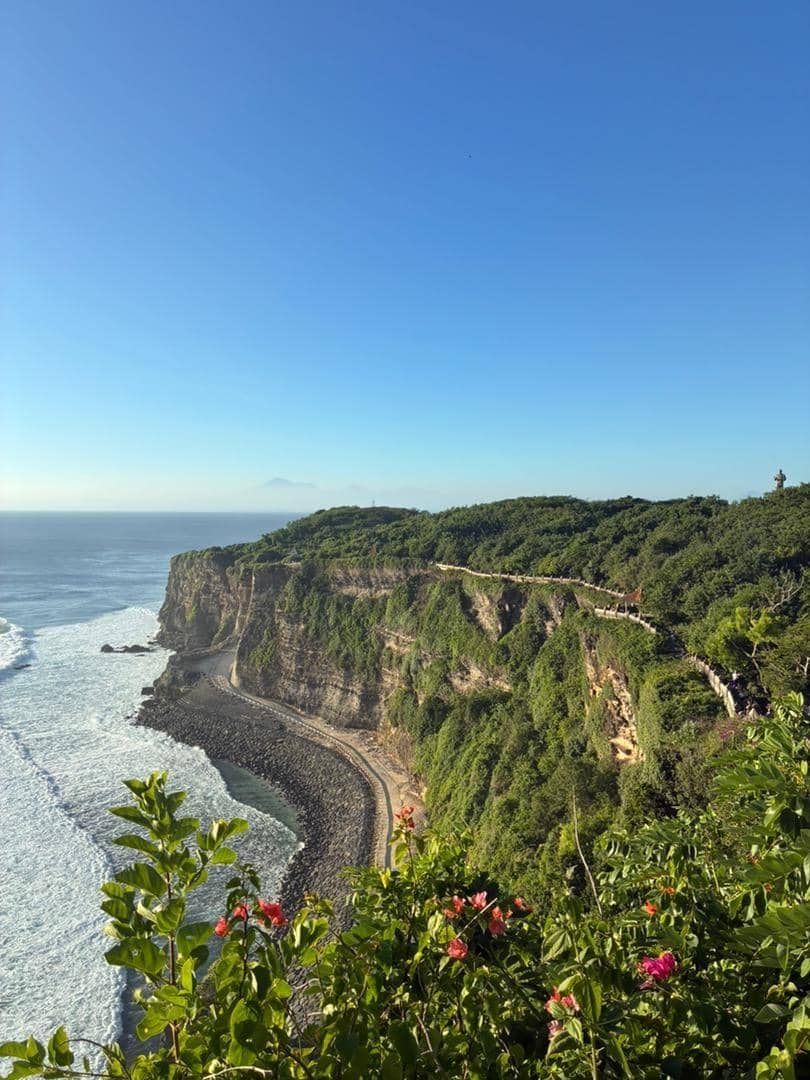
A sea temple on a 70-meter cliff, with the kecak at 6:00 PM.3536
In Google Maps ↗ - 10Kuta
Central Parking Kuta, the other group meeting point of the site tour.
In Google Maps ↗ - 11Lempuyang Luhur
The highest of the seven temples, at about 1,175 m, 2 to 4 hours there and back on foot.3738
In Google Maps ↗ - 12Gunung Kawi
Ancient shrines cut into a rock cliff above the Pakerisan River.39
In Google Maps ↗
Checklist
Before you go up to Besakih
01
Bring
- Cash for the ticket and a guide
- Shoes for many stairs
- Water
02
Respect
- Stay out of closed inner courts
- Give way to processions
- Step around offerings
Cost calculator
Price a Besakih day for your group
Pick a tour and enter how many of you are going.
People
Total from$55
pp from $28
Check availabilityfree cancellationThe total is each temple day's lowest GetYourGuide price times your party size, shown in your currency at today's ECB rate; the booking page confirms the real amount.
Video
A visit to Besakih, the mother temple of Bali
The player loads on your tap, not before.
Festivals that fill the courts
Besakih has a busy calendar. Almost every shrine celebrates its own anniversary, and with the 210-day Pawukon calendar that adds up to at least 70 festivals a year.20 The provincial office adds that on the full moon of the Balinese month Kedasa the entire compound celebrates the visit of the gods, with a great throng of pilgrims.40
The largest yearly event is Ida Bhatara Turun Kabeh, held every year in the month of Kedasa, around March to April.21 Devotees arrive from across the island with offerings, and every court is in use. Larger rituals come round less often: Panca Wali Krama once every ten years, and Eka Dasa Rudra once every 100 years.2215 The last Eka Dasa Rudra was held in 1979.14
For a visitor, a festival is both the best and the hardest day to come. The Ministry advises avoiding Besakih during large ceremonies unless you are invited.41 If you happen upon one, stay on the edges, keep your camera low and let the processions through; the colours and the music will stay with you longer than any photo. Women carrying towers of fruit and flowers on their heads, priests in white and the gamelan in the outer court turn the stone terraces into something far closer to a village festival than a monument.
Tickets, sarong and the walk up
Every visitor must wear a sarong, called kamen, and a sash, which you can rent at the entrance if you do not bring your own.42 The Ministry's Besakih page puts the ticket at Rp60,000 to Rp100,000 including the sarong and sash, and suggests an optional local guide for Rp50,000 to Rp100,000.5
The Ministry's temple guide gives a higher figure, around IDR 150,000 for foreign nationals and IDR 80,000 for Indonesians.6 Fees here have risen and fallen, so carry enough cash for the higher figure plus a guide, and pay only at the official counter. If you book a tour, check whether your option includes the entrance fee, because the tour on this site includes it only on some options.
The visit is a climb. One Besakih tour notes about 200 steps to see the whole temple area. Shoes you can take off and put on quickly help, and so does water. The Ministry recommends the morning, when it is cooler and calmer on the mountain.23
Getting there and the tours that stop here
Besakih lies in Besakih village, Rendang district, in the Karangasem regency of East Bali.2 The Ministry puts it about a 2-hour drive from Ubud or 2.5 hours from Kuta.1 The Ministry recommends a private driver or a tour because of the distance and the winding roads.6
The tour on this site ends its East Bali day at Besakih: after Lempuyang and Tirta Gangga it gives the mother temple 1 hour, then 1.5 hours by car back. It runs 9 to 10 hours, has 3,587 reviews averaging 4.79, and starts from $28.
If Besakih is your main goal, other listings give it more time. A small-group day limited to 10 people spends 1 hour at Besakih with Kertha Gosa, Bukit Jambul and Penglipuran, from $68. Another day gives Besakih 1.5 hours after Tegallalang and a waterfall, from $21.
Visiting with respect
Besakih is a working temple, and its courts may close during ceremonies. The tour notes for this site say inner areas may be restricted when a ceremony is on. Under the same notes, women who are menstruating may not enter the sacred temple areas.
Inside, keep to the paths, never climb on walls or shrines, and keep your voice low near people at prayer. Offerings on the ground are part of the ritual, not litter, so step around them. If a guide offers to take you into an inner court, ask first whether visitors are welcome there that day.
At nearby Lempuyang the Ministry notes that mornings give the clearest view of Agung and that fog may come down in the afternoon.43 Combine the visit with a slow drive back through the rice terraces, or pair it with the gate at Lempuyang in one long day, and you will have seen the two temples that define East Bali. Leave room in the day for the unexpected, too: a ceremony on the road, a procession to the river or a village temple dressed for its anniversary is part of the same living religion you came to see.
Your temple day
Lempuyang, Tirta Gangga and Besakih in one day.
Pick a date and an option, and cancel free up to 24 hours before.


You ask,we answer.
Why is Besakih called the mother temple?
It is the island's central temple. Since the Gelgel dynasty of the 15th century it has been the holy centre for all of Bali.8
Is Besakih the biggest temple in Bali?
Yes, the largest complex. The Ministry counts 23 large and small temples on the slope of Agung.3
How much is the entrance fee at Besakih?
IDR 60,000 to 150,000. Official pages differ: the Ministry gives Rp60,000 to Rp100,000 and also around IDR 150,000 for foreigners.56
Did the 1963 eruption damage Besakih?
The lava missed it. The eruptions killed about 1,700 people; the lava flows missed the complex by mere meters.13
How far is Besakih from Ubud?
About a 2-hour drive. From Kuta the Ministry gives about 2.5 hours; the last stretch climbs through villages and rice terraces.1
When are the big ceremonies at Besakih?
Around March to April. Ida Bhatara Turun Kabeh is held every year in the month of Kedasa.21
Do I need a guide at Besakih?
It is optional. The Ministry suggests a local guide for Rp50,000 to Rp100,000 to explain the temple areas.5
Sources
Where the information comes from
- 1Indonesia Ministry of Tourism (indonesia.travel)Visiting Pura Besakih, the Largest Hindu Temple in Bali↩
- 2Bali Provincial Tourism Office (Dinas Pariwisata Provinsi Bali)Besakih Temple↩
- 3Indonesia Ministry of Tourism (indonesia.travel)Visiting Pura Besakih, the Largest Hindu Temple in Bali↩
- 4Bali Provincial Tourism Office (Dinas Pariwisata Provinsi Bali)Besakih Temple↩
- 5Indonesia Ministry of Tourism (indonesia.travel)Visiting Pura Besakih, the Largest Hindu Temple in Bali↩
- 6Indonesia Ministry of Tourism (indonesia.travel)11 Must-Visit Temples in Bali and How to Get There↩
- 7Bali Provincial Tourism Office (Dinas Pariwisata Provinsi Bali)Besakih Temple↩
- 8Bali Provincial Tourism Office (Dinas Pariwisata Provinsi Bali)Besakih Temple↩
- 9Bali Provincial Tourism Office (Dinas Pariwisata Provinsi Bali)Besakih Temple↩
- 10Indonesia Ministry of Tourism (indonesia.travel)Visiting Pura Besakih, the Largest Hindu Temple in Bali↩
- 11Indonesia Ministry of Tourism (indonesia.travel)Visiting Pura Besakih, the Largest Hindu Temple in Bali↩
- 12WikipediaMount Agung↩
- 13WikipediaBesakih Temple↩
- 14Indonesia Ministry of Tourism (indonesia.travel)Visiting Pura Besakih, the Largest Hindu Temple in Bali↩
- 15Indonesia Ministry of Tourism (indonesia.travel)Visiting Pura Besakih, the Largest Hindu Temple in Bali↩
- 16WikipediaBesakih Temple↩
- 17WikipediaMount Agung↩
- 18WikipediaBesakih Temple↩
- 19Bali Provincial Tourism Office (Dinas Pariwisata Provinsi Bali)Besakih Temple↩
- 20WikipediaBesakih Temple↩
- 21Indonesia Ministry of Tourism (indonesia.travel)Visiting Pura Besakih, the Largest Hindu Temple in Bali↩
- 22Indonesia Ministry of Tourism (indonesia.travel)Visiting Pura Besakih, the Largest Hindu Temple in Bali↩
- 23Indonesia Ministry of Tourism (indonesia.travel)Visiting Pura Besakih, the Largest Hindu Temple in Bali↩
- 24WikipediaBesakih Temple↩
- 25Bali Provincial Tourism Office (Dinas Pariwisata Provinsi Bali)Lempuyang Temple↩
- 26Bali Provincial Tourism Office (Dinas Pariwisata Provinsi Bali)Tirta Gangga↩
- 27Indonesia Ministry of Tourism (indonesia.travel)The Beauty of Pura Tirta Empul↩
- 28Indonesia Ministry of Tourism (indonesia.travel)The Beauty of Pura Tirta Empul↩
- 29Bali Provincial Tourism Office (Dinas Pariwisata Provinsi Bali)Elephant Cave Temple↩
- 30Bali Provincial Tourism Office (Dinas Pariwisata Provinsi Bali)Elephant Cave Temple↩
- 31UNESCO World Heritage CentreCultural Landscape of Bali Province: the Subak System as a Manifestation of the Tri Hita Karana Philosophy (archived copy, 11 October 2026)↩
- 32UNESCO World Heritage CentreCultural Landscape of Bali Province: the Subak System as a Manifestation of the Tri Hita Karana Philosophy (archived copy, 11 October 2026)↩
- 33Bali Provincial Tourism Office (Dinas Pariwisata Provinsi Bali)Beratan Lake Temple↩
- 34Indonesia Ministry of Tourism (indonesia.travel)11 Must-Visit Temples in Bali and How to Get There↩
- 35Uluwatu Temple management (official website)Uluwatu Temple: The Iconic Cliffside Temple of Bali↩
- 36Uluwatu Temple management (official website)Uluwatu Temple: The Iconic Cliffside Temple of Bali↩
- 37Indonesia Ministry of Tourism (indonesia.travel)Pura Lempuyang, the Iconic East Bali Gate of Heaven↩
- 38Indonesia Ministry of Tourism (indonesia.travel)Pura Lempuyang, the Iconic East Bali Gate of Heaven↩
- 39Bali Provincial Tourism Office (Dinas Pariwisata Provinsi Bali)Gunung Kawi Temple↩
- 40Bali Provincial Tourism Office (Dinas Pariwisata Provinsi Bali)Besakih Temple↩
- 41Indonesia Ministry of Tourism (indonesia.travel)11 Must-Visit Temples in Bali and How to Get There↩
- 42Indonesia Ministry of Tourism (indonesia.travel)Visiting Pura Besakih, the Largest Hindu Temple in Bali↩
- 43Indonesia Ministry of Tourism (indonesia.travel)Pura Lempuyang, the Iconic East Bali Gate of Heaven↩